Humanity
Humanity
Ba'athism Once Dominated the Middle East... Now It's Gone
On December 8, 2024, Bashar al-Assad fled Damascus for Russia as rebel forces closed in on the Syrian capital. With that flight, a 54-year dynasty collapsed—and with it, the last Ba’athist government on Earth. When ideologies die, they usually leave echoes behind: nostalgia, apologists, half-remembered myths. Soviet communism still has its devotees. Fascism, nearly a century after its defeat, continues to find admirers in parts of the West. Ba’athism, by contrast, leaves almost nothing behind at all. Today, it holds exactly one elected seat anywhere in the world—a single representative in Lebanon’s parliament, who may well be the last Ba’athist ever chosen by voters.
By Lawrence Lease11 months ago in FYI
Art That Whispers: The Hidden Messages Lurking Inside Famous Masterpieces
More Than Just Pretty Pictures Celebrated artworks are so much more than beautiful things to look at. Many legendary painters, Michelangelo, Leonardo da Vinci, Botticelli, Van Eyck, and Picasso, were not just artists. They were masters of symbolism, puzzle-makers who embedded clues, codes, and even hidden images inside their canvases.
By Areeba Umair11 months ago in FYI
6 Mind-Blowing Things Floating in Space That You Won’t Believe Are Real
Space is supposed to be empty, silent, and cold… right? Well, not exactly. Beyond the usual stars, planets, and black holes, our universe is hiding some truly bizarre things, so strange that they sound made up, except they’re not.
By Areeba Umair11 months ago in FYI
I Learned Who I Really Am After Saying ‘No’ for 30 Days
M Mehran FYI: I used to be a “yes” person. Not because I liked helping everyone, but because I was terrified of disappointing people—or worse, being alone. Every invitation, every favor, every last-minute plan—I said yes. Always yes. Until I realized yes was exhausting me. So, I made a decision: for 30 days, I would say nothing but no. No to social obligations. No to work tasks that weren’t mine. No to anything that drained me. FYI: I had no idea how hard it would be. The first day, my phone buzzed with a friend asking for help moving a couch. Normally, I would have dropped everything and sprinted over. But this time, I replied: “No, I can’t.” The silence that followed my message felt deafening. My heart raced. My stomach ached. I imagined them hating me, thinking I had changed, that I was selfish. FYI: It was terrifying. But then something incredible happened. Nothing exploded. My friend didn’t call me a monster. They just… managed. They survived without me. And so did I. Over the next week, I started noticing things I hadn’t before. The mornings were quieter. My energy returned. I had time to read, to write, to think without distractions. I even found myself smiling more. FYI: Saying no gave me space to hear myself. By the second week, I faced the hardest challenges. My boss asked me to take on a project that wasn’t mine. Family members asked for favors I normally would have done without complaint. Old friends invited me to events I didn’t want to attend. Every time, I repeated it in my head: No. And every time, a tiny part of me felt lighter, freer, more… me. Then something unexpected happened. People started noticing. My boss asked me why I seemed calmer and more focused. A friend said, “You seem happier lately.” And another friend admitted that my saying no inspired them to set boundaries too. FYI: I didn’t just gain time. I gained respect—for myself and from others. By week three, I stopped feeling guilty. I stopped over-explaining. I stopped trying to justify my choices. I realized that my worth wasn’t tied to how many yeses I could pile onto my plate. My worth was intrinsic. My happiness was not negotiable. And the best part? I started noticing things I had been missing. Long walks without checking my phone. Meals without distractions. Conversations that were real, deep, and intentional. My creativity returned, bubbling up from corners of my mind I had long ignored. FYI: I didn’t just say no. I said yes—to myself. On day 30, I reflected on the month. I realized something: my life had not become smaller. It had become richer. Fuller. More vibrant. I had stopped living to please others and started living to honor myself. FYI: Boundaries aren’t just rules. They’re declarations of self-respect. After the challenge, I didn’t go back to saying yes to everything. I chose selectively, deliberately, intentionally. Some yeses are still part of my life—but they are meaningful. And every no is a reminder of the freedom I discovered. Now, I approach life differently. I focus on things that matter. I invest in people who value me, not just take from me. I spend my energy wisely. I live deliberately. FYI: Saying no for 30 days didn’t make me selfish. It made me whole. So here’s my advice if you feel drained, overcommitted, or invisible: try saying no. Protect your energy. Prioritize yourself. You don’t have to justify it, and you don’t have to apologize. FYI: Saying no might feel scary at first—but it will show you who you really are. And honestly? Who you really are is worth discovering
By Muhammad Mehran11 months ago in FYI
The Memory Merchant
M Mehran Most people in the city walked past the narrow brick storefront without ever seeing it. The sign over the door was small, hand-painted in fading silver letters: FYI: Curiosities & Corrections. Corrections, in this sense, meant memories. I found it on a cold afternoon when my phone died right as I needed directions. I ducked inside hoping for an outlet. Instead, I stepped into a room that smelled like cinnamon and old paper. Shelves overflowed with jars—small ones, tall ones, squat ones shaped like teapots, each containing something glowing faintly inside. “Careful with those,” a voice said. A man emerged from behind the counter. Tall, thin, hair silver as frost. “They’re memories.” I blinked. “You mean… metaphors? Like journals?” “No, no,” he said with a patient smile. “Actual memories. People trade them. People buy them. People let them go.” I was too tired to laugh. Too curious to leave. “FYI,” he continued, gesturing to the shelves, “memory is far less reliable than most believe. Your brain rewrites events every time you recall them. These”—he tapped a jar—“are first drafts. The originals.” Inside the jar, a tiny swirl of gold shivered, like a firefly trapped in syrup. “You’re kidding.” He shrugged. “Try one.” --- He handed me a jar labeled Copenhagen, 1971 – First Snowfall. “Open it. Just a crack.” The moment the lid loosened, something slipped into me—a cold breath of air, a child’s gasp, the fluttering brightness of flakes landing on eyelashes. For three seconds, I was a kid in Denmark, snow soaking through my mittens, my heart ballooning with awe. I snapped the lid shut, trembling. “What—how—” “Neuroscience plus a little craftsmanship,” he said. “Long story.” He watched me with the polite distance of someone waiting for a reaction he had seen a thousand times. “That was incredible,” I whispered. “As it should be. First memories are the purest.” Then he leaned forward. “Would you like to trade one of yours?” --- I should have walked away. I should have thanked him and left and blamed the strange experience on exhaustion and low blood sugar. But curiosity has always been my worst habit. “What kind of memory do you want?” I asked. “Something you don’t mind losing,” he said. “Preferably something personal. But not essential. Nothing foundational, unless you want side effects. FYI: remove a core memory and your personality shifts.” “Side effects?” “Confusion. Emotional dissonance. In extreme cases, feeling like a stranger to yourself.” He said it as calmly as a doctor describing mild dizziness. I thought about the memories I held. There were bad ones. The night my brother left. The argument with my father that still woke me sometimes. But the idea of losing them felt like cheating, like tearing chapters out of a book because I didn’t like the plot. “I’ll trade a small one,” I said finally. “Something harmless.” He nodded approvingly. “Good. Harmless is always safer.” I closed my eyes. “I have one—learning to ride my bike when I was six. The moment I realized my dad had let go.” “Oh,” he said softly. “That one matters.” “Does it?” “Do you want to forget your father’s faith in you?” That made me pause. Memories, I realized, weren’t isolated. They linked to everything else. “Okay… what about the time I learned to whistle?” He smiled. “Perfect.” He asked me to place my fingertips on a small copper bowl. It warmed under my hands. I felt something tug—more emotional than physical—and then the faintest pop, like a bubble bursting deep inside my mind. He handed me a new jar filled with pale blue light. First Whistle – Age 8. “Keep it,” he said. “Your first trade is free.” I waited for some sense of loss, but there was nothing. I knew I had learned to whistle once, but the memory of it sat behind a translucent curtain. More idea than experience. It didn’t hurt. “Why do people do this?” I asked. “Because people want to feel again,” he said. “Not just think. FYI: emotions fade faster than facts. I sell the feeling of first times.”
By Muhammad Mehran11 months ago in FYI
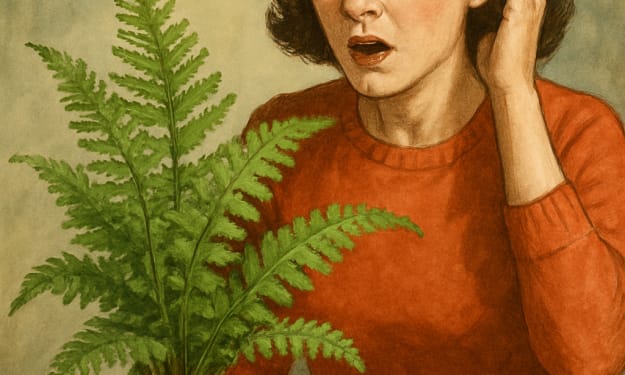
Did My Houseplant Just Read My Mind? The Strange Story That Might Make You Talk Nicely to Your Fern
If you’ve ever owned a plant, you already know the emotional rollercoaster that comes with it. One day, you’re misting its leaves like a proud parent, the next you’re Googling, “why does my plant hate me?” Maybe you’ve even whispered a little encouragement, or an apology, over a drooping stem.
By Areeba Umair11 months ago in FYI
Time Travel: Could We Really Jump Through the Past and Future?
Time travel has captured our imagination for centuries. From sci-fi movies to ancient myths, the idea of moving through time, whether to the past or the future, has always fascinated humanity. While many might dismiss it as pure fantasy, some of the world’s most brilliant minds have seriously explored whether it could ever become reality.
By Areeba Umair11 months ago in FYI
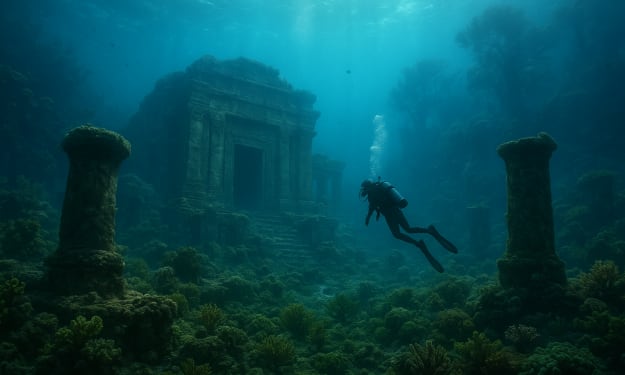
5 Underwater Mysteries That Still Have Scientists Scratching Their Heads
If we’re being honest, space gets all the hype. NASA sends a probe past Pluto and the world goes wild, and yeah, that’s seriously cool. But the truth is, Earth still has its own unexplored “final frontier.” More than 95% of our oceans, rivers, and lakes remain untouched, unmapped, and largely misunderstood.
By Areeba Umair11 months ago in FYI
Is Water Actually Alive? The Mind-Bending Experiments That Make You Think Twice
Water is everywhere. We drink it, swim in it, stare at it when we need to clear our minds, and most of us don’t give it a second thought beyond that. But what if water isn’t just a simple liquid? What if it’s something far more responsive… maybe even alive in its own mysterious way?
By Areeba Umair11 months ago in FYI
The Most Mind-Bending Historical Discoveries Ever Found (And Why They Still Baffle Us)
When archaeologists head out to dig, they’re usually expecting broken pottery, bones, or maybe an old coin if they’re lucky. But every now and then, they stumble across something so strange it feels like it jumped straight out of a sci-fi movie.
By Areeba Umair11 months ago in FYI
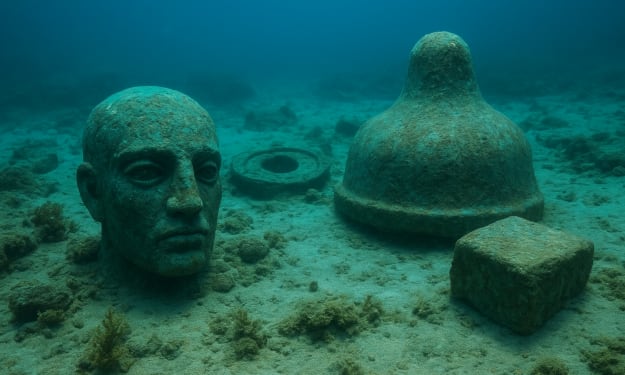
Beneath the Surface: The Most Jaw-Dropping Underwater Discoveries We Learned About This Year
If there’s one part of our planet that refuses to stop surprising us, it’s the ocean. Sure, we know it covers more than 70% of Earth, but what gets me every time is that we’ve explored only a tiny fraction of it. The rest? Still hiding secrets, civilizations, creatures, and probably the occasional lost sock.
By Areeba Umair11 months ago in FYI
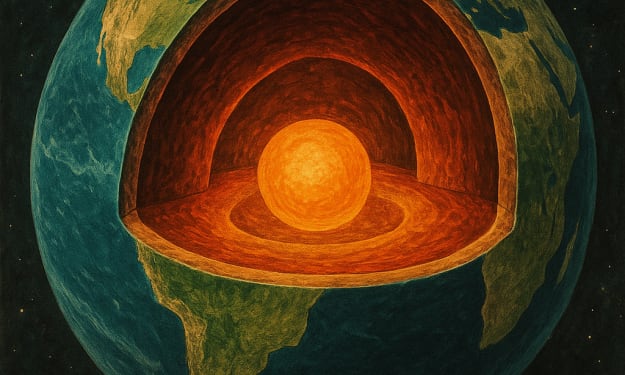
What If Earth Isn’t Solid After All? Exploring the Strange Clues Behind the Hollow Earth Theory
When most of us picture the inside of Earth, we automatically think of that neat little diagram from science class, the one that slices the planet like an onion. Crust, upper mantle, lower mantle, outer core, inner core. Simple, right?
By Areeba Umair11 months ago in FYI