Historical
5 Countries with Large Snake Populations
5 Countries with Large Snake PopulationsSnakes, with their diverse forms and ecological roles, are a fascinating part of the global ecosystem. While they are found on every continent except Antarctica, certain countries provide habitats that support particularly large and diverse snake populations. These countries often feature a combination of factors that make them ideal snake habitats, including warm climates, varied topography, and abundant prey. Here are five countries that stand out for their large snake populations:
By Moharif Yulianto2 years ago in FYI
5 countries with large monkey populations
5 Countries with Large Monkey PopulationsMonkeys, our close relatives in the primate family, inhabit diverse ecosystems across the globe. Their intelligence, social complexity, and captivating behaviors make them a fascinating subject of study and admiration. While many monkey species face threats to their survival, certain countries boast significant populations of these remarkable creatures. This article delves into five such nations, highlighting the diversity of monkey species found within their borders, the challenges they face, and the conservation efforts aimed at ensuring their continued existence.
By Moharif Yulianto2 years ago in FYI
Groundhog Day, The Facts, And My Prediction For Sunday
After a cold winter, marked by high heating bills, ice, and more time indoors, this Sunday is Groundhog Day 2025. We'll all be waiting to see whether our furry friend sees his shadow, and we can hopefully count on an early spring.
By Jason Morton2 years ago in FYI
The Federal Funding Freeze: What It Means for Medicaid, FAFSA, and Millions of Americans
In recent years, the topic of federal funding freezes has become a contentious issue, sparking debates across political lines and leaving millions of Americans uncertain about their access to essential programs. From Medicaid to student loans, food stamps to Pell Grants, the ripple effects of a federal funding freeze are far-reaching. This article delves into the implications of such freezes, the programs affected, and the broader political context, including Project 2025 and the role of key figures like Judge Loren Alikhan.
By Aneeq Zaheer2 years ago in FYI
The Miracle of Surviving Flight 571"
The “Miracle of the Andes” is the name given to one of the most dramatic and inspiring stories of human survival, involving Uruguayan Air Force Flight 571, which crashed in the Andes mountains in 1972. This event, which was marked by the courage, resilience and extreme choices made by the survivors, remains an account of human strength in the face of inhuman and inhospitable conditions. What happened to the passengers on that flight is considered a true miracle, but also a story of horror and sacrifice. On October 13, 1972, Flight 571, carrying 45 people from Montevideo in Uruguay to Santiago in Chile, suffered a serious accident while crossing the Andes. The aircraft, a Fairchild FH-227, got lost in a heavy storm and the crew, disoriented, ended up crashing into the mountain range. The impact of the crash was devastating. Of the total of 45 occupants, 12 died at the time of the accident and another 17 would die in the following days due to injuries and the lack of adequate conditions for survival. The survivors, who were mainly rugby players, their friends and families, were trapped in a desolate setting, at an altitude of around 4,000 meters, in the heart of the mountains. They were isolated, with no communication with the outside world, and the sub-zero temperatures, coupled with the difficult terrain and constant fear, made any rescue attempt even more complicated. The situation only got worse as the days went by, as there was no food and the water was frozen. The seriousness of the situation quickly became clear. Without enough resources to survive any longer, the survivors had to make extremely difficult decisions. After days of trying to stay alive with the few supplies they found in the wreckage of the plane, a terrifying decision was made: in order to survive, they would have to resort to cannibalism. They began to consume the bodies of the dead, an unthinkable choice, but one that was the only option to ensure that people lived. This decision has generated ethical and moral debate over the years, but for the survivors, it was a matter of life and death. The great mystery of Flight 571 was not just the crash itself, but the struggle for survival that followed. The search for survivors was difficult and disorganized. Because of the isolation of the site and the lack of precise information about their location, the rescue operation was ineffective. Even after days of searching, the plane was not found. However, two of the survivors, Fernando Parrado and Roberto Canessa, made a crucial decision: they would try to cross the mountains to find help. In a journey that would last ten days, without proper equipment and in extreme cold and hungry conditions, they managed to cross the mountains and finally reached a small town in Chile, where they managed to alert the authorities. After Parrado and Canessa were rescued, a major rescue operation was organized and a total of 16 survivors were saved. The story of the “Miracle of the Andes” was widely publicized and gained international recognition, being considered an example of courage, endurance and the human instinct for survival. The survivors faced what many would consider the worst of situations, but despite the difficulties, they managed to overcome the obstacles. The Mystery of Flight 571 is not just a story of extreme survival. It raises questions about morality, what it means to live and what people are capable of doing to stay alive. The experience left deep scars on the survivors, many of whom suffered psychological trauma and faced a long process of reintegration into society. Even so, the narrative of the “Miracle of the Andes” remains one of the most powerful stories of human resilience and overcoming the most immeasurable adversity.
By Lara Santos2 years ago in FYI
BOOM! The Bass That Puts Out Fire
Firefighting just got a major remix — literally! Imagine fighting flames not with water, foam, or chemicals, but with sound. Yes, you read that right. The future of fire suppression is here, and it’s all about using low-frequency sound waves to extinguish fires.
By Tales by J.J.2 years ago in FYI
Unraveling the Mystery of the World's First Civilization
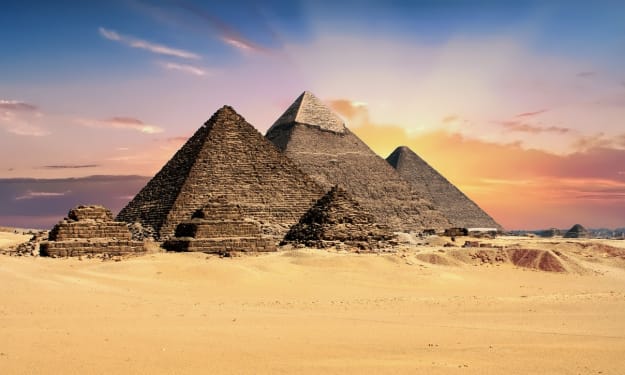
For decades, researchers have debated which civilization can lay claim to being the world’s first. The long-held belief was that the Sumerians of Mesopotamia, known for their early development of writing, were the earliest civilization. However, recent discoveries have challenged this narrative, suggesting that Egyptian and Indus Valley cultures may have an equally strong claim to this title. The Egyptian Discovery: A New Contender One of the most intriguing findings comes from Yale researchers, who recently unearthed a panel of four signs believed to have been written around 3,250 BCE in Egypt. This discovery suggests that the Egyptians may have developed their writing system at around the same time as, or even earlier than, the Sumerians. Additionally, another significant find in the region includes a rock drawing depicting a pregnant elephant that dates as far back as 4,000 BCE. These artifacts hint at an advanced and expressive culture that predates many long-held assumptions about the timeline of human civilization. The Overlooked Indus Valley Civilization While the focus often falls on Mesopotamia and Egypt, the Indus Valley Civilization, which flourished around the areas of modern-day Pakistan and India, is also a strong contender for the title of the oldest civilization. This advanced society thrived around 3,000 BCE, with evidence suggesting they were already trading with Mesopotamians as early as 3,500 BCE. But how is this possible? Could the Indus Valley have developed such advanced urban systems and trade networks so early? The answer lies in the agricultural settlements of the region, which began to grow into larger urban centers like Harappa and Mohenjo-daro. These cities were incredibly sophisticated for their time, featuring baked-brick homes laid out in grid patterns—a design that wouldn’t become standard in other civilizations for centuries. One of the most impressive aspects of these ancient cities was their drainage and sewage systems. Most homes were connected to a network of drains that used gravity to carry waste out of the city. This level of infrastructure rivaled that of later civilizations and underscores the ingenuity of the Indus Valley people. A Religious but Practical Society Religion played a central role in the Indus Valley Civilization, with Hindu beliefs deeply embedded in their practices. However, unlike Mesopotamian or Egyptian cities, their urban centers were not dominated by grand spiritual structures. Mohenjo-daro, for instance, had a notable public bath that appeared to serve as the most important building in the city. This structure, known as the "Great Bath," is believed to have been used for religious or ritualistic purposes, reflecting the culture's emphasis on cleanliness and spiritual purification. The origins of Hinduism in the region also bring up fascinating questions about the timeline of this civilization. The Upanishads, a collection of texts central to Hindu philosophy, are thought to contain knowledge that dates back to well before the civilization’s peak. However, Hindu traditions involved passing down this wisdom orally for generations, delaying the emergence of a written record. While some historians suggest the Indus Valley people may date back as far as 5,000 BCE, this remains speculative due to a lack of concrete evidence. Comparing the Contenders Mesopotamia, Egypt, and the Indus Valley represent three of the most advanced civilizations of the ancient world, but determining which came first is no easy task. The Sumerians of Mesopotamia are often credited with developing the earliest known writing system—cuneiform—around 3,100 BCE. Their cities, such as Uruk and Ur, featured monumental architecture, complex irrigation systems, and a well-organized social structure. The Egyptians, on the other hand, were developing their own writing system, hieroglyphs, around the same time. Recent discoveries like the 3,250 BCE panel and the 4,000 BCE rock drawing indicate that Egyptian culture may have been thriving earlier than previously believed. Their society was highly centralized, with the construction of massive monuments like the pyramids reflecting their advanced engineering and administrative capabilities. Meanwhile, the Indus Valley Civilization stands out for its urban planning and advanced infrastructure. Its cities lacked the grand temples and ziggurats seen in Mesopotamia and Egypt, but they compensated with practical innovations like the Great Bath and an efficient sewage system. Their trade networks also highlight their connection to other civilizations, making them a pivotal player in the ancient world. Why the Mystery Remains Despite the wealth of evidence from all three civilizations, historians remain divided on which was truly the first. One reason is the lack of concrete, written records for certain periods. For instance, while the Sumerians left behind extensive cuneiform tablets, much of the Indus Valley script remains undeciphered, and the oral tradition of the Upanishads delays our understanding of their early history. Another challenge is the difficulty of dating ancient artifacts with absolute precision. While carbon dating and other methods provide estimates, they cannot definitively establish the timeline of a civilization’s rise and fall. The Future of Discovery The debate over the world’s first civilization may never be resolved definitively, but it is far from over. As archaeologists continue to uncover new evidence, our understanding of ancient history is constantly evolving. Who knows what future discoveries might reveal? What remains clear is that these ancient societies, whether Sumerian, Egyptian, or Indus Valley, were far more advanced than previously imagined. Their innovations in writing, architecture, and urban planning laid the foundation for human civilization as we know it today. Rather than focusing on which came first, perhaps the more important takeaway is the shared ingenuity and creativity of humanity’s earliest cultures.
By Lisa Ann Bastiaan2 years ago in FYI