Historical
What Are Chinese Kung Fu (Martial Arts) and Its History, Development, Styles?
Chinese Kung Fu is also known as karate. While also popular among people like Gong Fu or Wushu. Kung Fu or karate is a course of martial arts that originated in China a long time ago. Martial arts or Kung Fu is becoming more and more beautiful as a sport in the world. Kung Fu stands for a representative of Chinese culture around the world.
By Rosan Pandey5 years ago in FYI
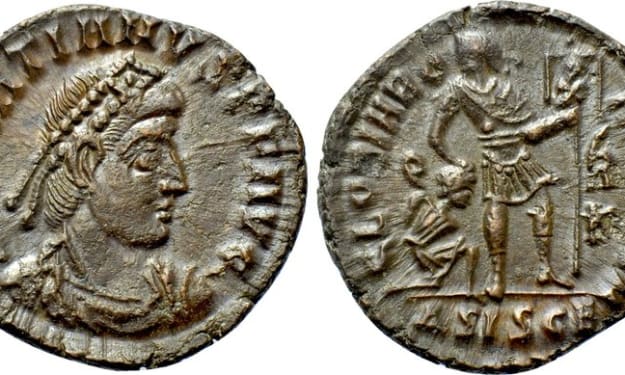
Gratian, Emperor of Rome
During the later history of the Roman Empire the top job became too much for one man to handle, with the result that the Empire was governed at various times by two or more Emperors. Gratian, who reigned from 375 to 383, was one of many such joint Emperors.
By John Welford5 years ago in FYI
Afghanistan situation is becoming worse. We must help!
Afghanistan situation is becoming worse. We must help! They need help, just raise awareness please Afghanistan is under attack. It has been under attack for many years. More then 40 to 50 years. They Taliban have taken hostage all of the Afghanistan land. They are fighting for what, just power land and money. Imagine having to be kicked out from your own house and having absolutely no time to pack or get your important items. Most afghans that have no money and don’t know where to go they have found a place in Kabul and they are living there, in the bush. The government of Afghanistan has provided them with tents, food and some other essential items. A lot of afghan from outside of Afghanistan and who live in Afghanistan, have also helped in some way that they can. Afghans are scatted and spread out all around the world feelings of fear, pain, sweat and other mixed emotions that only they know, and we can’t imagen.
By Bahair nawrose5 years ago in FYI
The Stone of Destiny
The Stone of Scone, more commonly known as the Stone of Destiny, has quite the tale for a slab of sandstone. It has traveled to many lands, been viewed as a symbol of Scottish independence, used as the foundation for the coronation of monarchs, stolen, then stolen again, and was finally returned to its ancestral home.
By Kassondra O'Hara5 years ago in FYI
Tom Paine, philosopher of revolution
Thomas Paine (1737-1809) is a somewhat controversial historical character, particularly when he is regarded from a British perspective. He was British by birth and upbringing, but spent much of life beyond its shores in support of causes that were not in Britain’s interests.
By John Welford5 years ago in FYI
The pace of change.
The pace of change. The evolution of social change. The land we now call Britain was, 2500 years ago, inhabited and so ruled over, by various Celtic tribes. Exactly how long they had been there is unknown probably since the end of the ice age. So their origins may have been started about 6000BC. Each tribe or family. had their own territory and, as far as can be understood, they chose a tribal chieftain who may originally been a shaman. Some one who it was believed could transform themselves into an animal and guide the hunters to their prey. They left no written reports and so much of what we think we know about these people, is based on expert opinion, made from interpreting what physical objects still remain from this period, some information is based on much more recent reports written by the Romans, who invaded and enslaved the Celtic population. Since any such reports have to be viewed with the understanding they had to be “political” and show the Romans in a beneficial light while painting the Celtic civilisation as barbaric, peopled by savages, thus justifying the occupation and enslavement. So it is hard to get a real understanding but the Celtic “civilisation” lasted for several thousand years and they appear to have had female leaders and warriors, at least in some tribes. It is a reasonable assumption they they spoke slightly different languages and certainly must have had local dialects. It has been found that they had more contact and trade, with other countries and more sophistication than previously (200 years ago) expected. The expectation was “coloured” by the Roman records and reports.
By Peter Rose5 years ago in FYI
Hieroglyphics: The Words of the Gods
What are Hieroglyphics? For thousands of years people have traveled to the land of Egypt to find the columns and temples ornately adorned with thousands of pictures and symbols. Although, up until recently, no one knew for sure just what these cryptic messages from the past truly said.
By Emily Marie Concannon5 years ago in FYI
Elephants Are Afraid of Mice! And Other ‘Eek!’ Misconceptions.
Elephants have no knee joints, so if they fall down they can’t get up again. So … to avoid falling, elephants lean against a tree while they sleep. To capture an elephant, a hunter can cut part way through a tree ahead of time; when the elephant leans against it, the tree will break and the elephant will fall. Unable to rise, the beast cries out, and a large elephant tries to lift it up, but fails. In some accounts, twelve elephants next attempt to lift it, and also fail. Finally a small elephant comes and succeeds in raising the fallen one.
By Hamish Alexander5 years ago in FYI
Raj Ghat Timings, Entry Fee, History, Nearby Attractions
Raj Ghat is a memorial to Mahatma Gandhi. Originally it was the name of a historic ghat of Old Delhi (Shahjahanabad) on the banks of Yamuna river. Close to it, and east of Daryaganj was “Raj Ghat Gate” of the walled city, opening at Raj Ghat on Yamuna River. Later the memorial area was also called Raj ghat. It is a black marble platform that marks the spot of Mahatma Gandhi's cremation, Antyesti (Antim Sanskar) on 31 January 1948, a day after his assassination. It is left open to the sky while an eternal flame burns perpetually at one end. It is located on the banks of the river Yamuna in Delhi in India on Ring Road officially known as Mahatma Gandhi Road. A stone footpath flanked by lawns leads to the walled enclosure that houses the memorial.
By vishal rathuor 5 years ago in FYI
The coup d'etat of Claude-Francois Malet
These days we take instant communications for granted, but in the days before the telephone and the telegraph a well-placed, but false, piece of news could bring down an Empire. At least, that is what Claude-Francois Malet reckoned, and he very nearly succeeded.
By John Welford5 years ago in FYI