
Some people will get an extra paycheck three or four times a year
Others may find they run short in specific months,

Have you been missing your extra payday?
Everyone enjoys receiving additional funds but may not always know how to obtain them. Did you know that depending on when your payday is each month, you may have already been getting an extra check or direct deposit? Or you may have had months when your money does not last, and you don't know why. There is a logical reason for both experiences.
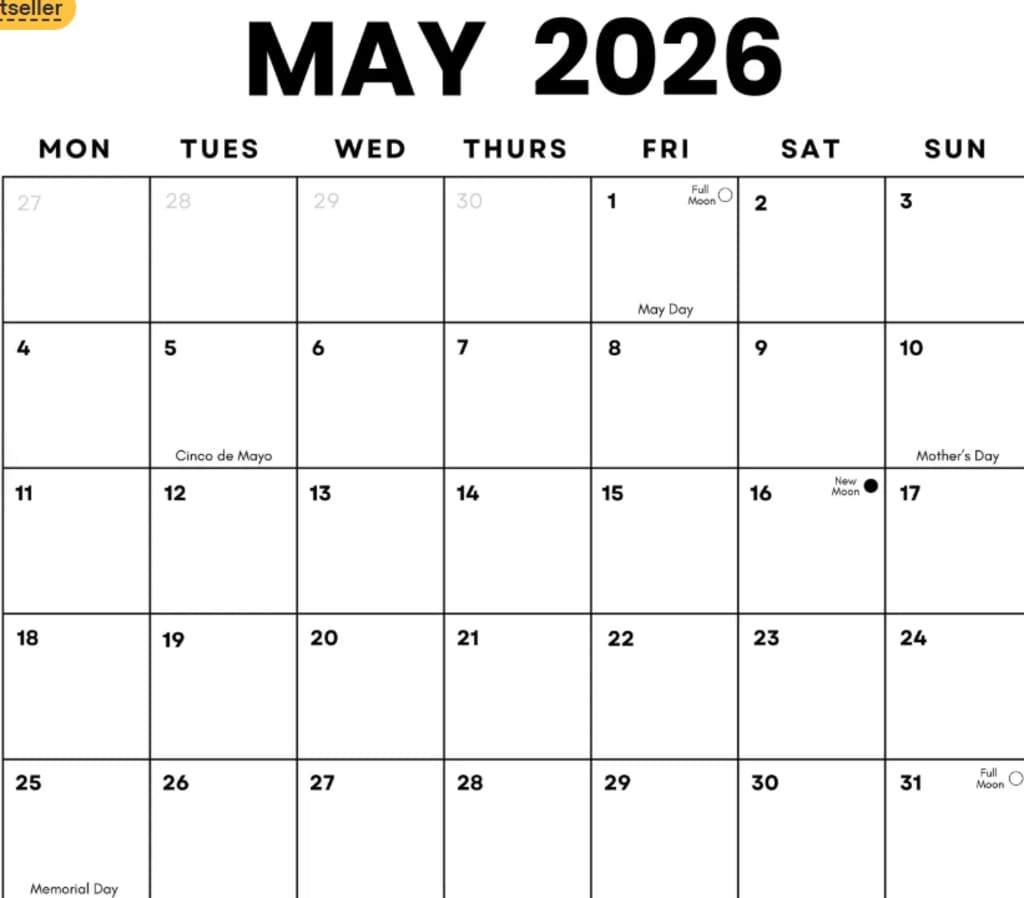
This May of 2026 AD is a good example. Many working people will receive an extra week of pay. If your money comes once a month or twice a month, you will not have additional funds, but you might feel the sting of more month than money. You may have months when ends don't meet, no matter how hard you try.
How this method works
May began on a Friday, which means anyone who gets paid every other week and received money on the first will also get paid on the fifteenth and the 29th.
Many people probably don't notice the additional funds because expenses are so high. Still, it's there and can be a blessing if planned for. I first observed this in 1978 when I was paid each Friday.
Typically, there are four weeks in a month, but a few times a year, there are five. If you get paid on Mondays but your direct deposit hits on Saturday, you were paid on May second, and will receive money again on the sixteenth and 30th.
This extra payday in May benefits those who receive their money every Friday. Instead of four pay periods, they will have five. For those who get paid once a week or every other week on different days, this method also works for you. It won't be this May, but pay attention to the calendar for the rest of the year.
FYI, this information brings awareness about the additional pay periods in a calendar year, but based on your expenses, you might not see a difference in earnings from extra paydays.
Five weeks in a month make all the difference
Every month, five weeks follow the first, second, and third, and end with the 29th, 30th, and 31st, unless the month has only 30 days. When it happens on a Sunday, it gives worshippers a fifth Sunday in addition to the usual four. This happens three or four times each year. Now and then, two months back-to-back have five Sundays, but not often.
The same is true for an extra payday. It will happen three or four times in a year. Now that you know, you can plan what you will do with the additional money. Check the calendar to learn when you get an extra check or direct deposit. If your money comes once or twice a month, you may have noticed the opposite effect.
Do you have more month than money?
Sometimes your funds don't stretch. This is because your monthly or bi-monthly income does not increase when there are five weeks. You have to purchase groceries, gas, and other items for an extra fifth week when your budget is set for four.
Look at calendars for years past, and you will see the months you ran short because of a fifth week, or you received an additional payday without realizing it. Now you know how it works, you can plan for the future.
If your finances are tight and you don't get to use the additional payday funds as extra, at least now you realize it's there. If you enjoyed this article, please like, comment, subscribe, or leave a tip. Thank you.
About the Creator
Cheryl E Preston
Cheryl is currently pursuing a Bachelor of Science in Psychology. She enjoys writing about current events, history and baby boomer nostalgia. Tips are greatly appreciated.
Enjoyed the story? Support the Creator.
Subscribe for free to receive all their stories in your feed. You could also become a paid subscriber, letting them know you appreciate their work.
Comments
There are no comments for this story
Be the first to respond and start the conversation.