


There is something about mothers’ love that is, well, immeasurable. Those who have been lucky enough to experience it know what I am talking about.
May is the month for Mother's Day. This day honours the important role mothers play in our lives.
As we consider human mothers, let’s also remember the animal mothers who sacrifice for their young.
Orangutan mothers raise their kids much as human mothers do. They feed them, protect them, and teach them how to find food. They will teach them how to hide from predators and what foods they can and can’t eat.
They are so dedicated that over the 8-9 years, the young are totally dependent on the mother. The mother will make a new nest for them every single night. That is over 30,000 treetop beds.
Polar bear mothers do not eat for over eight months, all in the name of motherhood. Once a polar bear becomes pregnant, she goes into hiding in an ice den. To survive and produce enough milk for her young, the female must double her weight.
Alligator mums also make supreme sacrifices and show astounding self-control. After their eggs hatch, the mother alligator carries her young around in her mouth for a couple of weeks.
After this time, the young stay close to the mother (often riding on her back) for up to 2 years. As they are only 6-8 inches long when born, this behaviour protects them against predators.
Elephant moms are miraculous for their dedication. They carry their babies for 2 whole years until they are born. At birth, babies can weigh 200 pounds, almost 100 kg. They are the heaviest babies of all land animals.
It's obviously not over then. Baby elephants rely on their mothers for food during the first 2–3 years. Luckily, the mothers have help from other females in the herd.
Koalas, unique to Australia, give birth to young (called joeys) that look like pink jelly beans. Only about 2 centimetres long, they make an exhausting trip up the mother's belly to her pouch. They attach to one of her teats to continue to develop for over 6 months.
Once they are ready to transition to a solid diet, the mother feeds her young a unique substance called pap. She makes a complex jelly mix that gives young joeys the right bacteria. This helps them digest their tough diet of eucalyptus leaves.
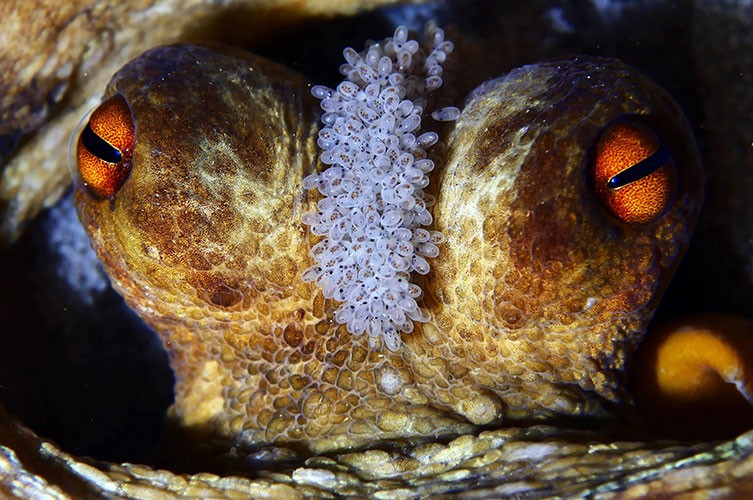
The ultimate sacrificial mum would have to be the octopus. Female octopuses can lay up to 100,000 eggs. Females will guard their eggs until they hatch, during which time they rarely eat. At the end of the reproductive cycle, the life of the female ends. A female octopus lives up to 2 years on average and gives birth only once in her life.
They guard their eggs from predators. They also waft water over them to add oxygen. They keep up this behaviour until the eggs hatch. Once laid, she never leaves their side. This means she can’t go hunting for food anymore, not until they hatch at least. She will stop eating and stay with her eggs. This protects them from predators and keeps their oxygen supply steady.
It is sad because by the time these eggs hatch, it will be too late for the mother to survive. A deep-sea octopus has been observed brooding her eggs for 53 months, which is four and a half years. When the eggs hatched, the mother was gone. A long, slow death by starvation, which she accepts to help her young survive better.
For the record, male octopuses don’t fare well either. They do not survive for long after sex. So, the sea is full of little orphan octopuses. Not for long; they only have a 1% survival rate.
The things that mothers do!
They totally deserve a day of dedication. Happy Mother’s Day to all human and animal mothers.
Till next time,
Calvin
Submitted for the Mikeydred Maypole unofficial challenge:
About the Creator
Calvin London
I write fiction, non-fiction and poetry about all things weird and wonderful, past and present. Life is full of different things to spark your imagination. All you have to do is embrace it - join me on my journey.
Enjoyed the story? Support the Creator.
Subscribe for free to receive all their stories in your feed. You could also become a paid subscriber, letting them know you appreciate their work.
Comments
There are no comments for this story
Be the first to respond and start the conversation.