
Maximize Staff Augmentation Partnership by Fixing Your Repositories First
How to Prepare Your Repository Before Augmenting the Engineering Team?

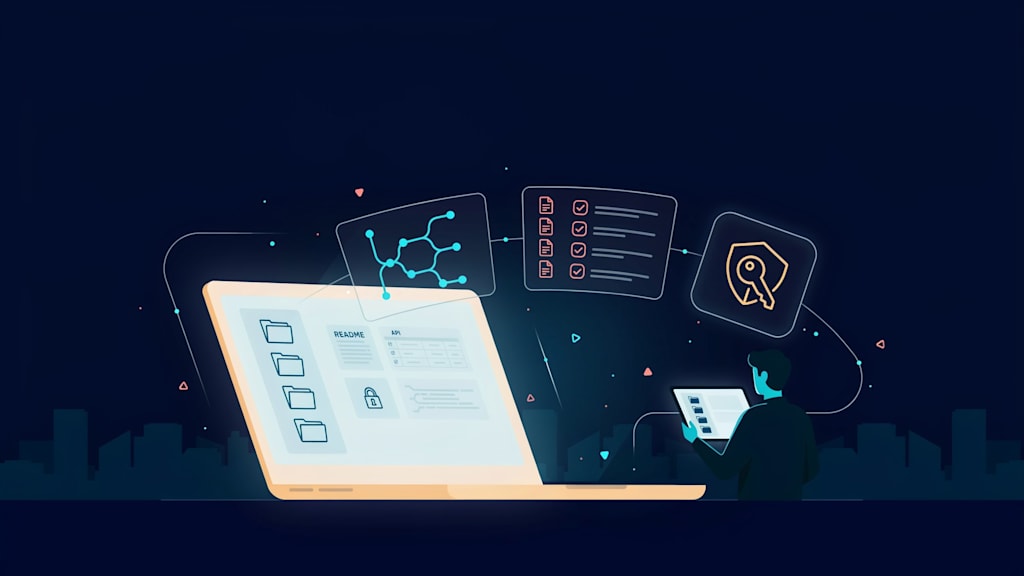
Every engineering team has modules whose logic is known to only a few developers. The module may still work because the internal team understands its dependencies and exceptions through tribal knowledge. This approach may remain manageable as long as the same developers continue to maintain the project. But it becomes a delivery risk when a new developer joins or when organizations hire dedicated developers through IT staff augmentation to fill specific skill gaps.
In fact, 41% of developers spend significant time making things work without structured documentation, underscoring how quickly missing context can lead to lost productivity. Augmented developers may know the programming language, framework, and tools, but they will not know the local logic of your system. Every undocumented decision forces them to infer intent from code, manually trace dependencies, or repeatedly ask internal developers for context that should already exist inside the repository.
The following article discusses the importance of repository readiness before augmenting internal teams with external developers, what to prepare, how to implement it, and provides a quick overview of developer onboarding best practices.
Why Repository Readiness Matters Before you Augment your Team?
Explore why it is critical for a secure code repository setup to understand exactly what is at stake when a repository lacks proper structural safeguards:
1. Financial Drain of Billable Hours
Without a ready repository, your time-to-value stalls instantly while the invoice accumulates. Augmented developers are typically billed on a time-and-materials basis from the moment they get access, meaning you pay while they struggle through undocumented architecture or broken environment setups.
This friction creates a massive financial leak, forcing you to fund days of unproductive troubleshooting while draining your internal team's time as they act as ad hoc tech support.
2. Security Risk
Onboarding external developers into an unprepared codebase exposes your company to severe operational vulnerabilities. Unmanaged access may lead to compliance failures, such as accidentally committing live API keys, hardcoding database credentials, or executing destructive force-pushes onto production branches.
Without automated roadblocks in place, a single security oversight can turn a routine scaling effort into an expensive data breach or an extensive system recovery project.
3. Erosion of Codebase Quality
External teams cannot adhere to engineering standards that exist only as undocumented tribal knowledge. When a repository lacks inherent structure, augmented teams unknowingly introduce conflicting architecture patterns, inconsistent error boundaries, and variable testing habits that fragment the codebase.
This quality drift rapidly increases the cost of technical debt by making future maintenance harder, slowing feature work, and forcing teams to spend weeks refactoring inconsistent code.
Repository Best Practices to Follow Before Onboarding External Developers
For a secure code repository setup, tech leads can implement structural safeguards across 3 distinct layers. Each layer builds sequentially upon the last to eliminate manual oversight, fortify access control, and automate quality enforcement. Read ahead to discover how implementing this three-tiered architecture prepares a codebase to safely hire dedicated developers from an IT staff augmentation agency.
Layer 1: Make the Repository Self-Explanatory
The first objective of a production-ready repository is to eliminate the need for tribal knowledge. If a senior augmented engineer cannot understand the operational mechanics without booking time on your internal team's calendar, the repository has failed to meet basic readiness standards. Hence, documentation must be a highly structured matrix of technical artifacts that clearly map out the system's intent. Core repository documentation checklist must include:
1. System README.md
The root README file serves as a system blueprint that must provide an explicit, reproducible local setup guide. This document should specify the exact language runtimes, list all system-level dependencies, and outline a single-command bootstrap sequence. Additionally, local service URLs, ports, and verification steps should also be documented to confirm that the application is running correctly.
2. CONTRIBUTING.md
This document serves as the workflow protocol governing exactly how code moves through the development lifecycle. It must outline the precise branch-naming conventions, detail the rebasing or merging mechanics the team uses, and define the specific criteria required for a PR to be considered for review.
3. Living Architecture Maps
Codebase exploration wastes expensive billable hours that should be spent building features instead. Hence, you should maintain an updated, text-based architecture diagram using tools like Mermaid.js or PlantUML directly inside the repository directory. This map should detail data-flow boundaries, microservice dependencies, and caching layers so developers can instantly visualize where their code changes occur.
4. Architecture Decision Records (ADRs)
Augmented developers often attempt to rewrite or refactor patterns that they do not immediately understand. By maintaining a dedicated directory for these records, you capture the historical context, technical tradeoffs, and business constraints behind your past architectural choices. This prevents external teams from wasting time relitigating settled technical decisions.
5. Runbooks and Debugging Matrices
When local environments break, the development process stalls. Hence, embedding a deterministic troubleshooting index that maps common error logs to their respective fixes lowers the cognitive load of local debugging.
Layer 2: Lock it Down Before you Hand Over the Keys (Security)
Once the repository can explain itself, the next job is to make sure a newcomer can't cause harm, whether by accident or otherwise. This is where preparation for external contributors differs most sharply from internal hiring, because the risk profile is genuinely different.
1. Cryptographic Identity and Commit Integrity
To prevent unauthorized code injection and maintain clear audit trails, you should enforce cryptographically signed commits at the repository governance layer. Without this, any user can easily alter their local Git configuration to impersonate an internal engineer in the history logs. Hence, enforcing signed commits ensures that the version control system cryptographically verifies the identity of every submitted commit.
2. Immutable Branch Protection and Code Ownership
Strict branch rules, such as restricting direct pushes, blocking force pushes, and requiring successful CI checks, must be configured in your version control system before granting access. The setup should be complemented by a CODEOWNERS file to automatically map specific code paths to your internal engineering leads. This ensures the repository intercepts external PRs and requires internal sign-offs before any critical code can be merged into production.
3. Decoupled Configuration and Runtime Secret Scanning
The repository must be completely sanitized of hardcoded credentials, production connection strings, and third-party API tokens.
- .env.example Matrix: An exhaustive environment template file that must contain functional, non-sensitive dummy configurations.
- Pre-Commit Secret Interception: To catch mistakes before they ever reach the cloud, secret-scanning configurations should be embedded in the repository's Git hooks using tools like Gitleaks, git-secrets, or detect-secrets. If a developer accidentally leaves a live API key or an AWS token in a source file, the local commit action will automatically abort and protect those credentials.
Layer 3: Let the Repo Enforce Your Standards (Quality & Workflow)
This layer is all about consistency because the internal team cannot spend its time acting as a human style guide or manually validating basic functionality. Hence, the repository must be engineered to actively reject non-conforming code without requiring human intervention.
1. Programmatic Code Style and Static Analysis
To protect the codebase from accumulating style inconsistencies, static analysis must be enforced directly on the developer's local machine before changes ever reach the remote server. This setup is achieved by embedding fast linters and formatters like ESLint, Prettier, or Ruff straight into the repository's root configuration.
When a git-hook manager like Husky is paired with a staging utility like lint-staged, the repository constructs an automated gate that runs style and syntax checks exclusively against modified files during the commit process. If a contributor introduces an architectural anti-pattern or violates formatting rules, the local commit action automatically aborts.
2. Deterministic CI Test Suites and SAST Gates
While local hooks manage immediate syntax quality, the repository must also house the definitive configuration files required to orchestrate the CI pipeline. This centralized automation ensures that whenever an augmented developer pushes a branch or opens a Pull Request, an isolated cloud runner immediately launches a comprehensive evaluation matrix. The pipeline simultaneously runs unit and integration test suites, executes dependency vulnerability audits, and runs Static Application Security Testing (SAST) engines.
If a single check fails, the repository programmatically locks the PR from being merged, ensuring the internal team spends time reviewing code that is already verified as secure.
Tips to Hire Dedicated Developers After Fixing Your Repositories
For decision-makers, maximizing ROI from external engineering augmentation requires following the developer onboarding best practices:
1. Evaluate Developers for Architectural Alignment
When interviewing dedicated developers, look beyond basic keyword matches on a resume. Assess their familiarity with production-grade workflows, version control governance, and automated testing ecosystems.
2. Validate Agency's Security and Compliance Infrastructure
Ensure the IT staff augmentation agency enforces strict non-disclosure agreements (NDAs), background checks, and secure endpoint management before any developer is granted access to your internal source code or repositories.
3. Establish Clear KPIs
Define explicit performance metrics prior to onboarding engineers. Track objective indicators such as sprint velocity, code churn, and deployment success rates to maintain clear accountability and accurately measure engineering output.
4. Unify Communication Channels
Avoid isolating augmented experts into a separate delivery silo. Loop them into daily standups, internal sprint planning sessions, and primary communication channels to maintain absolute alignment on project priorities.
Conclusion: Human Oversight to System Governance Transition
Establishing comprehensive repository readiness must precede onboarding external developers, as the codebase is the primary source of system context. When a repository independently explains its architecture and enforces its own boundaries, the reliance on tribal knowledge disappears. This systematic repository preparation maximizes the value of IT staff augmentation while also saving the internal team from operational friction, such as briefing on dependencies, core logic, and related details.
Another thing to note is that while it rapidly scales delivery capacity, this operational leverage is entirely dependent on a codebase that’s engineered for distributed contribution from day one. A repository configured to explain its logic, protect its assets, and programmatically enforce standards creates the definitive foundation for secure collaboration, faster code contribution, and predictable product delivery. So, act now to implement the provided 3-tier configuration structure to establish the necessary foundation for a frictionless partnership and predictable project delivery.
About the Creator
Nathan Smith
Nathan Smith is a Technical Writer at TechnoScore with extensive knowledge in software documentation, API guides, and user experience.
Enjoyed the story? Support the Creator.
Subscribe for free to receive all their stories in your feed.
Comments
There are no comments for this story
Be the first to respond and start the conversation.