
Looking Back at The Columbine High School Massacre
Columbine: The Warnings No One Stopped

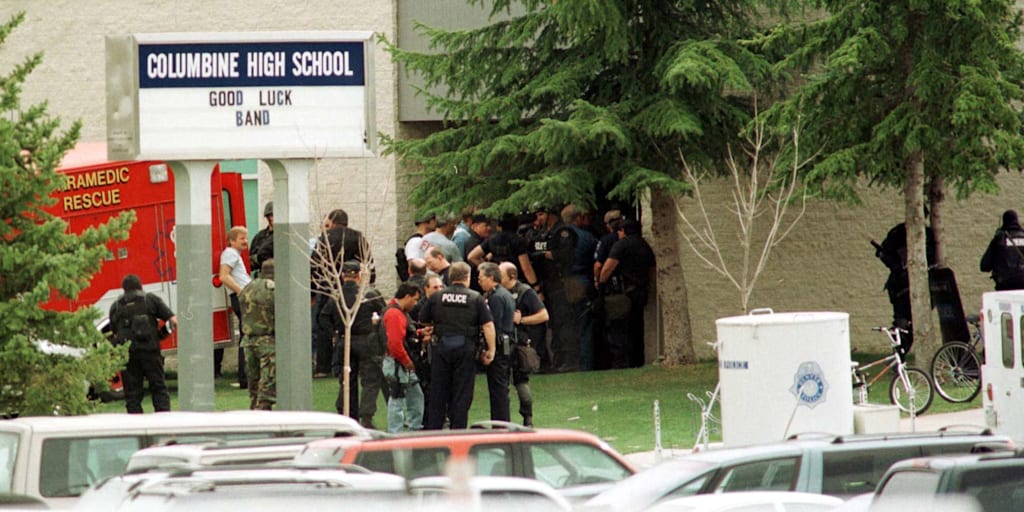
There are some stories that never really feel right to tell.
Not because they aren’t important—but because of how heavy they sit once you start digging into them. Columbine is one of those stories. It’s not just a crime. It’s a moment that reshaped how people think about safety, schools, and warning signs that, in hindsight, feel impossible to ignore.
And yet… they were ignored.
Before April 20, 1999, Columbine High School in Littleton, Colorado was just that—a school. A normal place in a quiet town with a history rooted in gold rush optimism and small-town life. Nothing about it suggested it would become one of the most infamous locations in modern American history.
But what happened there didn’t come out of nowhere.
That’s the part people still struggle with.
The Signs Were There—Everywhere
Eric Harris and Dylan Klebold didn’t just wake up one day and decide to carry out a massacre. There were signs. Not subtle ones either—loud, repeated warnings that something was deeply wrong.
Eric kept an online blog where he didn’t just vent—he documented criminal behavior. At first, it was minor vandalism. But that quickly escalated into something darker. He began posting instructions on how to build explosives. Then came the threats—explicit, targeted, and impossible to misinterpret.
One post laid it out clearly: he wanted to kill as many people as possible.
That wasn’t hidden. It was seen. It was reported.
And still, nothing happened.
Their behavior didn’t stop online. In school, both Eric and Dylan wrote about violence openly. Assignments included stories about killing classmates and essays glorifying figures like Charles Manson. These weren’t abstract themes—they were direct reflections of obsession with power, control, and destruction.
Teachers noticed. Parents were told.
But again, no real intervention followed.
Looking back, it feels almost unreal. Not because the signs were hard to spot—but because they were so obvious.
From Red Flags to Full-Blown Alarm Bells
If the writings weren’t enough, their private journals and videos made things even clearer.
They recorded what are now known as the “basement tapes”—videos detailing their thoughts, plans, and mindset. These weren’t vague or symbolic. They discussed the attack directly, referring to it as their “masterpiece.” They named targets. They outlined strategy.
At one point, Eric even wrote about hijacking a plane after the attack.
This wasn’t impulsive behavior. It was planned—methodically, over months.
They also practiced. They filmed themselves using weapons. They stockpiled guns and explosives. By the time April arrived, they had assembled an arsenal that included firearms, pipe bombs, and homemade explosives.
This wasn’t a breakdown.
It was preparation.
April 20, 1999
The attack itself unfolded with chilling precision—though not everything went according to their plan.
They planted bombs in the school cafeteria, intending to cause a massive explosion that would kill hundreds. The bombs failed. If they hadn’t, the death toll would have been far worse.
When the explosions didn’t happen, they shifted to direct violence.
The shooting began outside, catching students off guard. At first, many thought it was a prank. That hesitation cost lives.
Inside the school, chaos spread quickly. Teachers and staff scrambled to protect students. One teacher, William “Dave” Sanders, helped evacuate dozens—possibly saving around a hundred lives before he was fatally wounded.
In the library, the violence reached its peak. Over the course of just minutes, the attackers moved through the room, targeting students, taunting victims, and firing indiscriminately.
By the time it ended, 13 people were dead.
Twenty-four more were injured.
And two perpetrators had taken their own lives.
The Question Everyone Keeps Asking
After Columbine, the immediate reaction wasn’t just grief—it was confusion. People wanted a reason. Something to point to. Something to blame.
And that’s where things got messy.
Some blamed violent video games like Doom. Others pointed fingers at Marilyn Manson. Both theories gained traction in the media—but neither held up under scrutiny.
The truth is less convenient.
There wasn’t a single cause.
There were two individuals—deeply disturbed, increasingly isolated, and obsessed with violence—who acted on those impulses after months of preparation.
That’s it.
No shortcut explanation. No easy answer.
What Columbine Changed
Columbine didn’t just leave behind grief—it changed how people respond to warning signs.
Today, threats like the ones Eric made online would trigger immediate action. Schools take violent writing more seriously. Law enforcement responds differently.
Because Columbine proved something important:
Ignoring warning signs doesn’t make them go away.
It gives them time to grow.
Remembering the Right Names
There’s one final thing that matters here.
Most people can name the perpetrators. Their names are burned into public memory.
But fewer can name the victims.
And that’s backwards.
Columbine shouldn’t be remembered for the people who caused it—but for the lives it took, the families it shattered, and the lessons it forced into the open.
Because at the end of all of this, that’s what actually matters.
About the Creator
Lawrence Lease
Alaska born and bred, Washington DC is my home. I'm also a freelance writer. Love politics and history.
Enjoyed the story? Support the Creator.
Subscribe for free to receive all their stories in your feed.
Comments
There are no comments for this story
Be the first to respond and start the conversation.