Latest Stories
Most recently published stories in FYI.
Welfare is Care
Millions in Britain are going without the essentials. The purpose of a welfare system is to prevent poverty and hunger. However, poor policy choices motivated by austerity have hit minority groups the hardest, with the most vulnerable being children and disabled people.
By Rosie J. Sargent2 years ago in FYI
Discover Your Driving Style With Get Drivers Ed
Introduction What kind of driver are you? This question, though simple, can reveal deep insights into your driving habits, behaviors, and your personality behind the wheel. At Get Drivers Ed, we encourage drivers to engage in this self-reflection not just as an exercise, but as a practical approach to enhancing their driving skills and safety awareness. This blog will delve into various driving styles and discuss how understanding and adapting your driving approach can lead to a safer, more conscious driving experience.
By Get Drivers Ed2 years ago in FYI
Human Fingerprints
Every person is unique, like a fingerprint. No two minds are the same, just like no two snowflakes are alike. Since the beginning of time, scientists, forensic experts, and curious people have been fascinated by the patterns on our fingers. Fingerprints, which are nature’s unique stamp, are charming. Even though fingerprints seem simple, there are many amazing things about them. In this piece, we’ll look at some interesting facts about fingerprints backed up by science. We’ll discover the secrets behind the unique ridges that make each of us distinctive.
By Ameer Bibi2 years ago in FYI
The rainbow
The rainbow, a breathtaking arch of vibrant colors gracing the sky after a storm, has captivated humanity for millennia. It transcends a mere weather phenomenon, inspiring wonder, symbolizing hope, and holding diverse meanings across cultures. This article delves into the fascinating world of rainbows, exploring their scientific explanation, cultural significance, and artistic expression.
By Moharif Yulianto2 years ago in FYI
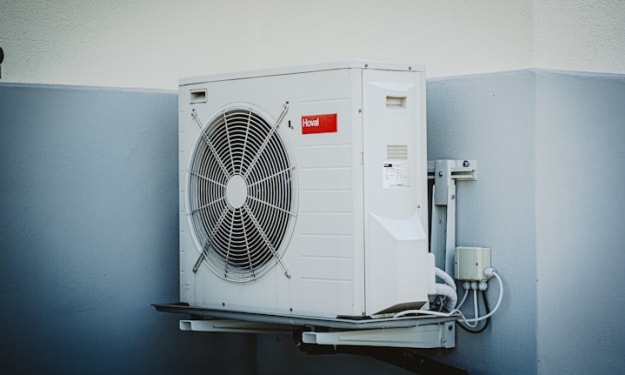
Operation of air conditioner
We sweat when the weather gets warm. As sweats cool down, our temperature drops. This is because sweats take the heat away from our skin as they evaporate. When liquid evaporates and take heat away from the surroundings, it is called Latent Heat Of Vaporization. The bigger the Latent Heat Of Vaporization, the more heat it takes away. An air conditioner uses refrigerant with large evaporative latent heat. Let’s assume a refrigerant in a hot room. The refrigerant will take away heat from its surroundings to evaporate. If we enlarge the area of contact of the refrigerant to the air, the refrigerant will take away more heat. When we blow wind from behind the refrigerant, air that lost heat becomes cooler and the a cool breeze comes out from the front. The refrigerant used in an air conditioner tends to evaporate easily and have high Latent Heat Of Vaporization which make it perfect for a cooling device. Now, to understand how an air conditioner works, let’s follow the flow of a refrigerant. First, let’s look at the general flow. This is a compressor. If we compare a refrigerant to blood, a compressor is like the heart. A compressor circulates a refrigerant and compress it with high temperature and pressure. Then, the refrigerant pressed by the compressor flows to a condenser. While evaporation is the transition of liquid to gas through heat absorption, condensation is the transition of gas to liquid when it loses heat. A condenser serves to turn refrigerant in hot gas state into liquid form by taking away its heat. The refrigerant passed through a condenser becomes liquid and flows into expansion valve. There is a section in the expansion valve where the piping gets narrow and as the refrigerant passes here, it splits up into many pieces. What we see here is similar to the principle behind water being spread from spray. As the pressure on the refrigerant drops, its temperature drops dramatically as well. The refrigerant with lowered temperature then, goes into an evaporator to steal away heat. An evaporator is literally, a device that evaporates liquid into gas. Cooled refrigerant steals away the heat in the room and evaporates. The compressor and condenser are built inside the outdoor unit of an air conditioner. The evaporator and expansion valve are built within the indoor unit of an air conditioner, which is what we normally refer to when we talk about air conditioner. Now, let’s dive deeper into the functions of each mechanical components of an air conditioner. In the evaporator, refrigerant loses heat and is evaporated as gas into the compressor. When a piston compresses the gas refrigerant, its pressure rises and so does its temperature. We use products of spray type sometimes. You might have come across insect repellent spray or butane fuel canister whose surface of the can gets cooler after use. This is because the pressure inside the product has become lower. If pressure is lowered, temperature is lowered and if pressure goes up, temperature also rises. Now, coming back to the case of an air conditioner, when gas with low pressure and temperature is pressed by piston, its pressure rises and so does its temperature. However, more air conditioners nowadays use scroll type of compressor rather than piston type. In a scroll compressor, there are 2 scrolls of which one is fixed and the other rolls constantly. As more air coming through the entrance gets inside the scroll, space becomes crowded. As there is less space now, gas becomes more compressed and is discharged from the middle of the scroll in a compressed state. The reason for using such type of a compressor is the efficiency of space utilization. This type of a compressor allows the machinery to become smaller in size and reduces noise as well as vibration. Compressed air is then sent to a condenser to be pressed into liquid. The temperature of refrigerant passed through the compressor is above 80 Celsius which is in a hot gas state. This refrigerant passes through a condenser and is cooled down slowly with chilled air from fans. When liquid evaporates, it absorbs heat and becomes gas. As it transforms into gas, its kinetic energy becomes stronger. When the gas loses heat, its kinetic energy becomes weaker and it becomes liquid. In other words, chilled gas becomes liquid. A refrigerant in gas state of high temperature loses heat as it passes through a condenser. As such, it becomes condensed and at the exit, it turns into liquid almost. Although the refrigerant has thrown off some of the heat as it passes through a condenser, it is still hot, with temperature at about 50 Celsius. The refrigerant in high temperature and high pressure liquid flows into expansion valve. The refrigerant which used to flow in large space now passes through narrow area and its pressure drops as it goes. When the pressure drops, temperature drops dramatically as well. The cool refrigerant is now sent to an evaporator. Expansion valve are connected to sensible heat storage that detects heat. Sensible heat storage is installed on the exit of an evaporator and detects temperature Inside the storage is fluid sensitive to temperature changes and as the temperature at the exit of an evaporator rises, the gas pressure rises which in turn, presses on a spring to send more refrigerant to evaporator. When the amount of refrigerant going into evaporator surges, cooling emission surges too. When the temperature at the exit of an evaporator drops, gas pressure drops and the amount of refrigerant going into evaporator in turn,drops too. Applying the above principle, an air conditioner controls the amount of refrigerant injected into an evaporator to prevent over-cooling. A refrigerant passes through the pipes of an evaporator and takes away heat in this process. As the pan underneath starts to operate, warm air in the room is sent to an evaporator and cooled air is emitted.
By Vũ Tiến Dụng2 years ago in FYI
Divine Detour: How Artemis Became an Advocate for Advanced Medicine
In what might be an unforeseen revelation to my devout followers, and with some subtle nudging from celestial AI assistants, I've ventured from the shadowy woods into the luminous laboratories of modern medicine. As a deity whose resume includes expert archery and a staunch defense of the natural world, it may seem rather peculiar that I now pen articles on something as complex and contemporary as CAR T-cell therapy. Yet, here lies my tale—a quirky spin on my age-old passions, revealing how I came to champion this groundbreaking cancer treatment.
By ScienceStyled2 years ago in FYI
Exploring Self-Driving Cars: Safety & Efficiency Unlocked
In an era where technology continuously reshapes our everyday lives, the advent of self-driving cars represents a significant leap forward. These autonomous vehicles, designed to transport people and goods without human intervention, promise to revolutionize the way we think about transportation. At Get Drivers Ed, while we focus on traditional drivers ed, we also recognize the importance of understanding these technological advancements. This blog will explore the purpose of self-driving cars, their potential impacts on society, and how they coexist with the current state of driver education.
By Get Drivers Ed2 years ago in FYI
Rise of the Machines: Known As Drones
In this article, we delve into the fascinating world of drones, uncovering 10 intriguing facts that shed light on their history, technology, and impact on society. Whether you're a drone enthusiast or just curious about these aerial marvels, prepare to be amazed as we unveil the hidden truths behind these buzzing machines. 1. Drones Aren't Just for the Sky: Contrary to popular belief, drones aren't limited to flying. Some models are designed for underwater exploration, enabling researchers to study marine life and underwater ecosystems with unprecedented precision. 2. The First Drone Dates Back to World War I: While drones may seem like a modern invention, the concept actually dates back over a century. The first documented use of a drone occurred during World War I when the U.S. military developed the Kettering Bug, an unmanned aerial vehicle used for reconnaissance missions. 3. Drones Can Surely Save Lives: In addition to their military applications, drones play a vital role in search and rescue operations. Equipped with thermal imaging cameras and other advanced sensors, drones can quickly locate missing persons in remote or hazardous areas, increasing the chances of a successful rescue. 4. The Smallest Drone on Record Can Fit in the Palm of Your Hand: Miniature drones, also known as micro drones, are becoming increasingly popular among hobbyists and professionals alike. Some models are small enough to fit in the palm of your hand, yet they're capable of capturing high-quality aerial footage and performing complex maneuvers.
By Mario Barnes2 years ago in FYI