Latest Stories
Most recently published stories in FYI.
Eco-Friendly Warehousing: Why Used Pallet Racks Are the Sustainable Choice
Supply chain sustainability is more than just a buzzword. Companies are looking closely at their supply chains to find more environmentally friendly solutions. Whether you want to save money by lowering energy consumption, reducing reliance on new materials and resources, or supporting the circular economy, sustainability is front and center. This includes everything from energy efficiency to storage solutions like used pallet racking.
By Shane Debois2 years ago in FYI
Georgia Adult Drivers Ed: Driving Success Simplified. AI-Generated.
Introduction: Navigating Georgia’s Roads with Confidence Georgia’s roads offer a unique blend of scenic beauty and bustling cityscapes. Whether you’re cruising through the lively streets of Atlanta or exploring the serene backroads, driving in Georgia requires knowledge, skill, and confidence. For adults looking to earn their license or brush up on their driving skills, Georgia Adult Drivers Ed is an invaluable resource.
By Get Drivers Ed2 years ago in FYI
Polkadot Chocolate Bars: A Sweet Treat with a Magical Twist
When it comes to indulgent treats, chocolate often takes the crown. But have you ever wondered what could make this classic favorite even more unique and exciting? Enter Polkadot Chocolate Bars – a one-of-a-kind fusion of creamy Belgian chocolate and a hint of the extraordinary, thanks to their mushroom-infused formula. Whether you're a chocolate enthusiast or a curious foodie, Polkadot Chocolate Bars are quickly becoming the talk of the town. Let’s explore what makes these delectable bars so special and why you should consider trying one today.
By Oneup Mushroom Bar Shop2 years ago in FYI
Eyes That Heal: How Moving Your Gaze Can Untangle Trauma
Could the way you move your eyes mend psychological wounds? Integration of Ocular Movements (IMO), a rising star in trauma therapy, might seem simple at first glance, but its impact is profound. By guiding the eyes through precise movements, therapists help patients reprocess trauma, reshape their neural wiring, and rediscover inner peace. Let’s dive into how this technique works and why it’s transforming mental health care.
By Alain SUPPINI2 years ago in FYI
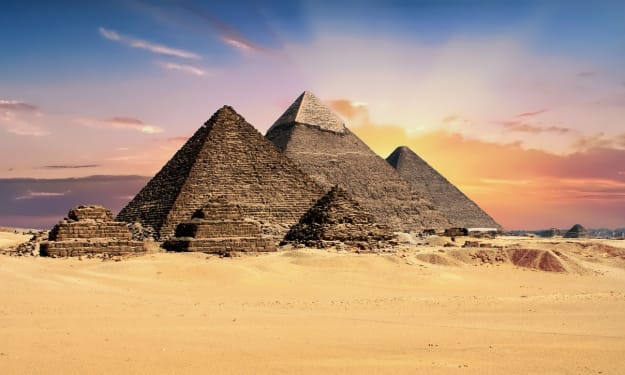
Unraveling the Mystery of the World's First Civilization
For decades, researchers have debated which civilization can lay claim to being the world’s first. The long-held belief was that the Sumerians of Mesopotamia, known for their early development of writing, were the earliest civilization. However, recent discoveries have challenged this narrative, suggesting that Egyptian and Indus Valley cultures may have an equally strong claim to this title. The Egyptian Discovery: A New Contender One of the most intriguing findings comes from Yale researchers, who recently unearthed a panel of four signs believed to have been written around 3,250 BCE in Egypt. This discovery suggests that the Egyptians may have developed their writing system at around the same time as, or even earlier than, the Sumerians. Additionally, another significant find in the region includes a rock drawing depicting a pregnant elephant that dates as far back as 4,000 BCE. These artifacts hint at an advanced and expressive culture that predates many long-held assumptions about the timeline of human civilization. The Overlooked Indus Valley Civilization While the focus often falls on Mesopotamia and Egypt, the Indus Valley Civilization, which flourished around the areas of modern-day Pakistan and India, is also a strong contender for the title of the oldest civilization. This advanced society thrived around 3,000 BCE, with evidence suggesting they were already trading with Mesopotamians as early as 3,500 BCE. But how is this possible? Could the Indus Valley have developed such advanced urban systems and trade networks so early? The answer lies in the agricultural settlements of the region, which began to grow into larger urban centers like Harappa and Mohenjo-daro. These cities were incredibly sophisticated for their time, featuring baked-brick homes laid out in grid patterns—a design that wouldn’t become standard in other civilizations for centuries. One of the most impressive aspects of these ancient cities was their drainage and sewage systems. Most homes were connected to a network of drains that used gravity to carry waste out of the city. This level of infrastructure rivaled that of later civilizations and underscores the ingenuity of the Indus Valley people. A Religious but Practical Society Religion played a central role in the Indus Valley Civilization, with Hindu beliefs deeply embedded in their practices. However, unlike Mesopotamian or Egyptian cities, their urban centers were not dominated by grand spiritual structures. Mohenjo-daro, for instance, had a notable public bath that appeared to serve as the most important building in the city. This structure, known as the "Great Bath," is believed to have been used for religious or ritualistic purposes, reflecting the culture's emphasis on cleanliness and spiritual purification. The origins of Hinduism in the region also bring up fascinating questions about the timeline of this civilization. The Upanishads, a collection of texts central to Hindu philosophy, are thought to contain knowledge that dates back to well before the civilization’s peak. However, Hindu traditions involved passing down this wisdom orally for generations, delaying the emergence of a written record. While some historians suggest the Indus Valley people may date back as far as 5,000 BCE, this remains speculative due to a lack of concrete evidence. Comparing the Contenders Mesopotamia, Egypt, and the Indus Valley represent three of the most advanced civilizations of the ancient world, but determining which came first is no easy task. The Sumerians of Mesopotamia are often credited with developing the earliest known writing system—cuneiform—around 3,100 BCE. Their cities, such as Uruk and Ur, featured monumental architecture, complex irrigation systems, and a well-organized social structure. The Egyptians, on the other hand, were developing their own writing system, hieroglyphs, around the same time. Recent discoveries like the 3,250 BCE panel and the 4,000 BCE rock drawing indicate that Egyptian culture may have been thriving earlier than previously believed. Their society was highly centralized, with the construction of massive monuments like the pyramids reflecting their advanced engineering and administrative capabilities. Meanwhile, the Indus Valley Civilization stands out for its urban planning and advanced infrastructure. Its cities lacked the grand temples and ziggurats seen in Mesopotamia and Egypt, but they compensated with practical innovations like the Great Bath and an efficient sewage system. Their trade networks also highlight their connection to other civilizations, making them a pivotal player in the ancient world. Why the Mystery Remains Despite the wealth of evidence from all three civilizations, historians remain divided on which was truly the first. One reason is the lack of concrete, written records for certain periods. For instance, while the Sumerians left behind extensive cuneiform tablets, much of the Indus Valley script remains undeciphered, and the oral tradition of the Upanishads delays our understanding of their early history. Another challenge is the difficulty of dating ancient artifacts with absolute precision. While carbon dating and other methods provide estimates, they cannot definitively establish the timeline of a civilization’s rise and fall. The Future of Discovery The debate over the world’s first civilization may never be resolved definitively, but it is far from over. As archaeologists continue to uncover new evidence, our understanding of ancient history is constantly evolving. Who knows what future discoveries might reveal? What remains clear is that these ancient societies, whether Sumerian, Egyptian, or Indus Valley, were far more advanced than previously imagined. Their innovations in writing, architecture, and urban planning laid the foundation for human civilization as we know it today. Rather than focusing on which came first, perhaps the more important takeaway is the shared ingenuity and creativity of humanity’s earliest cultures.
By Lisa Ann Bastiaan2 years ago in FYI
Why Working with a Certified Financial Advisor Makes Financial Sense?
*"It's not about timing the market, but time in the market"* - Warren Buffett In today's complex financial landscape, navigating investment decisions can feel like trying to sail through a storm without a compass. Recent data from the Financial Conduct Authority shows that 27% of UK adults have low financial resilience, highlighting the critical need for professional guidance in financial planning. As we venture into 2025, the value of working with a certified financial advisor has never been more apparent.
By XII Capital2 years ago in FYI
Defensive Driving Techniques to Stay Ahead of Danger. AI-Generated.
Introduction: The Importance of Defensive Driving Driving isn’t just about reaching your destination; it’s about ensuring you, your passengers, and other road users remain safe along the way. In today’s fast-paced world, with distractions and unpredictable drivers on the road, adopting defensive driving techniques is more important than ever.
By Get Drivers Ed2 years ago in FYI