Latest Stories
Most recently published stories in FYI.
Top 5 Damp Survey Mistakes Homeowners Should Avoid. AI-Generated.
I still remember the smell, earthy, slightly sweet, and impossible to ignore. It crept in slowly after weeks of rain, lingering in my hallway despite open windows and daily scrubbing. I thought it was just “old house smell.” I was wrong.
By Ananya Singhabout a year ago in FYI
New Paradigms in Ketamine Treatment for Mental Wellness. AI-Generated.
I still remember the day I sat across from a friend of mine, let’s call her Megan, as she quietly admitted something most people don’t dare to say out loud: “I don’t feel like I exist in my own life anymore.”
By Adrienne D. Mullinsabout a year ago in FYI
The Unexpected Health Benefits of Training in Brazilian Jiu Jitsu. AI-Generated.
I’ll be honest, when I first stepped onto the mat at my local Jiu Jitsu gym, I wasn’t chasing a black belt. I wasn’t trying to learn how to fight or compete. I just needed something. A change. Something to pull me out of a sluggish routine that revolved around screens, stress, and the same workouts that no longer made me feel alive.
By Angela R. Taylorabout a year ago in FYI
10 Questions to Ask Before Hiring a WordPress Developer. AI-Generated.
I remember the first time I hired a WordPress developer. I was launching a small online boutique, juggling a million things at once, and had just enough technical knowledge to be dangerous. I figured I’d hand over the reins, give them my Pinterest mood board, and voilàm, agic would happen.
By Christopher Hudsonabout a year ago in FYI
How Remote Assistant Boosts Productivity for CEOs. AI-Generated.
It was 2 a.m., and I was still checking emails on my phone in bed. Somewhere between “urgent pitch deck update” and “follow-up with investors,” I realized something had to give. Running a company was already enough, trying to be my own assistant was burning me out. I needed help. And not just any help, I needed a remote assistant.
By Anjelina Jonesabout a year ago in FYI
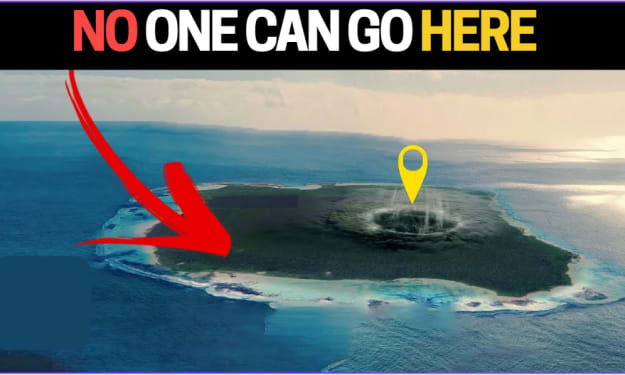
Why no one can visit this Dangerous Island ?
The National Geographic team was preparing to shoot a documentary for the first time on a remote island from where no one had ever returned alive. As they approached the shore, strange, unclothed figures emerged from the jungle and launched a rain of arrows at the National Geographic ship. The director’s leg was injured in the attack, and the crew was forced to retreat in panic. But what is this island, and why, despite all our advanced technology, have we humans never been able to truly reach it?
By Chronicle of Powerabout a year ago in FYI
Extremist Thinking and Its Negative Effects
Extremist Thinking and Its Negative Effects One day, Iblees (Satan) said to his companion, “Come, let me show you a spectacle.” He pointed to a small town and said, “It has been decreed that this town must be destroyed today.” In the marketplace, a sweet-maker had placed a large cauldron on a stove, in which sugar syrup was boiling. Iblees dipped his finger into the syrup and smeared a bit of it onto a wall. Before long, flies arrived. Seeing the flies, a lizard took position to catch them. A cat, sitting nearby, pounced on the lizard. Just then, a soldier passed by with his hunting dog. The dog lunged at the cat. The cat, startled, lost balance and fell into the cauldron of syrup. Angered by the disruption, the sweet-maker threw a heavy blow at the dog, killing it instantly. The soldier, furious at his dog's death, attacked the sweet-maker and left him badly injured. The locals, seeing the sweet-maker being beaten, attacked the soldier. When news of this reached the army, the soldiers, driven by revenge, launched a full assault on the town. Within a few hours, the entire town was reduced to rubble—all because of a single act of extremism. This fictional story reflects the reality of our current society. We live in a world where narrow-mindedness, prejudice, and intolerance are on the rise. People are unwilling to give space to others. Even minor disagreements can spark lifelong feuds. This rigid mindset is growing day by day. The reason is that many of us view people and situations only in black and white—right or wrong—with no room for in-between. But people are complex. Every person goes through different circumstances that shape their behavior. If someone reacts angrily in a certain moment, there may be a reason behind it. It doesn’t mean they are always rude or harsh. They could be kind and gentle but temporarily overwhelmed by a particular situation. Often, extremist thinking begins at home, when parents teach their children that certain relatives are "not good." In the neighborhood, we hear people say, “That family isn’t good.” In institutions, one group says another party or organization isn’t good—without explaining why. These vague judgments are passed down from one generation to the next, without question. Such extremism grows to the point that we admire even the flaws of someone we love, but view even the beauty of someone we dislike as dull or dark. We see this when families reject marriage proposals simply because the suitor is from a different clan. For example, a Syed family may reject a wonderful proposal just because the other party isn't Syed. This shows how we reduce people and choices to just black or white, while life is mostly lived in the grey area—a space where clear judgments cannot always be made. The grey area means not everything is absolutely right or wrong. We need to allow space for different perspectives. Life is never static. It’s complicated and filled with highs and lows. Sometimes it’s dark, sometimes dazzlingly bright. With time, people evolve. What once seemed wrong may now seem right. Different people, cultures, and experiences shape our views. A custom praised in one culture may be frowned upon in another. This diversity is the beauty of the universe—one that the Creator Himself has embedded in nature. If He wished, He could have created us all the same. But instead, the world holds seven billion unique individuals. This means we must learn to tolerate, accept, and respect differences, rather than jumping to conclusions. Sometimes, people become fanatical followers of their favorite personalities. This blind devotion can be very dangerous. When people stop thinking critically and follow blindly, they lose their freedom of thought. They consider everything their role model does as right—even when it’s wrong. They base their life decisions on that person’s opinions and start to hate everyone who disagrees. This blind imitation stunts personal growth. The person becomes closed to new ideas, assuming that only their leader's views are correct. Their life becomes hollow, lacking purpose. The leader, in turn, feels powerful and may exploit followers for personal gain, filling their minds with negativity. This leads to widespread division and chaos in society. Such followers often join groups where no dissent is allowed. Only those who agree blindly are accepted. Those who think differently are rejected or labeled enemies. There are also people who carry deep hatred for others—another form of extremism. This, too, brings great harm. Extreme hatred shuts down the mind. It makes a person unwilling to listen to others, even if they are right. Hatred breeds false assumptions, and the person refuses to see any good in the one they dislike. They isolate themselves, while most of society prefers love and peace. Such hatred brings mental stress, anger, and anxiety. It damages mental health, weakens both the individual and the community, and increases the chances of conflict. People start making rash decisions without proof, harming even innocent lives. Worst of all, hatred kills constructive dialogue. When ideas cannot be shared, solutions cannot be found. Now let us look at the general harms of extremist thinking: A person who thinks in absolutes faces many challenges. Such people lack flexibility, making it hard to adapt to new places or people. They always want to impose their ideas. They are unwilling to compromise or consider other viewpoints, preventing harmony and progress. They also struggle to build teams or connect with others, believing only their view is right. Their divisive words break societies apart. They promote an “us vs. them” mindset, which fuels sectarianism and conflict. Extremists fear new knowledge or experiences because they feel threatened by ideas that challenge them. They fail to realize that embracing change could help them grow and improve. Looking at everything through an extreme lens is mentally exhausting. It can lead to stress, depression, rage, and hopelessness. In the end, such a person becomes ineffective. They fail to solve problems, spread hatred instead of peace, and contribute little to society. If you want a peaceful, successful, and meaningful life, you must cleanse your mind of extremism. Don’t reduce life to just “right or wrong.” Embrace the grey area. This will develop flexibility—a vital trait that helps you navigate all kinds of challenges. You’ll learn to accept others, make room for different ideas, and encourage growth in yourself and others. This attitude opens the door to endless opportunities. The Sufi or wanderer is always traveling. He meets people of all kinds, visits many cultures and regions. This broadens his vision and deepens his insight, bringing him closer to the Creator. His gentle and flexible attitude draws people in, and through him, they are guided to God. A person who lives in the grey area has countless opportunities to grow. Such people accept others, stay humble, and value different opinions. They live in peace. Imagine needing to enter a room, but to reach it, you must first pass through a ten-foot door, then a four-foot door, and finally, crawl through a tunnel. You can only reach the room if you bend for the small door and lie low for the tunnel. Prayer (salah) teaches us the same principle. First we stand, then bow, then prostrate. The real purpose of prayer is to conquer the ego. It teaches us that in life, we must know when to stand, when to bend, and when to lower ourselves completely. Stand firm for truth, admit your faults, and seek forgiveness when needed. Life isn’t confined or limited. It’s a vast field. To succeed, we must broaden our minds, reject extremism, and develop flexibility within ourselves. Only then can we become useful and impactful human beings. Otherwise, we’ll live our whole lives as nothing more than frogs in a well.
By Ikram Ullahabout a year ago in FYI
How KFC Was Born After 65: The Real Story Behind Colonel Sanders
The man seen on the logo of the world’s most famous fast-food chain, KFC, is named Colonel Harland Sanders. He worked hard his entire life and faced many hardships. But what happened at the age of 65 that changed his destiny? What struggles did he go through on his journey to success, and why did his own company, KFC Corporation, file a court case against him?
By Chronicle of Powerabout a year ago in FYI
The Edge of Despair: A Leap of Faith
The news article caught my attention like a whisper in the wind. A 19-year-old university student, Sneha, from Delhi University, had left behind a trail of messages and a note, before taking a taxi to the Yamuna river bridge at dawn. She stood there, watching the sunrise, a new day unfolding before her, unaware that it would be her last. The taxi driver, oblivious to her intentions, dropped her off, concerned only with collecting his fare. Passersby noticed a lone figure, lost in thought, but none suspected the tragedy that was about to unfold. As Sneha gazed out at the river, she might have reflected on her life, her loved ones, and the pain she was escaping. The anguish of her family, friends, and the brutal reality of her own suffering weighed heavily on her mind. Perhaps, in those final moments, she thought of her mother's smile, her father's struggles, and the dreams she had yet to fulfill. The pain of living had become unbearable, and death seemed like the only solace. The incident occurred on July 7th, and her body was recovered only after seven days. Her friends revealed that she had been withdrawing from social interactions, finding solace in solitude and melancholy. Sneha had come to Delhi University with big dreams, pursuing a degree in mathematics. The city, with its rich history and cultural heritage, had been her new home. The story resonated with me, reminding me of Paulo Coelho's novel, "Veronika Decides to Die". The protagonist, like Sneha, had chosen to end her life, overwhelmed by the pressures of living. Sneha's father, a 53-year-old retired army man, battling serious health issues, had traveled far, standing on the bridge, asking every passerby if they had seen his daughter. The image of a father, broken and helpless, searching for his child, haunts me still. As I reflect on Sneha's story, I realize the importance of human connection and empathy. Children struggling with depression need their parents' love, support, and understanding. A simple gesture, a reassuring smile, or a gentle word can make a world of difference. Parents must strive to create a safe, nurturing environment, where their children feel comfortable sharing their fears and anxieties. In a world that often values achievement over well-being, we must recognize the importance of mental health. Sneha's story is a poignant reminder of the struggles many face in silence. Let us strive to create a society that encourages openness, empathy, and understanding, where individuals feel valued and supported. As I conclude this story, I am left with more questions than answers. What drove Sneha to take such a drastic step? Was it the pressure of academic expectations, or the lack of support systems? Whatever the reason, one thing is clear: we must do more to support those struggling with mental health issues. Let Sneha's story be a wake-up call for all of us. Let us reach out to those around us, offer a listening ear, and a helping hand. For in the end, it is not the grades or achievements that matter, but the love and support we offer each other.
By Muhammad Usamaabout a year ago in FYI
Mystery of Time Traveler who sent his Photo From Future
This story isn’t too old. Back in 2006, in Ukraine’s capital, a young man was found in a confused state. He was wearing old-fashioned clothes and had an antique camera dangling from his neck. People initially thought he was mentally unstable, but no one knew that he was about to become part of a time travel mystery.
By Chronicle of Powerabout a year ago in FYI
How Russia can become SUPER POWER again
Russia possesses secret natural advantages that could enable it to regain its status as a superpower. On one hand, a large part of Russia is covered in snow, and on the other, NATO allies have effectively surrounded it.
By Chronicle of Powerabout a year ago in FYI
How Ayurveda Supports Longevity and Healthy Aging
Today the pursuit of longevity has become increasingly scientific and complex, and ancient wisdom offers profound insights that remain remarkably relevant. Ayurveda, the traditional Indian system of medicine dating back over 5,000 years, presents a holistic approach to healthy aging that addresses not just the physical body, but the mind and spirit as well. As interest in natural wellness continues to grow globally, many are turning to comprehensive educational programs, including ayurveda therapy course in Sri Lanka, to understand these time-tested principles that promise not just a longer life, but a more vibrant and fulfilling one.
By Anna Paquinabout a year ago in FYI