
From Can't-Miss to Cast Aside: How Kyler Murray Lost Arizona — and Then Minnesota in Eight Days
From Number One Pick to Flame Out

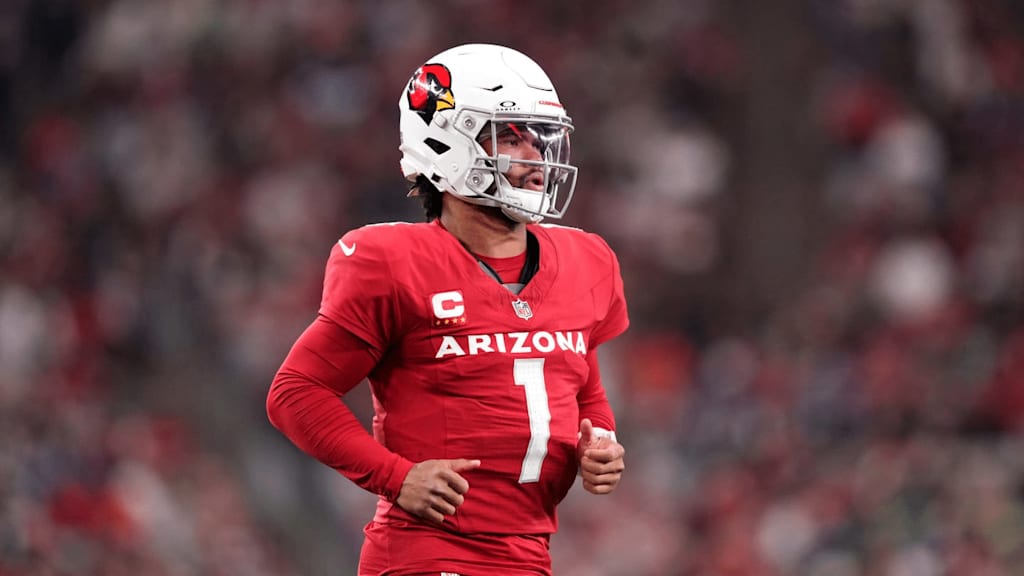
I still remember the first time I watched Kyler Murray and thought, this is different.
It wasn't just the speed. Plenty of quarterbacks are fast. It was the way the game seemed to slow down for him and speed up for everyone else at the same time. He would drift out of a collapsing pocket that should have swallowed him, flick his wrist, and suddenly a receiver was twenty yards downfield with nobody near him. He made the impossible look casual. That is a rare gift in football. It is also a dangerous one, because when a player can escape trouble that easily, people start to wonder whether he ever learned how to stay in it.
That question has followed Murray for seven years. And in November 2026, in Minnesota, it finally caught up with him in a way that felt less like a slump and more like a verdict.
This is not a story about one bad game. It is a story about a career that peaked early, stalled in the middle, and then, in a little over a week, lost its last good excuse.
The Can't-Miss Kid
Murray was never supposed to be a project. He was supposed to be the answer.
At Allen High School in Texas, he went 42-0 as a starter and won three straight state championships. After a stop at Texas A&M, he transferred to Oklahoma and in 2018 won the Heisman Trophy, throwing for 4,361 yards and 42 touchdowns and running for another 1,001 yards and 12 scores.
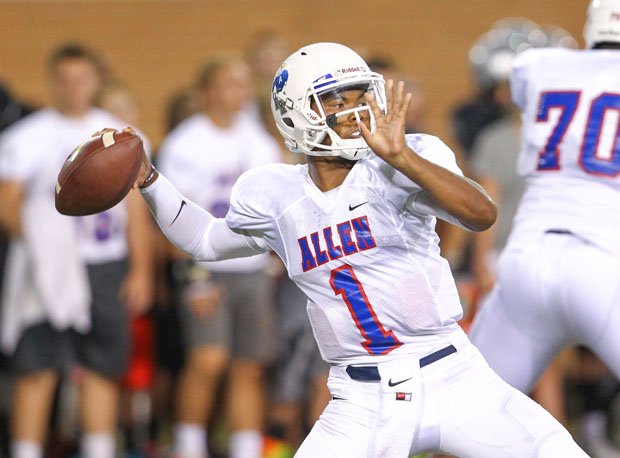
Baseball wanted him too. The Oakland Athletics took him ninth overall in the 2018 MLB Draft and gave him a $4.6 million signing bonus. For a while, it genuinely looked like he might choose the diamond. He chose football instead, and the Arizona Cardinals took him first overall in 2019 — one year after they had taken Josh Rosen tenth overall. They were willing to admit a mistake after one season to get him.
He rewarded them immediately. As a rookie he threw for 3,722 yards and 20 touchdowns, ran for 544 yards and four more, and won AP Offensive Rookie of the Year. The Cardinals went just 5-10-1, but the talent was obvious. You could see the future in his legs and his arm, even when the roster around him couldn't keep up.
The Peak Was Real
If you only remember one version of Kyler Murray, remember the 2020 and 2021 version. That was the player Arizona paid for.
In 2020 he made his first Pro Bowl with 3,971 passing yards, 26 passing touchdowns, 819 rushing yards and 11 rushing touchdowns. On November 15, 2020, against Buffalo, he gave us the play that will follow him forever: the Hail Murray. Down by four with 11 seconds left, Murray scrambled left, threw across his body into the end zone, and DeAndre Hopkins came down with it between three Bills defenders. Arizona won 32-30.
The next season he was even better, for a while. Arizona started 7-0 in 2021. Through those first seven games Murray completed 73.5 percent of his passes for 2,002 yards, 17 touchdowns and five interceptions, with a 116.8 passer rating. He was not just in the MVP conversation. For a few weeks, he was leading it.
Then came the ankle injury in the Week 8 loss to Green Bay. He missed three games and was never quite the same after he returned. Arizona finished 11-6 and made the playoffs for the first time since 2015, but the ending was ugly: a 34-11 wild-card loss to the Los Angeles Rams in which Murray went 19-of-34 for 137 yards, no touchdowns and two interceptions. He still made a second straight Pro Bowl, finishing with 3,787 yards, 24 touchdowns and 10 interceptions, but the feeling had shifted. The question was no longer whether he could be great. It was whether he could stay great when things got hard.
The Contract That Changed Everything
Arizona answered that question with money — and with a clause that would haunt both sides.
In July 2022, the Cardinals gave Murray a five-year, $230.5 million extension, with $160 million guaranteed. It came with an addendum no one had seen before: Murray was required to complete four hours of independent study — film and playbook work outside normal team activities — every week during the season. If he didn't, he could be deemed in default.
The reaction was immediate and brutal. Why would a team need to put homework in writing for a quarterback it had just paid $46 million a year? Murray called the discussion disrespectful. The Cardinals removed the clause within days, amid the backlash, but the damage was done. The clause had said out loud what a lot of people were only whispering: Arizona wasn't sure Murray prepared like a franchise quarterback.
I want to be careful here, because that is a perception, not a proven fact. No one outside that building can tell you how many hours Murray spent in the film room. What I can tell you is that perception became the story, and the story never really left him. Every late-season fade, every flat game after that, got filtered through it.
And then, that December, the injury made it worse. On December 12, 2022, against New England, Murray tore the ACL in his left knee on a non-contact play. His season was over after 11 games. Arizona finished 4-13. Head coach Kliff Kingsbury, the man who had recruited Murray in college and championed him in Arizona, was fired. The extension had barely begun, and already the marriage looked strained.
The Gannon Years: Healthy, But Not the Same
Jonathan Gannon arrived in 2023 with a new general manager, Monti Ossenfort, and a very public message: they believed in Murray. He returned on November 12, 2023, against Atlanta, and started the final eight games of a 4-13 season.
The real test was 2024, his first full season back. To his credit, Murray was solid. He played all 17 games, completed 68.8 percent of his passes for 3,851 yards, 21 touchdowns and 11 interceptions, and added 572 rushing yards and five touchdowns. Arizona finished 8-9, its best record under Gannon, with 6,090 total yards of offense.
But solid is not what Arizona paid for. The Cardinals didn't make the playoffs. The offense was efficient but rarely explosive. Murray threw for more than two touchdowns only twice all season, and topped 300 yards only twice. The flashes were still there, but the feeling that he would take over a game — the feeling from 2020 and 2021 — was fading.
By the end of 2024, the numbers told a quieter story: in the four years since he signed that extension, Murray had missed 20 games to injury and gone 16-26 as a starter, after starting his career 22-23-1. He had made more than $113 million since 2022. The Cardinals were paying for a peak they weren't getting back.
The Last Five Games in Arizona
If 2024 was a disappointment, 2025 was the breakup.
Arizona started 2-0. Then it lost three straight, including a collapse against Tennessee in Week 5 in which the Cardinals blew a 15-point fourth-quarter lead. Murray left that game briefly with a foot injury, came back, and never played again for Arizona.
He suffered a mid-foot sprain in that Titans loss. He missed the next two games. When he seemed close to returning to full practice, he was downgraded again. Arizona put him on injured reserve. On December 5, Gannon announced he would not return that season.
In the meantime, Jacoby Brissett took over and played better than Murray had. Brissett started 12 games, threw for 3,366 yards, 23 touchdowns and eight interceptions, and set an NFL record with 47 completions in a Week 11 loss to San Francisco. The Cardinals' receivers — Trey McBride, Marvin Harrison Jr., Michael Wilson — all posted season highs after Murray went out. That is not a small detail. It fed the same question from 2022: was the problem the roster, or was it the quarterback?
Murray finished 2025 with 962 passing yards, six touchdowns and three interceptions in five games, completing 68.3 percent of his passes, with 173 rushing yards and a touchdown. It was the first time in seven seasons he failed to reach 1,000 passing yards. Arizona finished 3-14 and missed the playoffs for a fourth straight year.
In January 2026, Arizona fired Gannon after a 15-36 record in three seasons. In March, the Cardinals released Murray. He left with a 38-48-1 record in 87 starts in Arizona, 20,460 passing yards, 121 touchdown passes and 60 interceptions, and $36.8 million still guaranteed to him for 2026 — money Arizona owed him whether he played or not.
That guaranteed money is why his next contract was so cheap. And that cheap contract is why Minnesota took the gamble.
The Minnesota Gamble
On March 12, 2026, the Vikings signed Murray to a one-year, $1.3 million deal. It was a prove-it contract in the truest sense: Arizona was still paying him, Minnesota was getting a former No. 1 pick for backup money, and Murray was getting a fresh start in a place that desperately needed a quarterback.
Minnesota had spent the offseason looking for competition for J.J. McCarthy, its 2024 first-round pick, after a difficult first season as the starter. Murray won the job. McCarthy fell to third on the depth chart, and on September 28 the Vikings traded him to the New York Giants for a 2027 fifth-round pick.
It started well enough, and then it unravelled in the same pattern Arizona fans knew too well. Murray suffered a concussion early in the season opener, a win over Green Bay, and Carson Wentz had to finish that game and start Week 2 against Chicago. Murray cleared protocol, returned in Week 3 against Tampa Bay, and stayed in the lineup through Week 8. In six starts he completed 100-of-154 passes for 1,022 yards, five touchdowns and three interceptions. The Vikings went 5-1 in his starts. On the surface, that looks like success.
Underneath, it wasn't. Murray was sacked 15 times on 154 pass attempts — an 8.9 percent sack rate, far higher than the 3.4 percent rate Kirk Cousins had posted in Las Vegas. He struggled to connect with Justin Jefferson and to pick up Kevin O'Connell's timing-based offense. O'Connell himself said it plainly: "We really learned that 11 snaps into the season it was less than ideal."
Brett Hundley, who backed up Murray as a rookie in Arizona in 2019, put it more directly in November: Minnesota's timing offense has not been a natural fit for Murray's skill set. Murray has always been at his best when a play breaks down and he can create. O'Connell's offense asks the quarterback to be on time, in rhythm, and in structure. Those are different skills, and Murray has never fully mastered the second set.
The Vikings were winning, but the offense ranked 29th in yards per game, 31st in passing and 27th in points. The defense was carrying them. And when Murray got hurt again, there was no patience left to wait for the fit to develop.
Eight Days
This is the part of the story that still stuns me, because of how fast it happened.
On Sunday, November 1, Minnesota lost 19-15 to Detroit — its first loss of the season. Murray felt tightness in his hamstring in the fourth quarter and stayed in the game, finishing 17-of-29 for 210 yards, a touchdown and an interception. Afterward, O'Connell called it a sore hamstring. It turned out to be a Grade 2 strain, week to week.
Murray missed Monday Night Football on November 9 against Buffalo. Wentz started in his place and was disastrous: 8-of-25 for 81 yards, no touchdowns and two interceptions. The Vikings lost, and the quarterback problem they thought they had solved in March was suddenly the only story in Minnesota again.
The next day, November 10, at the trade deadline, they solved it the only way they could: they brought back the past. Minnesota traded a 2027 third-round pick to the Las Vegas Raiders for Kirk Cousins, 38 years old, the quarterback they had let leave after the 2023 season. Cousins had started all nine games for the Raiders, completing 202-of-315 passes for 2,340 yards, 20 touchdowns and eight interceptions. He knew O'Connell's system, he knew Jefferson, and he gave the Vikings a chance to win now.
That is what makes this so brutal for Murray. He wasn't benched for a rookie. He wasn't benched because the team was tanking. He was replaced, while injured, by a 38-year-old the franchise had already moved on from once — because in the days from the Detroit injury to the deadline deal, Minnesota decided it could not wait for him to get healthy and figure it out.
ESPN's Jeremy Fowler put it bluntly on November 12: Murray "is injured and essentially soft-benched" behind Cousins. The injury is real. The benching is also real. They can both be true at once.
By November 14, Tom Pelissero was reporting that the Vikings were targeting Week 12, November 29 against Atlanta, for Murray's return. He would come back, if he comes back, as a backup on a roster that now carries four quarterbacks. Cousins had already been confirmed as the starter for Week 10 against Green Bay, and by the time the Vikings prepared to face San Francisco, they were 7-2 with Cousins at the controls.
Where Does He Belong Now?
So where does Kyler Murray belong? I don't think anyone knows, and that is the saddest part of this story.
He is 29 years old. He is still in his physical prime. He has thrown for more than 20,000 yards in his career, with 121 touchdowns and 32 rushing touchdowns. He has two Pro Bowls, a Rookie of the Year award and a Heisman. He has also missed 30 games to injury, been released by the only NFL team he had ever known, and been replaced in a matter of days by a quarterback six years older than him.
The baseball talk will keep coming up because it's the easiest what-if in sports. The Athletics drafted him. He could have been a center fielder. But he hasn't played organized baseball since Oklahoma, and choosing football in 2019 was the right call at the time. You don't undo seven years in the NFL with a nostalgia trip. If he goes back to baseball, it will be because football is done with him, not because baseball was the plan all along.
The more honest future is smaller and harder: backup, bridge, spot starter. A team with a good offensive line and a creative play-caller could still use what he does best — extend plays, punish a defense that loses containment, win a game you have no business winning. What he has not shown, in Arizona or in Minnesota, is that he can run a timing offense, stay healthy for 17 games, and carry a franchise for a season. At some point, the league stops paying for what a player could be and starts paying for what he is.
Murray's career is not over. But the version of it where he is the can't-miss kid, the MVP candidate, the $230 million franchise quarterback — that version is over. It ended in Arizona in March, when the Cardinals decided to pay him $36.8 million to go away. It ended again in Minnesota in November, when the Vikings decided to trade a third-round pick to bring back a 38-year-old rather than wait for him to heal.
I keep coming back to that Hail Murray throw. Not because it was lucky — it wasn't, Hopkins made a spectacular play — but because of what it promised. It promised a quarterback who could win a game no one else could win. For a few years, he kept that promise. Then the injuries came, the contract came, the questions came, and the promise got quieter and quieter until, in Minnesota, you could barely hear it at all.
If Murray gets another chance, it won't be as the future. It will be as a reclamation, on someone else's terms, for a fraction of what he once made. The talent that made him the first pick is still in there somewhere. The question now is whether any team still believes it is worth waiting for — because the last two teams that did, Arizona and Minnesota, both decided, in their own way, that it wasn't.
About the Creator
Lawrence Lease
Alaska born and bred, Washington DC is my home. I'm also a freelance writer. Love politics and history.
Enjoyed the story? Support the Creator.
Subscribe for free to receive all their stories in your feed.
Comments
There are no comments for this story
Be the first to respond and start the conversation.