
For centuries, ships were sunk in the ancient Libyan harbour.
In the sand, cargo

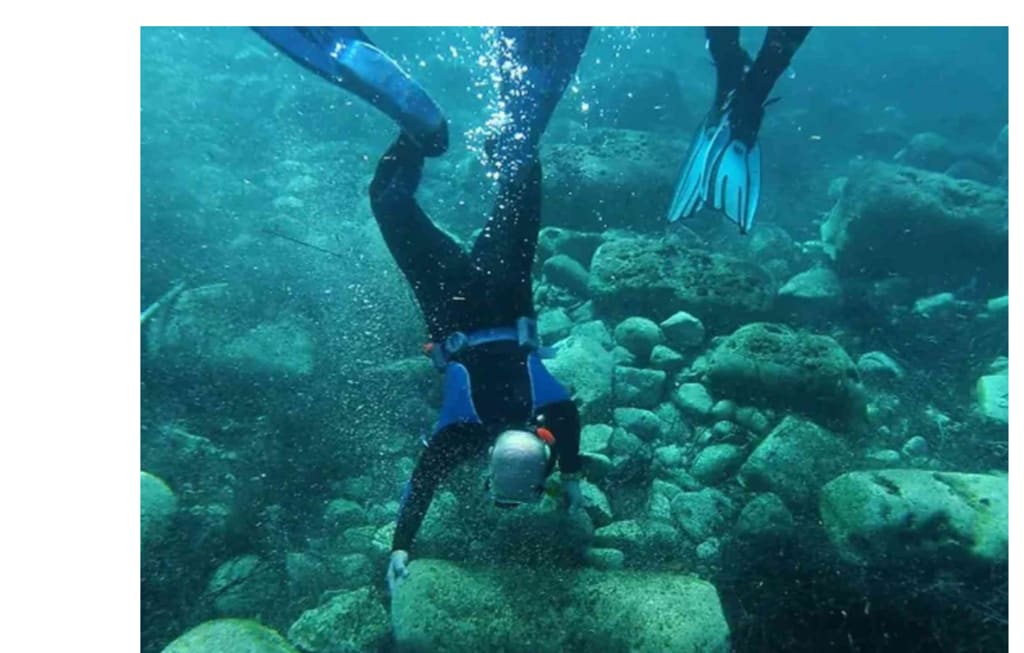
Near the port of Ptolemais, an ancient Greek city in what is now northeastern Libya, researchers have discovered a more than 100-meter-long field of ancient shipwreck debris, indicating that several vessels were lost along the same shoreline approach. The discovery reframes the harbour as a recurrent maritime hazard that influenced how ships arrived at the city rather than as a singular disaster site.
Where ships broke
Ships used to have to skirt a shallow rock formation just off the harbor's eastern entry, leaving a dense trail of shattered hulls and cargo pieces. Dr. Piotr Jaworski of the University of Warsaw's Faculty of Archaeology recorded evidence from this debris field that multiple ships, not just one, were wrecked along this route.
The wreckage's continual dispersion over a distance of more than 100 meters suggests that these losses happened more than once. Such a trend indicates a recurring navigational risk, necessitating an understanding of the circumstances that made this section of the coast so dangerous.
In the sand, cargo
Amphorae, tall clay vessels with narrow necks used for cargo transportation, were among the discoveries. These were combined with other damaged cargo and structural debris. A bronze aequipodium, a counterweight from a Roman balance, indicates that meticulously measured products were traded here.
Crystallised wine, a residue that can maintain chemical evidence of what merchants formerly carried, may even be contained in a single jar. That assertion will be determined by laboratory research, but even ambiguous cargo indicates to archaeologists that the harbour provided food for a legitimate commercial center.
The reason behind the port's collapse
The team had already mapped roughly 3.4 miles (5.5 kilometres) of coastline surrounding the harbour before the wreck track appeared. Researchers identified quays and a breakwater that are now below the current waterline using sonar, depth measurements, and drone photos.
The continued appearance of columns, anchors, and seabed probes next to the new wreck field can be explained by those older maps. The ship losses suited a harbour that remained bustling despite its edges being altered by earthquakes and rising water.
Ptolemais as a significant port
Ptolemais, a significant Greek port city in Cyrenaica, which is now northeastern Libya, was located behind that danger. It was established in the third century B.C. by Ptolemaic monarchs, and its use persisted for centuries until the Arab conquest.
The harbor's value increased when the city became the capital of Libya Superior, a Roman province in what is now eastern Libya, in late Roman times. Increased risk would have resulted from heavy traffic, particularly in areas where incoming ships had to navigate a damaged coastline.
Work on the Acropolis was ongoing.
Another team was working on the city's fortified high point, the acropolis, in addition to the shoreline. There, surveyors created a new, very accurate map that more closely connected the plateau, lower city, and harbour.
In order to determine where builders obtained materials for buildings, lamps, and ceramics, geologists also tracked the sources of stone and clay. Archaeologists can link submerged relics to the people, workshops, and defences that formerly stood over them thanks to this landward activity.
Previous wealth endured
Excavators had already discovered homes that demonstrated how affluent this community had become long before the wreck route appeared. One notable example was the House of Leukaktios, which had painted walls and mosaics that represented wealth and style.
Another hint came from a Roman coin hoard that was discovered nearby. Coins may be used to date activity and show the flow of riches. When viewed beside the harbour findings, Ptolemais appears less like a remote ruin and more like a bustling metropolis.
After-war research
After the civil war rendered work at Ptolemais unfeasible for over ten years, fieldwork ceased. When work restarted, Polish experts joined Libyan conservators and archaeologists at museum, hillside, and harbour locations.
Even though a large portion of Ptolemais remained unexplored, that endeavour represented 25 years of Polish archaeological work in Libya by 2026. Recovering lost time, stabilising unstable discoveries, and posing fresh questions were all made more difficult by the lengthy lapse.
The importance of preservation
Because so much of Ptolemais still exists along the same terrain, from harbour to plateau, it is exceptionally helpful. The connections between water, streets, workshops, and homes that originally cooperated can be destroyed by subsequent construction at many old ports.
Instead of speculating based on fragments, archaeologists can still compare the submerged approach with the city's higher districts. A wreck field offshore can alter academics' understanding of the entire town because of its uncommon continuity.
What is still concealed
Additionally, the team has not yet completed testing the payload, thus the wreck trail is only partially read. Broken cargo, structural debris, and residues inside jars could narrow dates and reveal which routes supplied the port.
According to Jaworski, "this is also a good starting point for long-term underwater research at Ptolemais." One risky strategy would end up directing years of excavation for a metropolis with so much lying buried or underwater.
What follows
The area off Ptolemais is more than just a collection of shattered hulls; it's a hub for urban history, geology, and trade. The city stands to show how ancient mobility, risk, and riches shaped one another when the evidence from the sea and the land are interpreted together.
About the Creator
Enjoyed the story? Support the Creator.
Subscribe for free to receive all their stories in your feed.
Comments
There are no comments for this story
Be the first to respond and start the conversation.