
Chicory Market Set for Strong Growth as Consumers Embrace Functional Foods, Gut Health, and Caffeine-Free Alternatives
From Coffee Substitute to Functional Superfood: Why Chicory Is Becoming a Global Wellness Favorite

The global food and beverage industry is witnessing a significant transformation as consumers increasingly seek healthier, natural, and functional alternatives to conventional products. Among the many ingredients benefiting from this shift, chicory has emerged as one of the most promising. Once known primarily as a coffee substitute, chicory is now gaining recognition for its nutritional benefits, digestive health properties, and versatility across multiple industries.
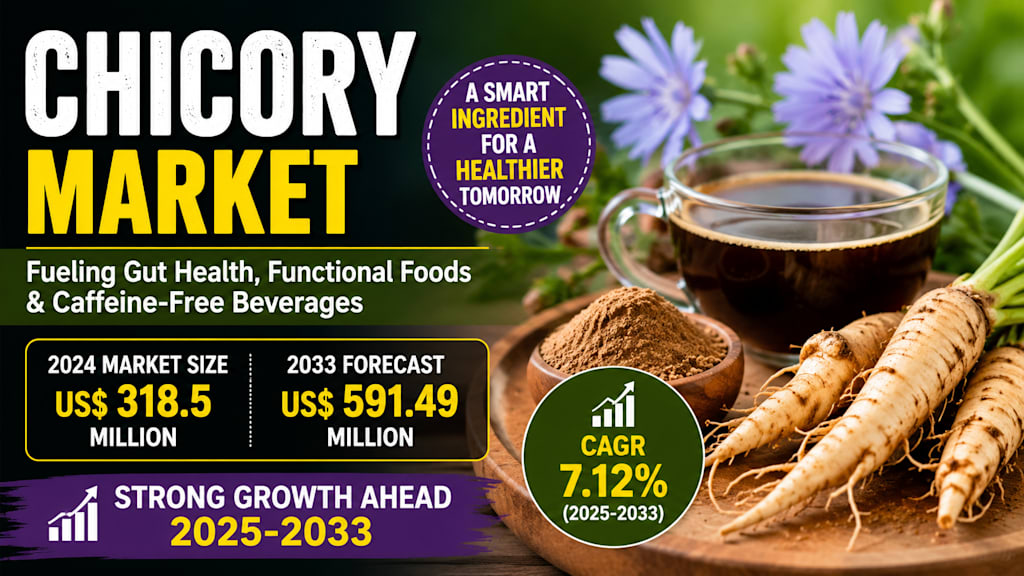
According to Renub Research, the global Chicory Market is projected to grow from US$ 318.5 million in 2024 to US$ 591.49 million by 2033, expanding at a CAGR of 7.12% between 2025 and 2033. This remarkable growth reflects changing consumer preferences, increasing awareness of gut health, and rising demand for functional foods and beverages.
As wellness trends continue to shape purchasing decisions worldwide, chicory is positioned to become a mainstream ingredient across food, beverage, supplement, and personal care sectors.
Understanding Chicory and Its Growing Importance
Chicory is a flowering plant belonging to the dandelion family. While its leaves are often consumed in salads and culinary dishes, the root is the most commercially valuable component. Rich in inulin—a natural prebiotic fiber—chicory root has become highly sought after by manufacturers aiming to create healthier food products.
For centuries, chicory has been used in traditional medicine and food applications. Today, modern scientific understanding of gut health and microbiome balance has brought renewed attention to the ingredient.
The popularity of chicory stems from its ability to provide multiple health benefits while serving as a natural ingredient in numerous formulations. Whether used in dietary supplements, coffee substitutes, functional beverages, or food products, chicory aligns perfectly with the growing consumer demand for clean-label and plant-based ingredients.
Market Growth Driven by Health-Conscious Consumers
One of the primary factors driving the chicory market is increasing health awareness among consumers.
People today are paying closer attention to digestive health, immunity, and overall wellness. As a result, ingredients that provide scientifically supported health benefits are experiencing unprecedented demand.
Chicory root contains high levels of inulin, a prebiotic fiber that nourishes beneficial gut bacteria. Research continues to highlight the importance of gut microbiota in supporting digestion, immunity, metabolic health, and overall well-being.
Consumers are actively seeking products that promote digestive health naturally, creating strong demand for chicory-based ingredients.
Additionally, chicory offers antioxidant and anti-inflammatory properties that further enhance its appeal among wellness-focused consumers.
As healthcare costs rise and preventive nutrition gains popularity, ingredients like chicory are becoming integral components of modern dietary habits.
The Rise of Functional Foods and Beverages
The functional food movement is reshaping global food markets, and chicory is benefiting directly from this trend.
Consumers no longer view food merely as a source of calories. Instead, they increasingly seek products that deliver additional health benefits beyond basic nutrition.
Functional foods containing prebiotics, probiotics, vitamins, minerals, and plant-based compounds are witnessing strong demand worldwide.
Chicory's high inulin content makes it a preferred ingredient for manufacturers developing:
Functional beverages
Health drinks
Nutritional supplements
Protein products
Fiber-enriched foods
Digestive wellness products
As product developers continue to innovate, chicory is finding its way into a growing range of consumer goods.
The ingredient's natural origin further strengthens its appeal in an era where consumers carefully scrutinize product labels and ingredient lists.
Chicory's Popularity as a Coffee Alternative
Perhaps one of chicory's most recognizable applications is its use as a coffee substitute.
Roasted chicory root produces a rich, earthy flavor profile remarkably similar to coffee. This has made it an attractive option for consumers looking to reduce caffeine intake without sacrificing taste.
Several factors are contributing to the growing popularity of chicory coffee:
Growing Caffeine Awareness
Many consumers are becoming increasingly aware of the potential side effects associated with excessive caffeine consumption, including:
Sleep disturbances
Anxiety
Increased heart rate
Digestive discomfort
Chicory offers a caffeine-free alternative that allows consumers to enjoy a coffee-like experience without these concerns.
Demand for Natural Wellness Products
Health-conscious consumers often prefer beverages that provide functional benefits alongside enjoyable flavors.
Unlike coffee, chicory contains beneficial dietary fiber and prebiotic compounds, making it an attractive choice for wellness-focused individuals.
Expanding Product Availability
The availability of chicory-based beverages has expanded significantly across supermarkets, specialty stores, and online retail platforms, making these products more accessible than ever before.
Cost Advantages Strengthen Market Adoption
Beyond its health benefits, chicory offers significant economic advantages.
Coffee prices continue to face pressure from climate-related challenges, supply chain disruptions, and fluctuating agricultural yields. As a result, manufacturers are increasingly exploring alternative ingredients to manage costs.
Chicory can be substantially less expensive than coffee in certain markets. This cost advantage makes it attractive for:
Coffee blends
Instant beverages
Food formulations
Functional drink products
Manufacturers can reduce production expenses while maintaining desirable flavor characteristics, creating a compelling business case for chicory adoption.
This affordability also appeals to consumers seeking cost-effective beverage options during periods of economic uncertainty.
Growing Applications Beyond Food and Beverages
While food and beverage applications remain dominant, chicory's market potential extends far beyond traditional uses.
Dietary Supplements
The global dietary supplement industry continues to expand rapidly as consumers seek products that support overall health.
Chicory-derived inulin is increasingly incorporated into supplements focused on:
Digestive health
Gut microbiome support
Weight management
Immune health
Its natural origin and proven functionality make it a valuable ingredient in premium supplement formulations.
Cosmetics and Personal Care
The beauty and personal care sector is also exploring chicory-derived ingredients.
Consumers increasingly prefer skincare and cosmetic products containing plant-based ingredients with functional benefits.
Chicory extracts are being investigated for applications related to skin health, hydration, and anti-aging formulations.
Animal Nutrition
Another growing area of opportunity is animal feed.
Chicory serves as a natural prebiotic ingredient that supports digestive health in livestock and companion animals. As antibiotic reduction becomes a priority across agricultural sectors, natural alternatives such as chicory are gaining popularity.
Regional Market Outlook
Europe Leads Global Demand
Europe remains the largest and most established market for chicory.
Several factors contribute to the region's leadership:
Long-standing consumer familiarity
Strong agricultural production
Advanced food processing capabilities
High awareness of functional nutrition
Countries such as Belgium, France, Germany, and the Netherlands continue to play important roles in global chicory production and consumption.
North America Shows Strong Potential
The United States is experiencing growing demand for chicory products as consumers embrace functional foods and natural wellness solutions.
The expansion of clean-label trends, plant-based diets, and digestive health awareness is creating favorable conditions for market growth.
Coffee alternatives and fiber-enriched products are particularly gaining traction among American consumers.
Asia-Pacific Emerges as a High-Growth Region
Asia-Pacific represents one of the fastest-growing opportunities for the chicory industry.
Rising disposable incomes, urbanization, and growing health awareness are driving increased demand for functional ingredients.
India, in particular, is emerging as a significant market due to its strong agricultural foundation and growing interest in wellness products.
The region's expanding food processing sector is expected to create additional opportunities for chicory manufacturers over the coming years.
Middle East and Africa Gain Momentum
Countries such as the United Arab Emirates are witnessing increasing interest in natural health products and caffeine-free alternatives.
As consumer awareness improves, demand for chicory-based beverages and functional foods is expected to grow steadily across the region.
Challenges Facing the Chicory Industry
Despite strong growth prospects, the market faces several challenges.
Limited Consumer Awareness
Outside traditional markets, many consumers remain unfamiliar with chicory and its benefits.
Compared to highly publicized superfoods and functional ingredients, chicory often receives less attention from mainstream consumers.
Education and marketing efforts will be essential for increasing adoption rates.
Agricultural Constraints
Chicory cultivation depends on specific soil and climate conditions.
Production is concentrated in certain regions, making supply chains vulnerable to:
Weather disruptions
Droughts
Flooding
Geopolitical issues
Agricultural yield fluctuations
Expanding cultivation capabilities and improving supply chain resilience will be important for long-term market stability.
Competition from Alternative Functional Ingredients
The wellness market is highly competitive.
Consumers can choose from numerous ingredients offering digestive and health benefits, including probiotics, psyllium, oats, flaxseed, and various plant fibers.
Chicory producers must continue investing in innovation and consumer education to maintain competitive differentiation.
10 Recent Developments Shaping the Chicory Industry
1. Cosucra Expanded Production Capacity
Cosucra secured significant investment funding to enhance production capabilities and support growing global demand for chicory-derived ingredients.
2. DKSH and Cosucra Partnership Expansion
DKSH expanded its distribution agreement with Cosucra across Australia and New Zealand, improving market access for chicory fibers.
3. BENEO Upgraded Chile Facility
BENEO announced production enhancements at its Chile facility to strengthen liquid chicory root fiber manufacturing.
4. Increased Focus on Prebiotic Nutrition
Major food manufacturers are incorporating chicory-derived inulin into digestive health products.
5. Growth of Plant-Based Beverage Innovation
Companies are launching new caffeine-free beverage products featuring chicory as a core ingredient.
6. Expansion of Functional Food Portfolios
Leading food brands continue adding chicory fiber to nutrition-focused product lines.
7. Rising Investment in Gut Health Solutions
Industry investments targeting microbiome health are boosting demand for chicory-based ingredients.
8. Increased Adoption in Sports Nutrition
Manufacturers are utilizing chicory fiber in sports nutrition and performance-focused products.
9. Development of Clean-Label Ingredients
Food companies are leveraging chicory's natural profile to meet clean-label requirements.
10. Growing Global Distribution Networks
Key industry participants are expanding international distribution channels to reach emerging markets.
Competitive Landscape
The chicory market includes several established players focused on product innovation, agricultural development, and global distribution.
Major companies operating in the market include:
Jamnagar Chicory Industries
Cargill Incorporated
Leroux Flavored Brandies
Delecto Foods Pvt Ltd.
Starwest Botanicals
Organic Herb Trading
Pioneer Chicory
STOKROS Company Ltd
Natures Gold
Royal Cosun
These companies continue investing in research, product development, and strategic partnerships to strengthen market positions.
Final Thoughts
The future of the global chicory market appears exceptionally promising. As consumers increasingly prioritize digestive health, natural ingredients, and functional nutrition, chicory is emerging as a powerful ingredient capable of addressing multiple consumer needs simultaneously.
Its unique combination of health benefits, affordability, versatility, and sustainability positions it as a valuable component of future food systems.
With the market expected to grow from US$ 318.5 million in 2024 to US$ 591.49 million by 2033, chicory is no longer simply a coffee substitute. It is becoming a cornerstone ingredient in the rapidly expanding functional food and wellness economy.
For manufacturers, investors, and consumers alike, chicory represents an exciting opportunity at the intersection of nutrition, innovation, and sustainable growth.
About the Creator
Enjoyed the story? Support the Creator.
Subscribe for free to receive all their stories in your feed.
Comments
There are no comments for this story
Be the first to respond and start the conversation.