
Aviation Bearing Components: The Precision Pieces Behind Every Controlled Movement
In aviation, movement isnt just about speed its about how smoothly and reliably every part works together.

The Moment I Understood Controlled Motion
I once watched a landing gear system being tested. Heavy structure. Complex movement. Perfect timing. But what stood out wasn’t the size of the system it was how smoothly everything moved, without hesitation.
Later, I learned that this level of control wasnt accidental. It came down to aviation bearing components working quietly behind the scenes.
From my perspective these components dont just support motion they define how well motion happens.
What Are Aviation Bearing Components?
Aviation bearing components are the individual parts that make up bearing systems used in aircraft to support and guide motion.
In simple terms, they
- Reduce friction between moving parts
- Support loads during operation
- Maintain alignment and stability
- Enable smooth and controlled motion
They are not standalone parts they are systems within systems.
Why These Components Matter So Much
Aircraft operate under conditions where even minor inefficiencies can grow into major problems.
Without proper bearing components
- Friction increases
- Wear accelerates
- Motion becomes unstable
- System reliability drops
With well-designed components
- Movement stays smooth
- Stress is evenly distributed
- Performance remains consistent
- Safety is maintained
From what I’ve seen, these components are small but critical control points.
Key Aviation Bearing Components
A bearing system is made up of multiple elements working together.
Core components include
- Inner and outer rings
- Provide structure and guide motion
- Rolling elements (balls or rollers)
- Reduce friction and carry loads
- Cages or retainers
- Keep rolling elements evenly spaced
- Seals and shields
- Protect against contamination
Each part plays a specific role in ensuring smooth operation.
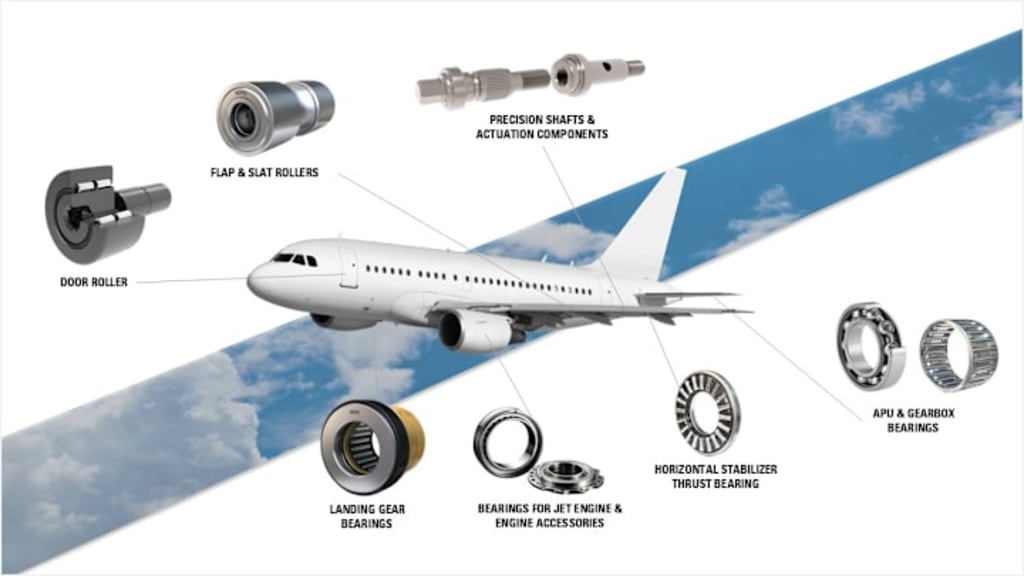
Where Aviation Bearing Components Are Used
These components are found throughout an aircraft.
Common applications include
- Engine systems
- Landing gear assemblies
- Flight control mechanisms
- Gearboxes and transmissions
- Rotating shafts
Anywhere motion exists, these components are at work.
What Makes Them Different from Standard Bearings?
Aviation bearing components are built to meet higher standards.
Key characteristics include
- High strength with low weight
- Resistance to extreme temperatures
- Durability under continuous stress
- Precision manufacturing
- Long operational life
From my perspective, they are engineered not just for performance but for consistency over time.
The Importance of Proper Selection
Choosing the right components is essential.
- Engineers consider
- Load requirements
- Speed of operation
- Environmental conditions
- Material compatibility
From what I’ve seen, the right selection ensures both efficiency and safety.
Sourcing and Identification Challenges
Managing aviation bearing components at scale can be complex.
- Common challenges include
- Identifying exact specifications
- Avoiding similar-looking but incompatible parts
- Ensuring authenticity
- Handling large inventories
This is where structured systems and platforms like aviation bearing components help streamline identification and sourcing.
Maintenance and Reliability
Even the best components require proper care.
Key maintenance practices
- Regular inspection for wear
- Proper lubrication
- Monitoring performance
- Timely replacement
From my perspective, maintenance is what keeps these components performing at their best.
The Engineering Perspective
From an engineering standpoint, these components are about control and balance.
They influence
- Motion efficiency
- System stability
- Mechanical reliability
- Overall performance
In my opinion, they represent a simple truth:
controlled systems are reliable systems.
What the Future Might Look Like
As aviation technology evolves, bearing components continue to improve.
- Possible advancements include
- Advanced materials for durability
- Reduced friction designs
- Smart monitoring capabilities
- Improved efficiency under extreme conditions
From my perspective, the goal will remain the same better performance with less resistance.
Final Thoughts
Aviation bearing components may not be the most visible parts of an aircraft but they are among the most essential. They ensure smooth motion, reduce stress, and keep systems working as intended. From my perspective, they remind us that great engineering isnt always about size or power Its about how well every small part contributes to the whole. Because in aviation, success isnt just about moving Its about moving smoothly, reliably, and with complete control.
True performance is measured not by motion alone, but by how controlled that motion remains under pressure.
About the Creator
Beckett Dowhan
Where aviation standards meet real-world sourcing NSN components, FSG/FSC systems, and aerospace-grade fasteners explained clearly.
Enjoyed the story? Support the Creator.
Subscribe for free to receive all their stories in your feed.
Comments
There are no comments for this story
Be the first to respond and start the conversation.