
Your VPN Tunnel Says It's Healthy. Your App Is Still Timing Out. Here's the Gap Nobody Talks About.
A 'healthy' tunnel and a working app aren't the same claim , and most monitoring can't tell the difference

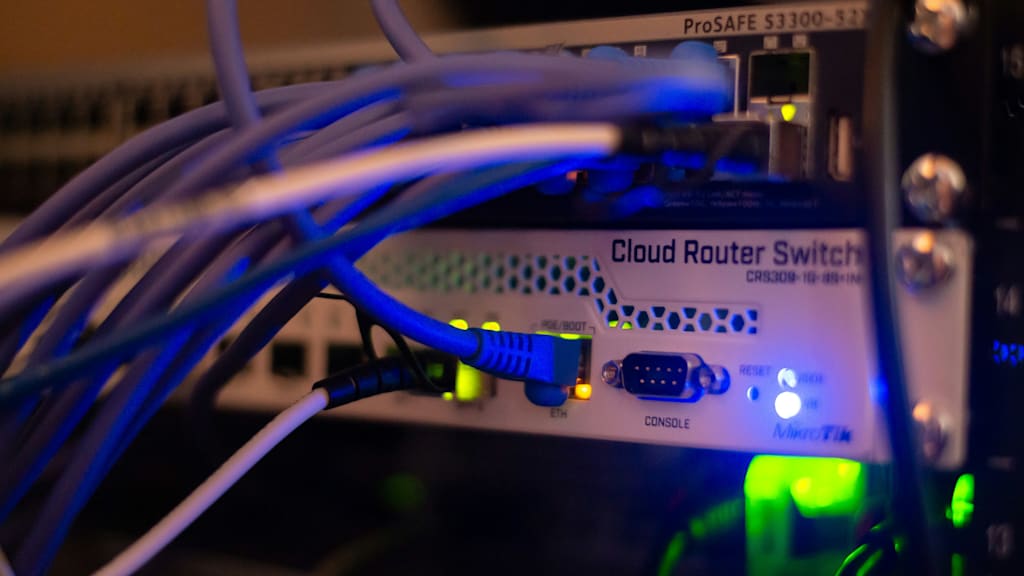
Engineering teams keep discovering the same uncomfortable truth: a "healthy" network tunnel and a working application are not the same claim. The fix isn't more redundancy. It's knowing the difference between looking fine and actually working.
There's a specific kind of dread that shows up in infrastructure work: every dashboard is green, the handshake timestamps are fresh, the interface shows "UP" , and customers are still hitting timeouts. Not a crash. Not an outage anyone can point to. Just silence where a response should be.
That gap between the network looks healthy and the application actually works is turning into one of the more interesting engineering problems of 2026, as more companies stitch public cloud and on-premises systems together and discover that traditional monitoring wasn't built to catch the failure mode they're now living with.
The setup that exposes the problem
Picture a fairly ordinary hybrid-cloud situation: public-facing APIs running in AWS, sensitive databases and internal systems still sitting on-premises for compliance or cost reasons, and a requirement to connect the two securely without buying into a full enterprise networking stack , no Transit Gateway, no MPLS contract, no BGP-based active-active fabric humming in the background.
The obvious first move is a single secure tunnel , commonly built with WireGuard, the lightweight, modern VPN protocol that's largely replaced older, clunkier options for this kind of point-to-point link. At small scale, it just works. Low latency, low complexity, easy to reason about.
Then traffic grows, and failover testing gets real, and the cracks show up fast. A tunnel under stress doesn't usually announce itself with a dramatic outage. It announces itself with backend timeouts, intermittent failures, and a recovery process that needs a human to notice and intervene. The tunnel is technically functional. It is operationally fragile. Those are different things, and the difference is the entire story.
The instinct to add more tunnels , and why it backfires
The textbook fix for a single point of failure is redundancy: run two active tunnels instead of one, balance traffic across both, get higher availability and better utilization in one move. It's the obvious next step, and it's also where a lot of teams discover a nastier problem hiding behind the simple version.
Run two active paths and something unpleasant starts happening during partial degradation: traffic going out one path comes back on the other. Routing tables, built on the assumption that a connection's outbound and return trip take the same path, develop ambiguity about which way packets should actually go. Some requests succeed. Others silently time out. The tunnel interfaces report nothing wrong the entire time.
That's a hard failure mode to debug precisely because nothing in the obvious monitoring layer flags it. You end up staring at green dashboards while users report a broken product, which is close to the worst position an on-call engineer can be in.
The uncomfortable lesson here generalizes well beyond networking: more redundancy doesn't automatically mean more reliability. Sometimes it just means more ways for things to fail in ways you can't see yet.
Trading elegance for predictability
The fix that actually holds up under failure isn't a smarter form of redundancy , it's a less ambitious one. Instead of two tunnels actively sharing load, run two completely isolated paths: a primary that carries all the traffic, and a standby that sits ready but inactive until the primary is confirmed , not assumed, confirmed , to be degraded.
Each path gets its own subnet, its own routing ownership, its own independent health checks. None of it overlaps. That isolation is what makes failures legible: when something breaks, there's exactly one place to look, not two paths potentially fighting over the same routes.
This is, on paper, a worse use of infrastructure. The standby tunnel sits idle most of the time. A pure efficiency argument would call that wasteful. But the actual lesson holding up across a lot of infrastructure war stories in 2026 is that operational determinism beats theoretical efficiency almost every time real incidents are involved. A system that fails in a way you can predict and isolate is worth more than one that's marginally faster on a normal Tuesday and a nightmare during an incident.
The monitoring blind spot that makes all of this worse
Here's the part that should worry anyone running similar infrastructure: most tunnel monitoring checks two things , is the interface up, and is the cryptographic handshake current. Both checks can report a perfectly healthy tunnel while the actual data plane , the part that moves real application traffic , has quietly stopped forwarding packets correctly.
That's not a hypothetical. It's a documented failure pattern: handshake timestamps kept updating, interfaces stayed "UP," and real traffic still silently failed, sometimes with even basic ping tests succeeding while application-level requests timed out. The tunnel was lying, in the specific sense that "healthy" and "working" had quietly diverged, and nothing in the standard health check could tell the difference.
The fix is a third validation layer most setups skip entirely: actually testing whether packets get forwarded, not just whether the tunnel claims to be open for business. Once that's in place , paired with something like Prometheus for the metrics pipeline and automated failover through cloud-native routing (an AWS Route Table update, rather than tearing down and rebuilding the tunnel) , failure detection drops to a matter of seconds instead of a confused incident call.
The pattern other firms are converging on
What's notable is how consistent this lesson is showing up across firms that approach infrastructure from different angles. InfraCloud, a cloud-native consultancy with deep roots in Kubernetes and observability tooling, has built a track record moving enterprise clients off black-box monitoring stacks like Datadog onto open, Prometheus-based pipelines specifically because off-the-shelf health checks weren't catching real degradation in distributed systems. GeekyAnts, an engineering firm working across DevOps and cloud infrastructure, has been documenting a near-identical conclusion from hybrid-cloud failover work , that the actual differentiator wasn't which redundancy model a team chose, but whether their observability could tell the difference between a tunnel that looked fine and one that was actually working. Larger infrastructure players are leaning the same direction: networking vendors at the top of the market have spent the past year folding security telemetry and AI-driven monitoring directly into their core platforms, treating "can you see the failure" as a harder problem than "can you survive it."
None of this is a coordinated movement. It's closer to a convergent discovery , different teams, different scales, different stacks, arriving at the same conclusion because the underlying failure mode is the same everywhere distributed systems quietly stop telling the truth about their own health.
The part that doesn't get automated away
Cloud-agnostic portability is one of the real wins of going this route , a design built on WireGuard, Linux-native routing, and standard observability tooling instead of vendor-specific networking stacks tends to move across AWS, Azure, GCP, or bare metal without a rebuild. That's a genuinely useful property as more companies hedge against single-cloud dependency.
But portability and automation don't remove the judgment calls. Someone still has to decide what "acceptable degradation" looks like before triggering a failover , too sensitive and you get flapping; too lax and outages run longer than they should. Someone still has to decide where the blast radius boundary sits between VPN edges, backend systems, and public ingress. And someone still has to sit with an incident postmortem and ask whether the failure was actually random, or whether the monitoring missed something it should have caught.
The infrastructure can be simplified. The responsibility for knowing what "healthy" actually means can't be outsourced to a dashboard.
The takeaway
The companies getting hybrid-cloud reliability right in 2026 aren't the ones with the most redundant networking. They're the ones who stopped trusting "the interface is up" as proof that anything actually works , and built the unglamorous, deterministic, slightly less efficient systems that fail in ways a human can actually understand at 2 a.m.
That's a less exciting story than "we built five-nines infrastructure." It's also the one holding up under real incidents.
About the Creator
Arjun
Writing about React Native, Flutter, Expo, mobile architecture, cross-platform performance, and the engineering decisions behind production-grade mobile apps.
Enjoyed the story? Support the Creator.
Subscribe for free to receive all their stories in your feed.
Comments
There are no comments for this story
Be the first to respond and start the conversation.