
Xylitol Market Outlook: Natural Sweetener Demand and Growth Opportunities
The Xylitol Market is experiencing steady growth driven by increasing consumer preference for low-calorie and sugar-free sweeteners.

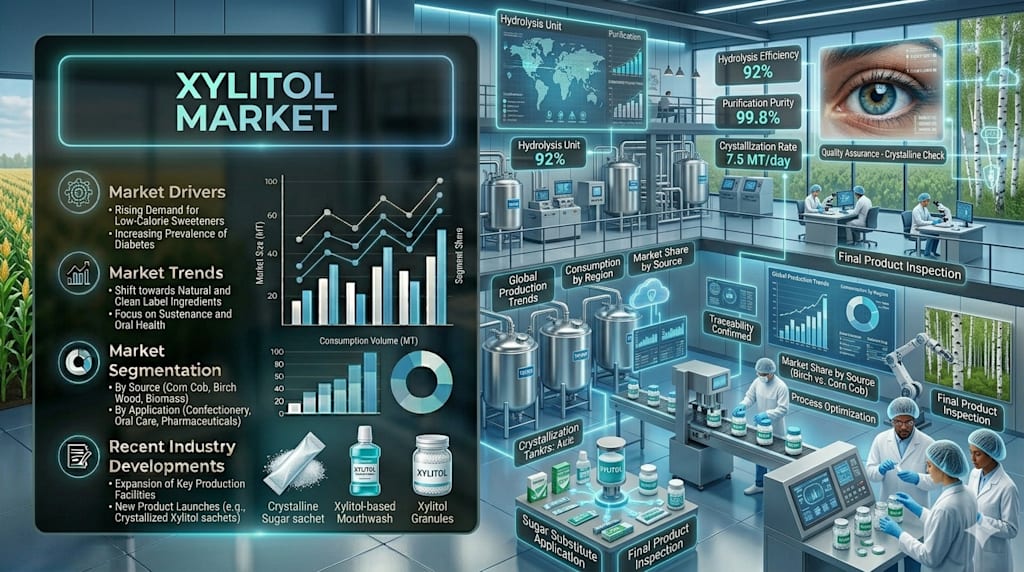
According to IMARC Group's latest research publication, The global xylitol market size was valued at USD 1,058.12 Million in 2025. Looking forward, IMARC Group estimates the market to reach USD 1,482.84 Million by 2034, exhibiting a CAGR of 3.82% from 2026-2034.
How AI is Reshaping the Future of Xylitol Market
- AI-Optimized Fermentation Processes: Machine learning algorithms analyze real-time fermentation data to optimize yeast strains and process conditions, achieving up to 1.62-fold enhancement in xylitol yield. These systems automatically adjust temperature, pH levels, and substrate concentrations to maximize production efficiency while reducing energy consumption.
- Predictive Quality Control Systems: Computer vision technology combined with AI monitors production lines to detect product inconsistencies, crystallization defects, and impurities with exceptional accuracy. Automated inspection systems ensure only high-purity xylitol meeting regulatory standards reaches pharmaceutical and food-grade applications.
- Smart Supply Chain and Demand Forecasting: AI-powered analytics process historical sales patterns, seasonal consumption trends, and consumer preferences to predict demand with up to 40% improved accuracy. Manufacturers use these insights to optimize inventory management, prevent stockouts of popular formulations, and align production schedules with market requirements.

Xylitol Industry Overview:
Growing health consciousness and diabetes prevention initiatives are transforming the xylitol landscape worldwide. The rising prevalence of metabolic disorders including diabetes and obesity is driving consumers toward low-calorie, low-glycemic sweeteners that support blood sugar management. India's Indian Institute of Technology Guwahati developed an innovative ultrasound-assisted fermentation method in August 2022 that significantly improves xylitol production efficiency from sugarcane bagasse, demonstrating technological advances making natural sweetener production more sustainable and cost-effective.
Xylitol Market Trends & Drivers
Expanding dental health awareness and oral care applications are propelling xylitol demand across consumer segments. The sugar alcohol's anti-cariogenic properties and ability to reduce cavity-forming bacteria make it indispensable in sugar-free chewing gum, which accounts for 68% of the xylitol market. Dentists worldwide recommend xylitol-based products for plaque prevention and saliva production, driving consistent growth in oral hygiene applications including toothpaste, mouthwash, and dental lozenges. Major confectionery manufacturers are reformulating products to include xylitol, capitalizing on its cooling sensation and sweetness profile that matches sugar while delivering only one-third the calories. The global chewing gum segment dominates applications as consumers increasingly seek functional benefits beyond freshness.
Regulatory support and clean-label trends are accelerating xylitol adoption in food and beverage formulations. Government campaigns promoting reduced sugar intake to combat obesity and diabetes create favorable conditions for natural sweetener acceptance. Regulatory bodies across North America and Europe endorse xylitol as a safe alternative to artificial sweeteners, encouraging manufacturers to reformulate confectioneries, baked goods, and beverages with this naturally-derived polyol. The shift toward plant-based and clean-label ingredients resonates with health-conscious millennials who scrutinize ingredient lists and prefer recognizable components. Up to 40 new second-generation biorefineries may be constructed in Europe by 2030, significantly increasing sustainable biomass processing capacity for xylitol and other bio-based sweeteners, supporting the transition toward circular economy models.
Biotechnological innovations and sustainable production methods are revolutionizing xylitol manufacturing economics. Microbial fermentation using engineered yeast strains has emerged as the dominant production route, with biological strategies overtaking chemical hydrogenation by 2023 and 2024. Researchers developed strains with 2.1-fold enhanced xylose reductase transcript levels, producing an additional 58.62 grams of xylitol per 2 kilograms of sugarcane bagasse versus wild varieties. Shandong Longlive Bio-technology specializes in bio-fermentation technology producing 25,000 tons annually with exports to over 50 countries, exemplifying commercial-scale biological production. Finland's P2X Solutions partnered with Danisco Sweeteners to replace conventional hydrogen with green hydrogen in xylitol production, eliminating high-temperature chemical processes and reducing environmental impact. These advances in biomass pretreatment, CRISPR-Cas9 gene editing, and downstream purification are lowering production costs while improving yield and sustainability metrics.
Leading Companies Operating in the Global Xylitol Industry:
Cargill, Incorporated
Foodchem International Corporation
Herboveda India
Jining Hengda Green Engineering Co., Ltd.
Merck KGaA
Mitsubishi Corporation Life Sciences Limited
Roquette Freres
Shandong Futaste Co.
Shandong Longlive Bio-technology Co., Ltd.
Zhejiang Huakang Pharmaceutical Co., Ltd.
Xylitol Market Report Segmentation:
By Form:
Solid
Liquid
Solid accounts for the majority of the market share as powder and granulated forms offer superior stability, longer shelf-life, and broad applications across confectionery, chewing gum, and pharmaceutical industries.
By Application:
Chewing Gum
Confectionery
Pharmaceutical and Personal Care
Others
Chewing gum holds the largest share of the industry due to accelerating demand from health-conscious consumers seeking dental benefits and the anti-plaque properties of xylitol in sugar-free formulations.
Regional Insights:
Europe
North America
Asia Pacific
Middle East and Africa
Latin America
Asia Pacific leads the market, accounting for the largest xylitol market share driven by rapidly growing urban populations, increasing disposable incomes, escalating diabetes cases in China and India, and favorable government regulations supporting reduced sugar consumption.
Recent News and Developments in Xylitol Market
August 2022: Indian Institute of Technology Guwahati researchers developed an ultrasound-assisted fermentation method to produce xylitol from sugarcane bagasse, significantly improving production efficiency and sustainability. The innovative biotechnological advancement reduces production time and enhances yield, supporting eco-friendly manufacturing practices aligned with growing demand for renewable raw materials.
2023-2024: Biological production strategies emerged as the dominant route for sustainable xylitol manufacturing, overtaking traditional chemical hydrogenation methods. Advancements in yeast fermentation technologies, optimized utilization of hemicellulosic feedstocks, and innovations in biocatalyst development drove this transformation, with notable peaks in scientific research activity demonstrating industry-wide commitment to environmentally-friendly production processes.
Finland Partnership: P2X Solutions entered an agreement with Danisco Sweeteners to deliver green hydrogen from its Harjavalta plant to Danisco's facility in Kotka, Finland. The partnership aims to make xylitol production greener by using green hydrogen instead of conventional hydrogen, eliminating the need for high temperatures and chemical processes while maintaining production capacity under the XIVIA brand.
Ongoing R&D: Major manufacturers including Roquette Freres and Cargill Incorporated are investing significantly in expanding production capacities and strengthening supply chains to ensure continuous high-grade xylitol flow. Companies are focusing on innovative formulations suited to varying requirements across food, beverage, pharmaceuticals, and personal care industries through substantial research and development initiatives.
Sustainability Initiatives: Leading producers are adopting renewable feedstock strategies using birch bark, corn cobs, and agricultural residues rather than nonrenewable resources. These sustainability-focused procurement methods align with global environmental trends and circular bioeconomy principles, responding to consumer demand for eco-friendly ingredients while reducing carbon footprints across xylitol production operations.
Note: If you require specific details, data, or insights that are not currently included in the scope of this report, we are happy to accommodate your request. As part of our customization service, we will gather and provide the additional information you need, tailored to your specific requirements. Please let us know your exact needs, and we will ensure the report is updated accordingly to meet your expectations.
About the Creator
Michael Richard
Michael Richard is a Market Research Expert specializing in market intelligence, competitive analysis, and data-driven insights. He helps organizations understand trends and emerging opportunities through in-depth research.
Enjoyed the story? Support the Creator.
Subscribe for free to receive all their stories in your feed.
Comments
There are no comments for this story
Be the first to respond and start the conversation.