
Will the United Kingdom Dairy Alternatives Market Reach US$ 3.78 Billion by 2034 as Plant-Based Living Reshapes Consumer Food Choices?
Rising vegan and flexitarian lifestyles, increasing awareness of lactose intolerance, growing sustainability concerns, and continuous product innovation are driving remarkable growth in the UK dairy alternatives market.

The United Kingdom is experiencing a profound shift in consumer eating habits as plant-based foods become increasingly integrated into everyday diets. What was once considered a niche category aimed primarily at vegans has evolved into a mainstream movement embraced by millions of consumers seeking healthier, more sustainable, and ethically conscious food choices.
Among the fastest-growing categories within the plant-based sector are dairy alternatives. Products such as oat milk, almond milk, soy milk, dairy-free yogurt, vegan cheese, and plant-based ice cream have gained widespread popularity across households, cafés, restaurants, and retail stores throughout the country.
This transformation is being fueled by a combination of factors, including growing health awareness, concerns about environmental sustainability, increasing recognition of lactose intolerance, and the rapid rise of vegan and flexitarian lifestyles. Consumers are actively exploring alternatives that align with their personal values while still delivering taste, nutrition, and convenience.
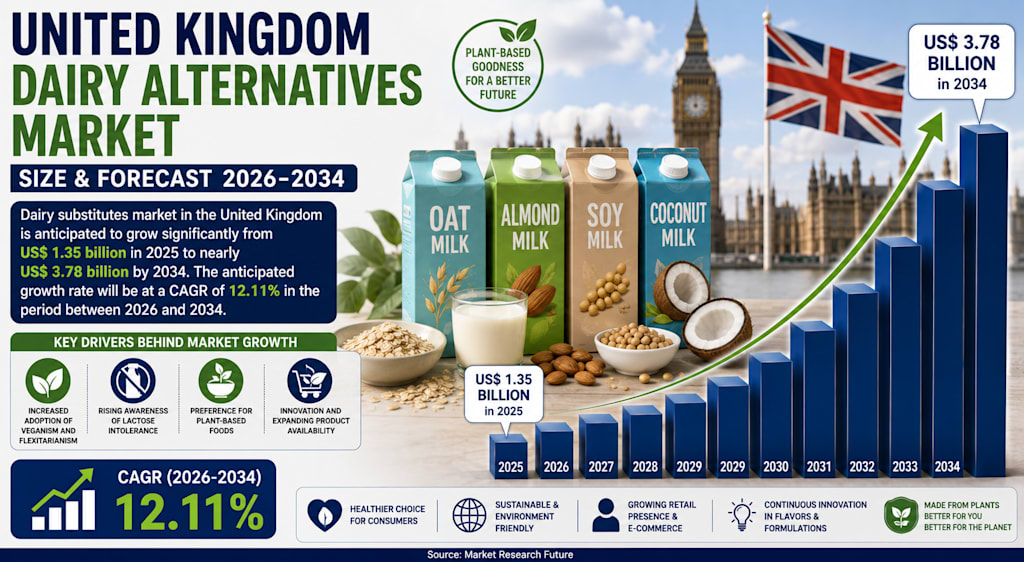
According to Renub Research, the United Kingdom Dairy Alternatives Market is projected to grow from US$ 1.35 billion in 2025 to US$ 3.78 billion by 2034, registering an impressive CAGR of 12.11% during 2026–2034. Growing adoption of plant-based diets, increasing demand for dairy-free products, and ongoing product innovation are expected to drive substantial market expansion.
Dairy Alternatives Have Become Mainstream Consumer Products
Dairy alternatives are plant-based products designed to replace traditional dairy foods.
These products are commonly derived from oats, almonds, soybeans, coconuts, rice, hemp, and other plant-based ingredients.
Consumers use dairy alternatives in a variety of ways, including beverages, cereals, coffee, cooking, baking, desserts, and snacks.
Over the past decade, plant-based milk has become particularly popular, with oat milk emerging as one of the leading products within the category.
The widespread availability of dairy alternatives in supermarkets, cafés, convenience stores, and restaurants has helped normalize their consumption across all demographic groups.
What was once considered a specialist market has become a significant segment of the UK's food industry.
Vegan and Flexitarian Lifestyles Are Driving Growth
One of the most important growth drivers within the UK dairy alternatives market is the rising popularity of vegan and flexitarian eating patterns.
Consumers are increasingly reducing their consumption of animal-derived foods due to health, environmental, and ethical considerations.
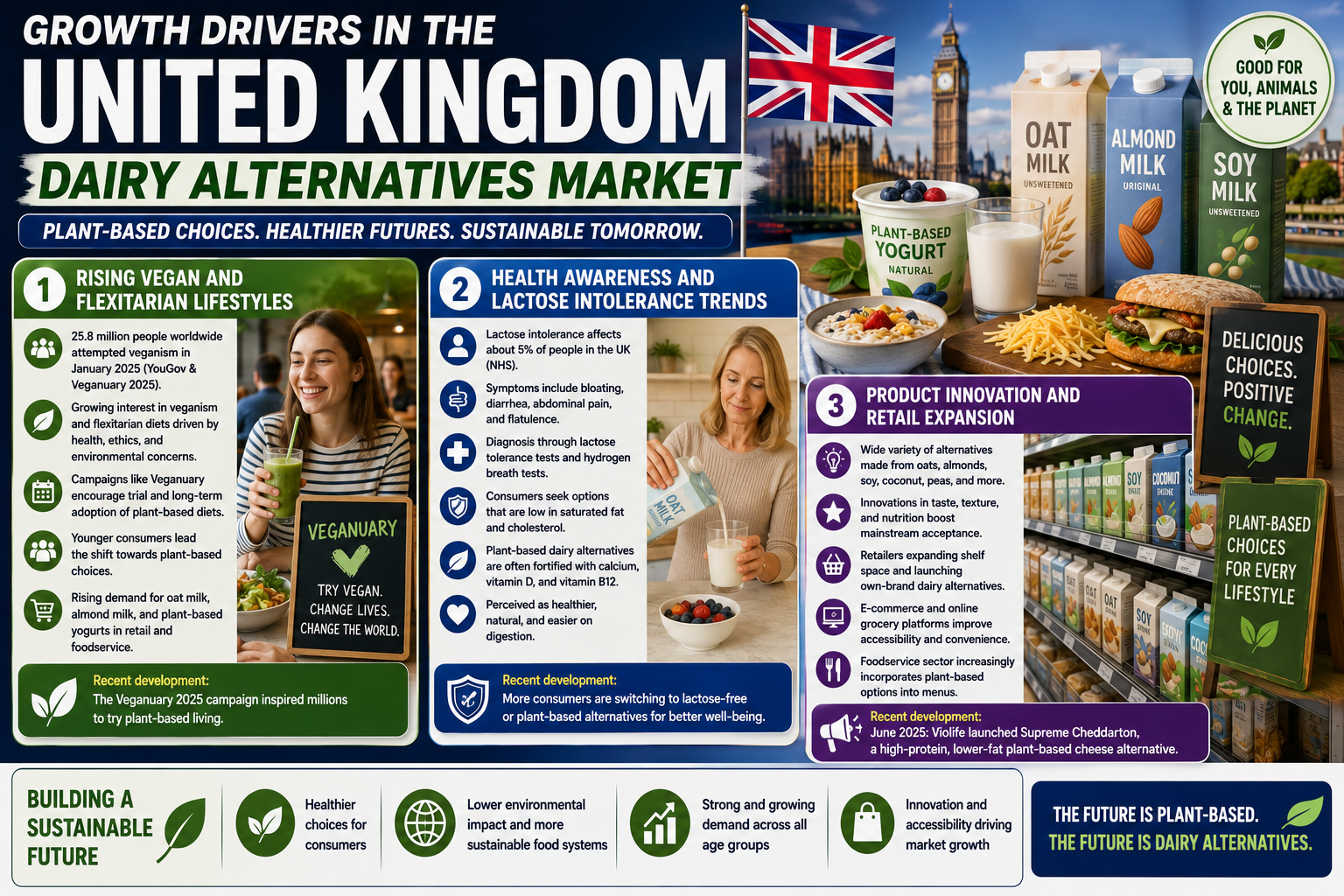
According to consumer research, approximately 25% of UK consumers identify as flexitarian, while plant-based food adoption continues increasing across multiple age groups.
Campaigns such as Veganuary have played an influential role in encouraging consumers to experiment with plant-based diets.
In 2025, more than 25.8 million people worldwide reportedly participated in Veganuary, demonstrating the growing global appeal of vegan lifestyles.
As consumers increasingly incorporate plant-based foods into their diets, dairy alternatives continue benefiting from rising demand.
Health Awareness Encourages Consumer Adoption
Health-conscious consumers are increasingly choosing dairy alternatives as part of broader wellness strategies.
Many consumers seek products perceived as lower in saturated fat, cholesterol-free, and more aligned with healthy eating goals.
Plant-based dairy alternatives are frequently fortified with nutrients such as calcium, vitamin D, and vitamin B12, helping them provide nutritional profiles similar to traditional dairy products.
Consumers increasingly view these products as healthier and more natural options.
The growing emphasis on preventative health and nutritional awareness continues encouraging trial and repeat purchases across the category.
Health-focused consumption trends are expected to remain a major market driver throughout the forecast period.
Lactose Intolerance Supports Demand
The increasing awareness of lactose intolerance has significantly contributed to market growth.
According to the National Health Service, approximately 5% of people in the United Kingdom are affected by lactose intolerance.
Consumers who experience digestive discomfort after consuming dairy products often seek plant-based alternatives that provide similar functionality without adverse effects.
Plant-based milk, yogurt, cheese, and creamers offer practical solutions for consumers managing dietary restrictions.
As diagnosis rates improve and awareness continues increasing, lactose intolerance will remain an important catalyst supporting long-term demand.
Environmental Sustainability Influences Purchasing Decisions
Environmental concerns have become increasingly important in consumer decision-making.
Many consumers recognize that plant-based foods generally require fewer natural resources and generate lower greenhouse gas emissions than animal-based products.
Reducing dairy consumption is often viewed as a practical step toward supporting sustainability goals.
Younger consumers in particular are highly motivated by environmental considerations.
Consumers increasingly seek brands that demonstrate transparency, sustainable sourcing practices, and environmental responsibility.
The continued focus on climate change and sustainability is expected to strengthen demand for dairy alternatives.
Animal Welfare Concerns Encourage Market Expansion
Animal welfare considerations represent another significant factor influencing consumer behavior.
Many consumers are choosing plant-based foods to reduce dependence on animal agriculture and support more ethical consumption practices.
Research indicates that animal welfare concerns remain among the leading motivations for reducing meat and dairy consumption.
This ethical dimension has become particularly influential among younger demographics who prioritize values-based purchasing decisions.
Manufacturers frequently highlight sustainability and animal welfare benefits within marketing campaigns to connect with socially conscious consumers.
Product Innovation Continues Transforming the Market
Innovation remains one of the defining characteristics of the UK dairy alternatives industry.
Manufacturers continuously introduce new products, improved formulations, enhanced textures, and more sophisticated flavor profiles.
Consumers now have access to dairy-free products derived from oats, almonds, soy, coconut, peas, rice, and other ingredients.
Technological advancements have significantly improved the taste, creaminess, and nutritional value of plant-based products.
In June 2025, Violife introduced Supreme Cheddarton, a plant-based cheese alternative featuring higher protein levels and reduced fat content compared to conventional cheddar cheese.
Such innovations continue attracting new consumers while strengthening category credibility.
Retail Expansion Improves Accessibility
The expansion of retail distribution channels has significantly increased the availability of dairy alternatives throughout the UK.
Major supermarkets have expanded shelf space dedicated to plant-based products while introducing private-label alternatives at competitive price points.
Consumers can now purchase dairy alternatives through supermarkets, hypermarkets, convenience stores, specialty retailers, and online platforms.
Research indicates that more than 74% of UK consumers purchase plant-based products through supermarkets.
Improved accessibility has helped transform dairy alternatives from niche products into mainstream household staples.
E-Commerce Accelerates Market Growth
Online grocery platforms are becoming increasingly important within the dairy alternatives sector.
Consumers appreciate the convenience of home delivery, subscription models, and access to a broader range of specialty products.
Digital channels allow emerging brands to reach consumers without relying exclusively on traditional retail distribution.
E-commerce also enables greater product discovery and consumer education.
The continued growth of online grocery shopping is expected to strengthen market penetration and support future expansion.
Milk Alternatives Remain the Dominant Segment
Plant-based milk continues to represent the largest category within the UK dairy alternatives market.
Consumers use alternative milk products in coffee, tea, cereals, smoothies, cooking, and baking.
Oat milk has become particularly popular due to its creamy texture, neutral flavor, and strong compatibility with hot beverages.
Almond milk, soy milk, coconut milk, and rice milk also enjoy substantial consumer demand.
The segment benefits from broad functionality and widespread acceptance across multiple consumer groups.
Milk alternatives are expected to maintain their dominant position throughout the forecast period.
Oat-Based Products Lead Consumer Preferences
Oat-based dairy alternatives have emerged as one of the most successful product categories in the UK market.
Consumers appreciate oat milk for its taste, versatility, affordability, and sustainability profile.
Many cafés now offer oat milk as a standard option alongside traditional dairy products.
The product's compatibility with coffee culture has significantly contributed to its popularity.
Oat-based yogurts, creamers, and desserts are also experiencing strong growth.
As sustainability concerns continue increasing, oat-based products are expected to remain highly attractive to consumers.
Almond-Based Dairy Alternatives Continue Expanding
Almond-based dairy alternatives maintain strong popularity among health-conscious consumers.
Almond milk is widely recognized for its light texture, mild flavor, and perceived health benefits.
Consumers frequently use almond milk in beverages, cereals, smoothies, and culinary applications.
Manufacturers continue introducing fortified formulations designed to improve nutritional value.
Although almond-based products often command premium prices, many consumers remain willing to pay for perceived quality and health advantages.
The segment is expected to experience continued growth.
Plant-Based Yogurt Gains Momentum
The UK yogurt market is increasingly embracing dairy-free alternatives.
Consumers seeking digestive health benefits, probiotic support, and plant-based nutrition are driving demand for alternative yogurt products.
Manufacturers offer products based on coconut, almond, soy, and oat ingredients.
Plant-based yogurts are available in a variety of flavors and nutritional formulations designed to appeal to diverse consumer preferences.
The segment benefits from broader consumer interest in gut health and functional foods.
Dairy-Free Ice Cream Becomes More Popular
Plant-based ice cream represents one of the fastest-growing categories within the dairy alternatives market.
Consumers increasingly seek indulgent products that align with dietary preferences and lifestyle choices.
Manufacturers now offer dairy-free ice cream products made from coconut, almond, oat, and other plant-based ingredients.
Innovations in texture and flavor have improved consumer acceptance significantly.
The combination of indulgence and dietary flexibility continues driving growth in this segment.
Convenience Stores Expand Distribution
Convenience stores are playing an increasingly important role in market development.
Consumers frequently purchase ready-to-drink dairy alternatives during commutes, work breaks, and daily errands.
Single-serve formats and grab-and-go products have become particularly popular among urban consumers.
The growing availability of plant-based beverages in convenience stores improves accessibility and encourages trial purchases.
This channel is expected to continue expanding its contribution to overall market growth.
London Leads Market Development
London remains the largest and most influential dairy alternatives market in the United Kingdom.
The city benefits from a diverse, health-conscious, and environmentally aware population.
Consumers demonstrate strong interest in vegan, vegetarian, and flexitarian lifestyles.
Supermarkets, cafés, restaurants, and specialty retailers throughout London offer extensive selections of dairy-free products.
The city's role as a trendsetter often influences broader national consumption patterns.
London is expected to remain a major growth center for the industry.
Scotland Experiences Strong Growth
Scotland has emerged as an important market for dairy alternatives.
Consumers in cities such as Edinburgh and Glasgow are increasingly adopting plant-based diets due to health, sustainability, and ethical considerations.
Retailers have expanded shelf space dedicated to dairy-free products, while foodservice operators increasingly include plant-based options on menus.
The growing popularity of oat milk, almond milk, and plant-based yogurt continues supporting market expansion.
East of England and Yorkshire Show Rising Demand
Regions such as the East of England and Yorkshire and the Humber are witnessing steady growth in dairy alternative consumption.
Cities including Cambridge, Norwich, Leeds, Sheffield, and Hull are experiencing increasing demand driven by health-conscious consumers and growing awareness of plant-based nutrition.
Retail expansion and greater product availability are supporting regional market development.
These areas represent significant long-term opportunities for manufacturers and retailers.
High Prices Remain a Key Challenge
Despite strong growth prospects, pricing remains one of the industry's most significant challenges.
Plant-based products often cost more than traditional dairy products due to ingredient sourcing and manufacturing complexities.
Research indicates that price remains one of the leading barriers preventing broader adoption of plant-based foods.
Economic uncertainty and inflationary pressures can further influence purchasing decisions.
Manufacturers continue seeking efficiencies that can help narrow the price gap between dairy and dairy-free products.
Taste and Texture Continue Influencing Consumer Behavior
Although product quality has improved significantly, taste and texture remain important considerations.
Some consumers continue to perceive plant-based products as inferior to traditional dairy products in terms of creaminess and flavor.
Maintaining consistent sensory experiences across different formulations remains a challenge.
Manufacturers continue investing heavily in research and development to improve product performance and consumer satisfaction.
Addressing these concerns will remain critical for sustaining long-term growth.
Final Thoughts
The United Kingdom dairy alternatives market is experiencing a period of extraordinary expansion driven by changing consumer lifestyles, health awareness, environmental concerns, and ethical consumption trends.
The increasing popularity of vegan and flexitarian diets, combined with ongoing innovation and expanding retail availability, continues creating substantial opportunities throughout the industry.
While challenges related to pricing and consumer perceptions remain important considerations, technological advancements and product improvements are steadily enhancing market competitiveness.
With the market projected to grow from US$ 1.35 billion in 2025 to US$ 3.78 billion by 2034, the UK dairy alternatives industry is well positioned to play a central role in the future of food and beverage consumption.
About the Creator
Enjoyed the story? Support the Creator.
Subscribe for free to receive all their stories in your feed.
Comments
There are no comments for this story
Be the first to respond and start the conversation.