
Will the Asia Pacific Dairy Market Reach US$ 281.47 Billion by 2034 as Rising Incomes and Health Awareness Boost Dairy Consumption?
Population growth, expanding middle-class consumers, increasing demand for protein-rich nutrition, and continuous dairy innovation are driving strong growth across the Asia Pacific dairy industry.

The Asia Pacific region has emerged as one of the world's most dynamic dairy markets, driven by rapid urbanization, rising disposable incomes, changing dietary habits, and growing awareness of nutrition. Once characterized by relatively low dairy consumption in many countries, the region is now witnessing substantial growth across a wide range of dairy categories including milk, cheese, butter, yogurt, cream, frozen desserts, and value-added dairy products.
Consumers throughout Asia Pacific are increasingly incorporating dairy into their daily diets as they seek healthier, protein-rich food options. Western dietary influences, expanding retail infrastructure, improved cold-chain logistics, and innovative product development have further accelerated dairy consumption across both developed and emerging economies.
Countries such as China, India, Indonesia, Japan, South Korea, Australia, and New Zealand continue playing vital roles in shaping the region's dairy landscape. At the same time, dairy manufacturers are investing heavily in product innovation, sustainability initiatives, and digital distribution channels to meet evolving consumer preferences.
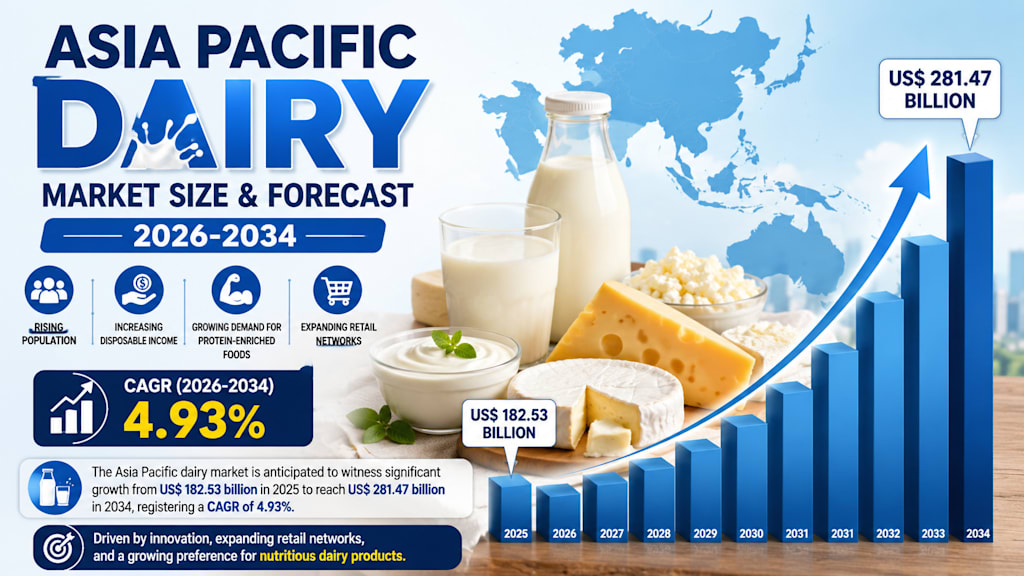
According to Renub Research, the Asia Pacific Dairy Market is expected to grow from US$ 182.53 billion in 2025 to US$ 281.47 billion by 2034, registering a CAGR of 4.93% during 2026–2034. Growth is being supported by increasing population levels, expanding middle-class consumers, rising health consciousness, and continuous innovation across dairy categories.
Dairy Consumption Continues to Rise Across Asia Pacific
Dairy products have become increasingly important components of daily nutrition throughout the Asia Pacific region.
Milk, cheese, butter, yogurt, cream, and dairy-based beverages provide essential nutrients including calcium, protein, vitamins, and minerals that support bone health, muscle development, and overall wellbeing.
Historically, dairy consumption levels were relatively low in several Asian markets. However, changing lifestyles, urbanization, and increased exposure to global food trends have significantly altered consumer behavior.
Younger consumers are particularly embracing products such as flavored milk, yogurt drinks, cheese snacks, and dairy desserts.
The growing popularity of dairy-based convenience foods and functional nutrition products continues supporting market expansion across the region.
Rising Disposable Incomes Drive Premium Dairy Demand
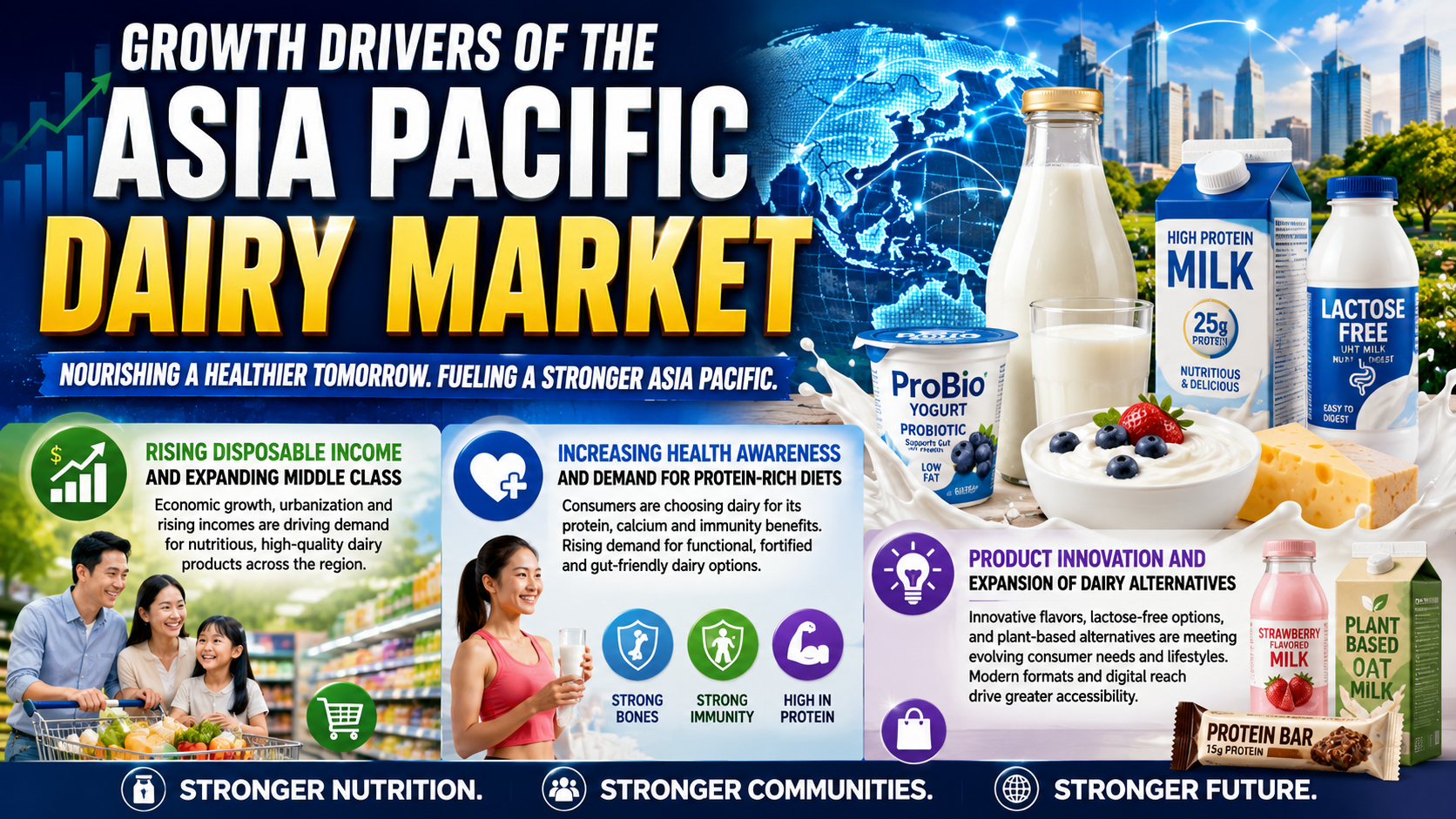
One of the most significant growth drivers for the Asia Pacific dairy market is the expansion of disposable income levels.
Economic development across emerging markets has created a rapidly growing middle class with greater purchasing power and evolving food preferences.
Consumers are increasingly willing to spend on premium, nutritious, and value-added food products that support healthier lifestyles.
The Association of Southeast Asian Nations (ASEAN) is expected to contribute substantially to future middle-class growth, creating enormous opportunities for dairy producers throughout the region.
As incomes continue rising, consumers are shifting from basic dairy products toward premium offerings including organic milk, fortified products, specialty cheeses, and functional dairy beverages.
This trend is expected to remain a major catalyst for long-term market growth.
Health Awareness Is Transforming Consumer Preferences
Consumers across Asia Pacific are becoming increasingly health conscious.
Awareness regarding nutrition, preventive healthcare, fitness, and wellness has grown significantly in recent years.
Dairy products are widely recognized as valuable sources of protein, calcium, vitamins, and essential nutrients.
As a result, health-conscious consumers are incorporating more dairy into their diets to support overall health and wellbeing.
Functional dairy products such as probiotic yogurt, fortified milk, high-protein beverages, and lactose-free options are experiencing particularly strong demand.
Governments throughout the region are also promoting dairy consumption as part of broader public health and nutrition initiatives.
These efforts continue encouraging market expansion across multiple demographic groups.
Product Innovation Creates New Growth Opportunities
Innovation remains a defining feature of the Asia Pacific dairy industry.
Manufacturers are continuously introducing new products to meet changing consumer expectations and dietary preferences.
Recent innovations include flavored milk beverages, high-protein dairy snacks, lactose-free products, fortified dairy drinks, and premium dessert offerings.
Packaging innovation has also become increasingly important.
Single-serve formats, portable packaging solutions, and environmentally sustainable packaging designs are helping companies attract modern consumers.
Digital marketing strategies and partnerships with foodservice operators further enhance product visibility and consumer engagement.
As competition intensifies, innovation will remain critical for market differentiation and growth.
Technology Is Improving Dairy Processing
Advancements in dairy processing technology are significantly enhancing product quality and market accessibility.
Modern filtration systems, fermentation technologies, and processing techniques enable manufacturers to create products that cater to specific dietary requirements.
For example, lactose-free dairy products are becoming increasingly popular among consumers who previously avoided traditional milk due to lactose intolerance.
Innovations in protein concentration technologies are also supporting the growth of sports nutrition and functional food segments.
In 2024, Chinese dairy producer Yili introduced lactose-free ultra-high-temperature milk using advanced microbial lactase technology, demonstrating how innovation is expanding market opportunities.
Population Growth Supports Long-Term Demand
The Asia Pacific region is home to more than half of the world's population.
Continued population growth creates sustained demand for food products, including dairy.
Large markets such as India, China, Indonesia, and Southeast Asia represent substantial consumer bases with growing nutritional requirements.
Urbanization is further accelerating dairy consumption by improving access to modern retail formats and organized food distribution systems.
As populations continue expanding and dietary patterns evolve, dairy products are expected to play an increasingly important role in regional food consumption.
Fresh Milk Remains the Foundation of the Market
Fresh milk represents one of the largest and most important segments within the Asia Pacific dairy market.
Consumers view fresh milk as an essential source of nutrition for children, adults, and elderly populations.
Milk consumption is strongly supported by public health campaigns promoting calcium intake and balanced nutrition.
Countries such as India and China account for a substantial share of regional fresh milk consumption.
Demand for premium milk products, fortified milk, organic milk, and specialty milk formulations continues growing across urban markets.
Fresh milk is expected to remain a cornerstone of the dairy industry throughout the forecast period.
Processed Cheese Market Experiences Rapid Growth
Processed cheese has become one of the fastest-growing dairy categories in Asia Pacific.
The increasing popularity of Western-style fast foods, sandwiches, burgers, pizzas, and ready-to-eat meals has significantly boosted demand.
Urban consumers appreciate processed cheese for its convenience, affordability, and long shelf life.
Markets such as China, India, Indonesia, and Southeast Asia are witnessing particularly strong growth due to expanding quick-service restaurant networks and changing dietary habits.
Product innovation, flavor diversification, and nutritional enhancements continue supporting category expansion.
Cultured Butter Gains Popularity Among Premium Consumers
Cultured butter is emerging as an attractive premium segment within the dairy market.
Known for its distinctive flavor profile and artisanal characteristics, cultured butter appeals to consumers seeking gourmet food experiences.
Bakeries, cafés, restaurants, and home cooking enthusiasts increasingly utilize cultured butter in premium culinary applications.
Countries such as Japan, South Korea, and Australia have demonstrated particularly strong demand for high-quality butter products.
The growth of premium retail channels and specialty food stores continues supporting segment development.
Whipping Cream Benefits from Bakery and Café Expansion
The whipping cream market is experiencing robust growth across Asia Pacific.
Rapid expansion of bakeries, cafés, dessert shops, and confectionery businesses has significantly increased demand.
Consumers increasingly enjoy premium desserts, specialty beverages, cakes, pastries, and bakery products that utilize whipping cream.
The growing popularity of home baking has also contributed to household demand.
Manufacturers continue investing in product development to introduce healthier formulations and improved performance characteristics.
As café culture expands throughout the region, whipping cream demand is expected to remain strong.
Frozen Desserts Continue Capturing Consumer Interest
Frozen desserts represent another rapidly growing dairy segment.
Products including ice cream, frozen yogurt, and milk-based desserts continue gaining popularity among consumers of all ages.
Rising disposable incomes, urban lifestyles, and increasing exposure to international dessert trends are supporting category growth.
Manufacturers are introducing premium flavors, healthier alternatives, vegan-inspired products, and innovative formulations to attract consumers.
The expansion of convenience stores, supermarkets, and online retail channels is further improving product accessibility.
Online Retail Revolutionizes Dairy Distribution
E-commerce has transformed the way consumers purchase dairy products across Asia Pacific.
Growing smartphone penetration, improved internet access, and sophisticated logistics networks have enabled consumers to order dairy products online with ease.
Fresh milk, yogurt, cheese, butter, and specialty dairy items are increasingly available through digital platforms.
Online retail offers convenience, product variety, subscription services, and home delivery options that appeal to modern consumers.
China, India, and South Korea are among the leading markets driving online dairy sales growth.
As digital commerce continues expanding, online distribution is expected to become increasingly important.
China Remains a Major Dairy Market
China represents one of the largest and fastest-growing dairy markets in Asia Pacific.
Urbanization, rising incomes, and increasing health awareness continue driving demand for milk, yogurt, infant formula, cheese, and premium dairy products.
The country's growing middle class increasingly seeks high-quality and imported dairy products.
E-commerce platforms and advanced cold-chain infrastructure have significantly improved product accessibility.
Government efforts to strengthen food safety standards have also contributed to renewed consumer confidence.
China is expected to remain one of the most influential markets within the regional dairy industry.
India Continues Leading Milk Production
India plays a pivotal role in the Asia Pacific dairy market as the world's largest milk producer.
Dairy products form an essential component of daily diets across the country.
Strong domestic demand for milk, yogurt, butter, paneer, and ghee continues supporting industry growth.
Government initiatives, cooperative dairy systems, and rural development programs have strengthened production capacity and farmer participation.
Growing demand for packaged, fortified, organic, and lactose-free dairy products is creating new opportunities for manufacturers.
India's importance within the regional dairy industry is expected to continue increasing.
Indonesia Emerges as a High-Growth Opportunity
Indonesia's dairy market is experiencing strong expansion driven by population growth, urbanization, and rising disposable incomes.
Government nutrition programs and increasing health awareness are encouraging dairy consumption across multiple age groups.
While the country remains reliant on imported dairy products, investments in domestic production and processing infrastructure are improving local capabilities.
Modern retail channels and e-commerce platforms are expanding consumer access to dairy products throughout the country.
Indonesia represents one of the most attractive growth opportunities within the Asia Pacific dairy sector.
New Zealand Strengthens Export Leadership
New Zealand remains one of the world's most important dairy exporters.
The country's reputation for high-quality, grass-fed dairy products continues supporting strong export demand throughout Asia Pacific.
Milk powder, butter, cheese, and specialty dairy products represent key export categories.
Trade relationships with China, Southeast Asia, and other regional markets strengthen New Zealand's strategic importance within the dairy industry.
Continued investments in sustainability, quality assurance, and value-added products support long-term competitiveness.
Lactose Intolerance Creates Market Challenges
Despite strong growth prospects, lactose intolerance remains a challenge for traditional dairy consumption in many Asian markets.
Countries including China, Japan, and several Southeast Asian nations have relatively high rates of lactose intolerance.
This has encouraged some consumers to seek plant-based alternatives such as soy milk, almond milk, and oat milk.
Manufacturers must continue investing in lactose-free formulations and alternative product offerings to address changing consumer needs.
Successfully adapting to these preferences will be important for sustaining growth.
Supply Chain and Cost Volatility Affect Industry Stability
The dairy industry also faces ongoing challenges related to supply chain efficiency and production costs.
Milk production depends heavily on feed availability, weather conditions, livestock health, and energy costs.
Many developing markets continue facing limitations in cold-chain infrastructure, resulting in product losses and distribution inefficiencies.
Price volatility can affect both producers and consumers, creating uncertainty throughout the supply chain.
Investments in infrastructure, logistics, and production efficiency will remain essential for long-term market stability.
Final Thoughts
The Asia Pacific dairy market is entering a new phase of growth driven by rising incomes, expanding middle-class populations, increasing health awareness, and continuous product innovation.
Fresh milk, cheese, butter, whipping cream, frozen desserts, and functional dairy products continue benefiting from evolving consumer preferences and improving retail accessibility.
While challenges such as lactose intolerance, supply chain limitations, and cost volatility remain, manufacturers are responding through innovation, technological advancement, and diversification.
With the market projected to grow from US$ 182.53 billion in 2025 to US$ 281.47 billion by 2034, the Asia Pacific dairy industry is well positioned to remain one of the world's most dynamic and attractive food sectors in the years ahead.
About the Creator
Enjoyed the story? Support the Creator.
Subscribe for free to receive all their stories in your feed.
Comments
There are no comments for this story
Be the first to respond and start the conversation.