
Why the Wood Sanding Machine Market Is Going Robotic
Cobots, AI quality checks, and EU motor rules are reshaping a famously low-tech corner of manufacturing.

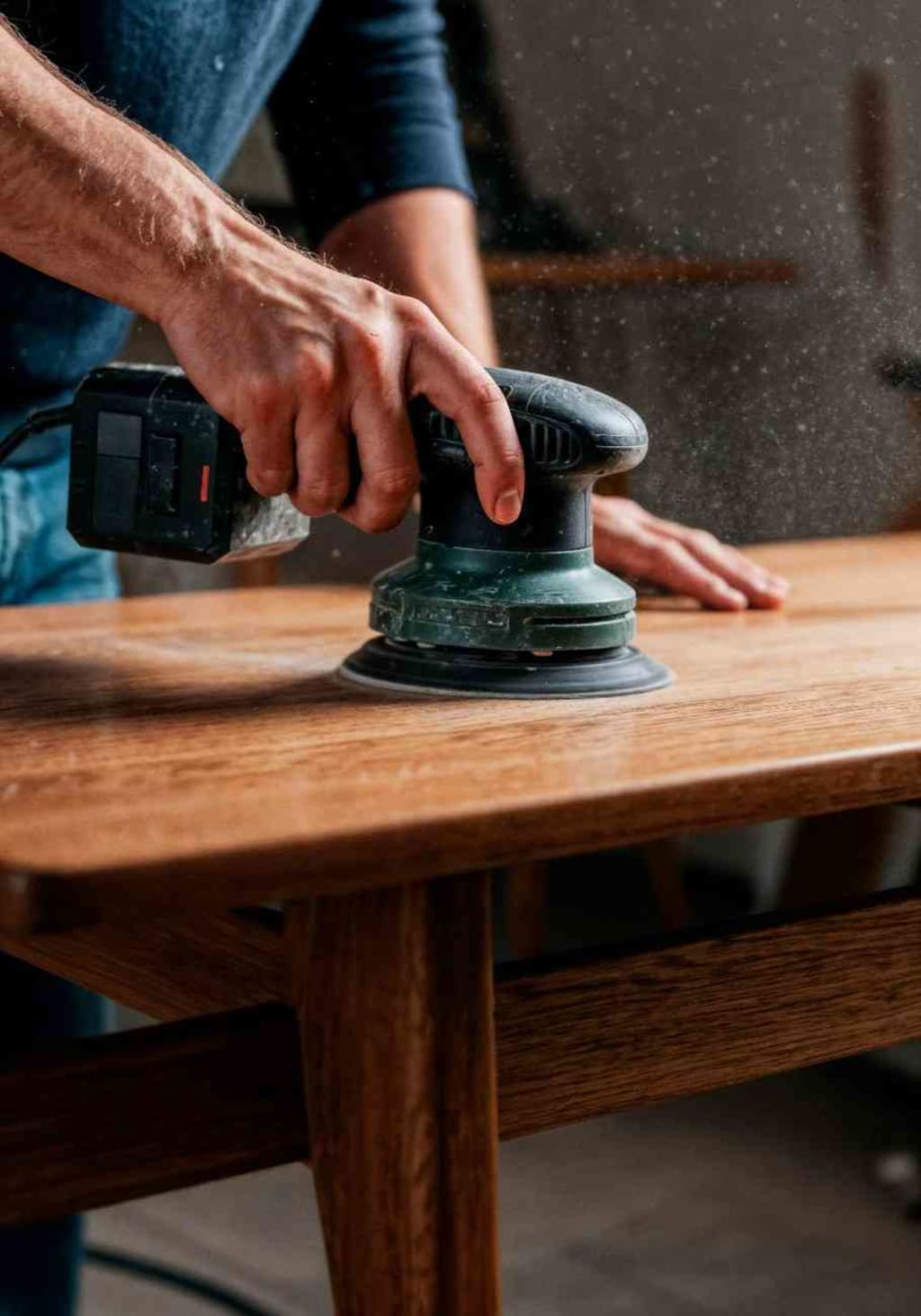
Sanding wood by hand is slow, dusty, and inconsistent — which is exactly why most of it isn't done by hand anymore. Furniture factories, cabinet shops, and flooring manufacturers all depend on equipment that can strip material evenly across a surface without gouging it, and that dependency is what's kept the Wood Sanding Machine Market growing steadily, even in a manufacturing sector that doesn't usually make headlines. Industry research projects the market climbing from $1.3 billion in 2025 to $2.0 billion by 2035, a 4.3% compound annual growth rate.
Those figures, split out by machine type and end-use, are covered in more depth in a companion document the publisher distributes alongside the main study.
Robots Are Doing the Sanding Now, Not Just the Cutting
In February 2025, automation company Vention launched its Rapid Sanding Solution, a turnkey robotic work cell built specifically for cabinetmakers and smaller woodworking shops that previously couldn't justify full automation. It's part of a broader pattern: Mirka introduced AIROS robotic sanding heads back in March 2024, followed days later by its AutoChanger system, which automates abrasive grit changes during multi-stage finishing and cuts the downtime that used to come with manually swapping sandpaper. By June 2025, PolishStyl was showing off a flexible sanding cobot with interchangeable brushes at LIGNA, aimed at exactly the small and mid-sized shops that can't afford a dedicated production line but still need consistent finishing quality. None of this looks like the industrial robotics most people picture — it's smaller, cheaper, and built for shops that until recently sanded everything by hand.
Belt Sanders Still Do the Heavy Lifting
For all the automation news, the equipment doing most of the actual work hasn't changed dramatically. Belt sanders remain the dominant machine type, holding 37.9% share, because continuous abrasive action across a wide surface is still the most reliable way to process panels and large furniture components. Portable and handheld professional units lead by operation type at 44.7%, reflecting how much of this industry still happens on job sites and in small workshops rather than centralized factories. Furniture manufacturing accounts for 46.2% of total demand, by far the largest end-use category, since furniture factories need sanding equipment at nearly every stage of production, from rough dimensioning to final finish before coating. That dominance is part of why the broader wood sanding machine market size has stayed tied so closely to furniture industry cycles rather than construction or renovation spending alone.
A European Rule Is Quietly Forcing Equipment Upgrades
Regulation is doing more to reshape this market than most people would expect. The EU's Ecodesign Lot 5 Phase-2 enforcement is pushing manufacturers to replace high-power sanding motors with IE5-class energy-efficient drives, which effectively forces a retrofit cycle across European facilities that might otherwise have kept older equipment running for years longer. That compliance pressure lines up with real consolidation activity: in March 2024, equipment maker WEINIG signed an agreement to acquire Stähle-Hess's Rotofinish, Gloria, and Saturn sanding machine portfolio, strengthening its position in finishing equipment just as regulatory upgrade cycles were starting to accelerate replacement demand across the continent.
Where the Growth Is Concentrated
North America holds the largest regional share, at 45.1% and roughly $0.5 billion, supported by reshoring-driven furniture manufacturing investment and steady construction activity. Asia Pacific is expanding quickly as Vietnam, Indonesia, and China build out plywood and engineered wood production capacity to serve global furniture supply chains. Latin America is seeing its own version of that story, with Mexico developing contract furniture manufacturing hubs aimed at US nearshoring demand, while Brazil modernizes equipment to serve both domestic construction and export markets.
Looking Ahead
The next stretch of growth in this market probably won't come from a fundamentally different sanding mechanism, but from how much intelligence gets built around the existing one. AI-based defect detection is already moving into CNC sanding lines now that key patents from 2024 have expired, giving manufacturers real-time quality monitoring instead of catching mistakes after the fact. Subscription-style equipment leasing, bundled with predictive maintenance guarantees, is also gaining traction as a way for smaller shops to access newer technology without the upfront capital cost. None of it changes what these machines fundamentally do. It just means fewer surprises by the time a finished piece reaches the customer.
About the Creator
Enjoyed the story? Support the Creator.
Subscribe for free to receive all their stories in your feed.
Comments
There are no comments for this story
Be the first to respond and start the conversation.