
Why the Wood Dust Extraction System Market Keeps Growing
Stricter exposure limits and smarter filtration are reshaping how factories handle airborne sawdust.

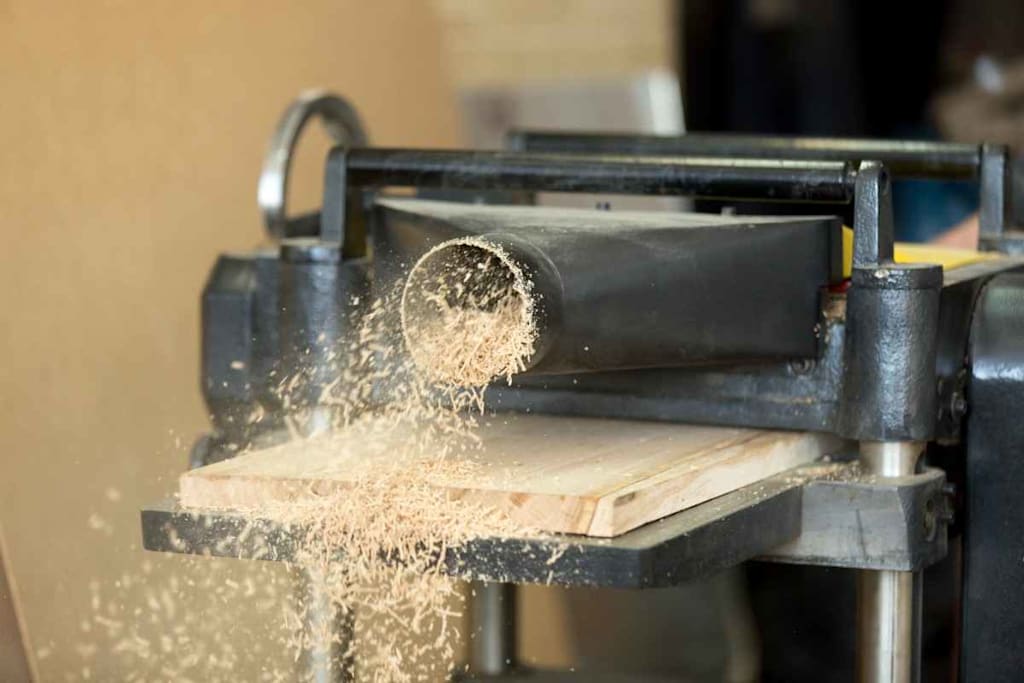
Wood dust isn't just messy — inhaled long enough, it's a documented respiratory hazard, and in high enough concentrations inside an enclosed space, it can ignite. That dual risk, health and fire, is exactly what's kept the Wood Dust Extraction System Market growing steadily even as the broader woodworking equipment sector matures. Industry research projects the market climbing from $1.2 billion in 2025 to $1.8 billion by 2035, a 3.9% compound annual growth rate, driven largely by regulation rather than any flashy new technology.
A fuller view of how those numbers split across system type and filtration media appears in a short preview document published alongside the complete study.
A New Benchmark for How Much Dust One System Can Handle
In May 2025, N.R. Murphy Limited completed what it calls the largest and most advanced dust collection system in its 82-year history — a high-capacity pulse-jet collector rated at 56,000 cubic feet per minute, fitted with 680 filter bags. Numbers like that make the scale of industrial dust extraction tangible in a way market statistics usually don't: that's enough airflow to service an entire panel processing facility running multiple production lines simultaneously, not a single workstation. It's also a useful signal that demand at the high end of this market isn't slowing down, even as smaller installations face very different cost pressures.
Why Ducted Systems Still Lead, Even Though They're Expensive to Install
Centralized ducted systems hold the largest share of the market by type, at 45.2%, because connecting multiple workstations through permanent ductwork is simply more efficient for large facilities than running several standalone units. The 2,001 to 10,000 cubic-meter-per-hour airflow range leads by capacity, at 37.4%, covering the bulk of mid-sized cabinet shops and furniture production lines without requiring industrial-scale infrastructure. Fabric bag filtration remains the dominant media choice, at 39.9%, largely on cost and durability grounds — it tolerates heavy, continuous dust loading better than more delicate alternatives. According to filtration specialist Leda Machinery, a well-designed extraction system can cut wood dust emissions by more than 90%, with advanced setups reaching as high as 99% effectiveness, which is the entire reason facilities keep investing in this equipment even when it adds real cost. The numbers underpinning the broader wood dust extraction system market size make it clear that this isn't optional infrastructure for most manufacturers anymore; it's closer to a basic operating requirement.
Portable Tools Are Getting Smarter Too
Not everything happening here is industrial-scale. Festool has pushed out three notable updates in under a year: the SYS-AIR mobile air purifier in October 2024, designed to catch the fine dust that escapes standard extractors; the CT 26, CT 36, and CT 48 EI mobile units in February 2025, which added Bluetooth connectivity and automatic filter cleaning; and the more compact CT MIDI I AC in March 2025, aimed squarely at service and renovation work rather than full production environments. None of these are designed for a factory floor — they're built for the contractor or small shop that needs serious extraction performance without permanent ductwork, and that segment of the market is clearly getting just as much product attention as the industrial side.
Where the Compliance Pressure Is Heaviest
North America holds the largest regional share, at 44.2% and roughly $0.5 billion, driven primarily by OSHA enforcement and consistent compliance expectations across furniture and panel manufacturing. Europe follows closely, where EU emission standards push manufacturers toward more advanced filtration even in facilities that technically meet older requirements. The persistent friction point everywhere is upfront cost: comprehensive ducted systems require real engineering work and structural changes, and that expense routinely pushes smaller workshops to delay investment despite regulatory obligations they technically can't avoid forever.
Looking Ahead
The next phase of growth here is likely to come less from bigger collectors and more from extraction systems that can tell facility managers what's actually happening inside them. IoT-enabled monitoring that tracks particulate concentration and flags filter replacement before performance drops is already moving from pilot programs into standard specification, and explosion-venting and spark-detection features are increasingly treated as baseline safety requirements rather than optional add-ons. As engineered wood products like cross-laminated timber and oriented strand board keep expanding production capacity worldwide, the facilities making them will need exactly this kind of extraction infrastructure built in from day one, not bolted on after the fact.
About the Creator
Enjoyed the story? Support the Creator.
Subscribe for free to receive all their stories in your feed.
Comments
There are no comments for this story
Be the first to respond and start the conversation.