
Why the United States Transportation Management System Market Is Growing With Digital Logistics
The United States transportation management system market is expanding rapidly as AI, cloud technology, and e-commerce growth transform logistics operations.

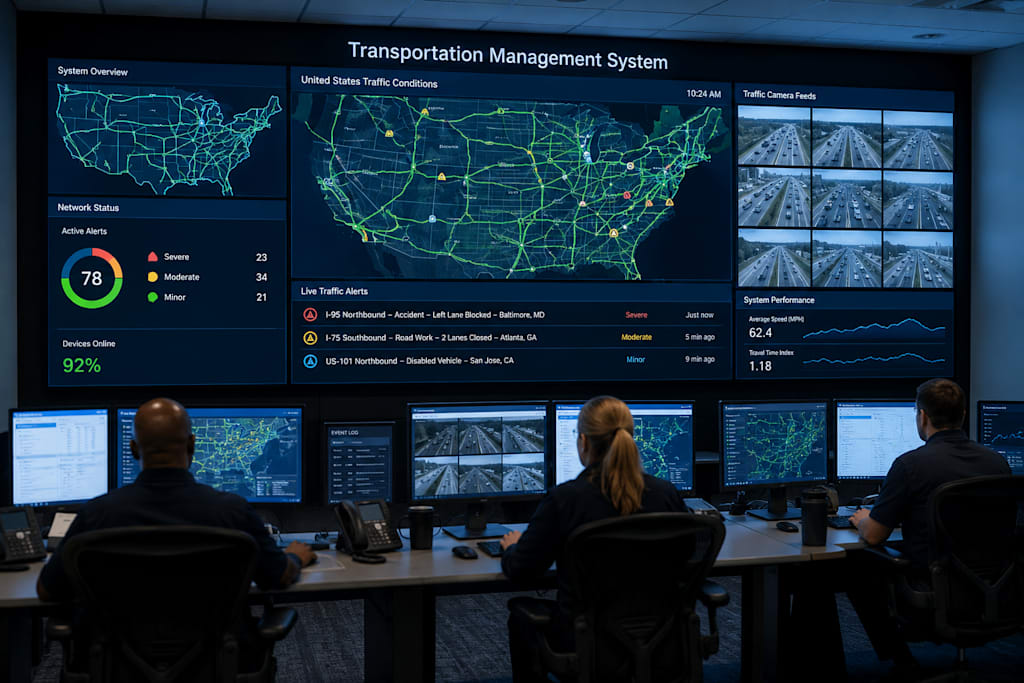
The growth of complex supply chains coupled with rising consumer demand for quick deliveries are driving US businesses towards sophisticated digital solutions for logistics operations. These sophisticated digital solutions-especially Transportation Management Systems (TMS)-provide a highly desirable medium for businesses to enhance operational processes, minimize expenditure, and boost transparency of their supply chain transportation.
The market in the United States for Transportation Management System is estimated at US$ 2.8 billion in 2025 and is anticipated to expand to US$ 7.3 billion by 2034, at a healthy CAGR of 10.77% over the 2026-2034 period (IMARC Group).
One of the prime reasons driving this growth is the complexity of supply chains in US businesses; businesses today deal with multi-modal transportation which includes the use of road, rail, air and sea in transit. Handling such transportation networks and optimizing them requires advanced systems for route planning, freight planning and tracking in real-time. TMS platforms provide these functionalities and a centralized solution for operations.
The rapid acceleration of the e-commerce and retail logistics industry in US business operations is another leading factor behind this rapid expansion; in response to a rise in demand from customers for timely and reliable deliveries, businesses are procuring and implementing TMS solutions to help with efficient last mile delivery operations, faster order fulfillment processes and real-time tracking of shipments.
Growing adoption of cloud-based TMS solutions is one of the key market-shaping trends; cloud implementation provides ease of use in terms of its flexibility, cost-effectiveness, and scalability making it a feasible solution for organizations of varying sizes, especially Small and Medium Enterprises (SMEs), wishing to modernize and automate their operations.
Also driving growth, technological innovations are revolutionizing the industry, where the inclusion of Artificial Intelligence (AI), Machine Learning (ML) and Internet of Things (IoT) into the latest TMS platforms provide powerful means of enabling predictive analytics, automated decision making and real-time shipment tracking thereby ensuring optimal routes, lower fuel consumption, and higher operational efficiency.
An essential driving factor for this market growth is also the increasing trend of sustainable operations and fuel efficiency; businesses in the US are using TMS to lower their carbon footprint through optimizing routes and reducing the amount of empty runs, thereby enhancing fuel efficiency as well. The adoption of these tools has gained importance due to growing strictness of environmental regulations.
Within the segmentation of the market, the same has been divided into software, hardware and services, with the software segment leading due to a rise in the demand for integration with a singular intelligent system of logistics operations. The deployment type market can be classified as on-premise and cloud based solutions with the growth rate of cloud based TMS solutions higher than its on-premise counterpart.
The different transportation modes present in the market are road, rail, airway and seaward mode, representing the diversity required in modern logistics supply chains across the business world. Application segment includes retail and e-commerce, manufacturing, logistics, healthcare, government organizations and travel & tourism with the leading applications currently being the retail and logistics sectors due to the growth spurt from online shopping. The regions under the market scope include the Northeast, Midwest, South, and the West regions of USA, where the market shows higher penetration due to the concentration of advanced logistics networks in such locations.
The incorporation of technology like blockchain and autonomous transportation in the new-age TMS platform is also a noteworthy trend that is taking shape. The integration is expected to boost supply chain efficiency by enhancing data transparency and providing tighter integration. However, high implementation costs, complexity in integration and threats from cyber attacks are significant challenges affecting this market, especially with small companies moving away from traditional methods to adopt the newest technologies.
The transport management system in the United States business environment is distinguished because of its inseparable relation to the digitalization of logistics; as firms increasingly look to boost operational efficiency, reduce overall costs, and keep their customers satisfied and informed, it can be predicted that transport management system will continue to be indispensable components in the modern business environment.
Further expansion is predicted through a growth in e-commerce, along with increasing development in technologies such as IoT and AI as well as cloud technology, the continued demand for green logistics solutions being the final catalyst for growth in the United States transportation management system market.
Detailed United States Transportation Management System Market forecast and trends
About the Creator
michael matthew
I’m a market researcher passionate about understanding people, markets, and motivations. My work blends data analysis, consumer psychology, and strategic insight to help brands and businesses make informed, human-centered decisions.
Enjoyed the story? Support the Creator.
Subscribe for free to receive all their stories in your feed.
Comments
There are no comments for this story
Be the first to respond and start the conversation.