
Why the United States Patient Monitoring Market Is Growing With Digital Healthcare Trends
The United States patient monitoring market is expanding as AI, remote healthcare, and wearable devices transform modern medical care and chronic disease management.

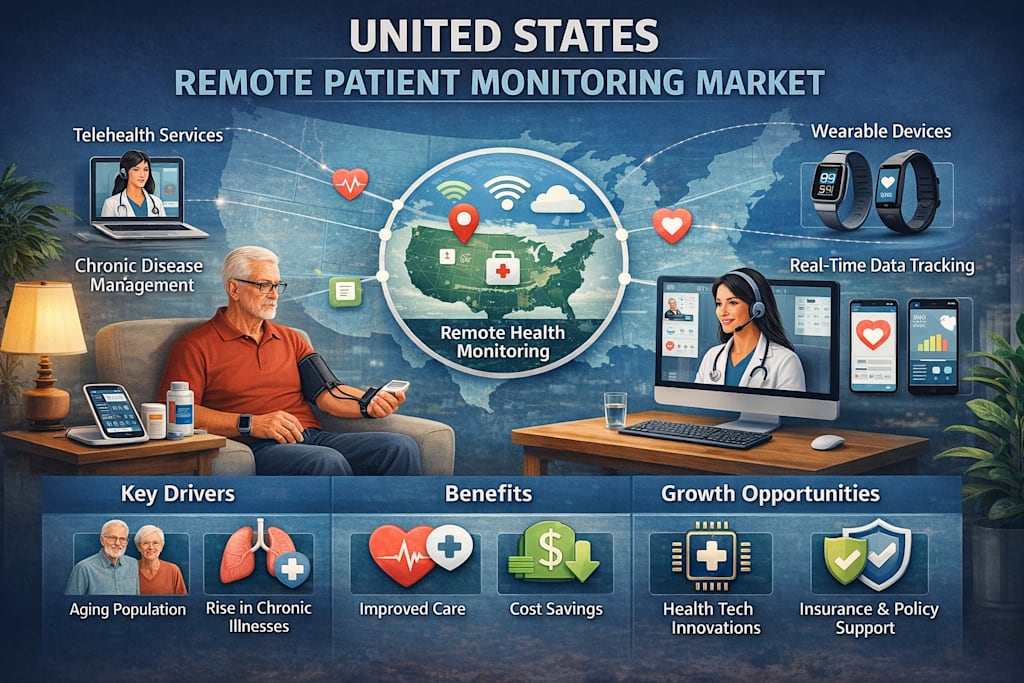
The US healthcare sector is adopting digital solutions at a high pace, aiming to improve patient health outcomes, increase overall efficiency, and lower the healthcare expenses. The most significant innovation within this domain is the advent of patient monitoring technologies which allow healthcare professionals to gather real time information on patients' vital signs and health conditions from any location. Patient monitoring systems have now become a staple of the US healthcare sector, from hospital settings to at-home care.
According to IMARC Group, the US patient monitoring market size stood at US$19.8 Billion in 2025 and is predicted to grow at a CAGR of 7.78% between 2026-2034 to reach a market value of US$39.7 Billion by 2034.
The increase in the number of patients diagnosed with chronic diseases like cardiovascular disease, diabetes, hypertension and respiratory diseases is a key factor fueling the demand for advanced patient monitoring devices. These conditions necessitate thorough and frequent monitoring and thus patients often require specific patient monitoring devices.
Moreover, with the growing number of aging individuals in the US, a larger percentage of the population will require ongoing care which further propels the need for sophisticated patient monitoring systems and devices, including but not limited to wearable technology, telemonitoring, and home health care devices.
The significant adoption of remote patient monitoring (RPM) technology is a driving factor for market growth. RPM devices help to monitor patient conditions outside the clinic which can help reduce readmissions, decrease overall care costs and improve patient compliance.
AI and IoT technologies integration into patient monitoring systems and devices are also shaping the growth of the market. These technologies provide a significant boost for the collection and analysis of patient health data and to support clinical decisions of health professionals.
In terms of segmentation, the patient monitoring market is divided into various types of devices such as cardiac monitoring devices, hemodynamic monitoring devices, respiratory monitoring devices, neuromonitoring devices, multiparameter monitoring devices and others.Cardiac monitoring systems holds a substantial share in this segment due to the rise in the prevalence of cardiovascular diseases.
The market for patient monitoring devices is bifurcated into end-users namely hospitals, ambulatory surgical centers, home healthcare centers and others. The home healthcare segment has a fast growing potential among all. Hospitals are also a leading segment in the patient monitoring market due to the availability of well-developed infrastructure and their massive patient volume.
The market is segmented on a geographical level to Northeast, Midwest, South, and West. All the regions have registered strong growth of the patient monitoring market due to increased investments and infrastructure in the country.
The increasing popularity of wearable health devices like smartwatches, and fitness trackers also contributes significantly to market growth. Users can monitor their vitals like blood oxygen saturation levels, heart rate, sleep cycle and activity which help to improve health and wellness.
Rise in demand for tele-health services and increased adoption of digital healthcare services due to the COVID-19 pandemic has also positively impacted the market.
Although, the US patient monitoring market is growing at a substantial rate, concerns such as data security and privacy issues, cybersecurity risks and high implementation costs of such systems might restrain market growth. Data privacy of patient information is a critical challenge to be addressed by the providers.
The patient monitoring market is so dynamic in the United States as it has brought a new wave of personalized, proactive care into practice, as it provides real-time insights that could benefit the health care systems transition from a reactive care model to a proactive health approach. The future market is anticipated to gain momentum from growing adoption of telehealth, growing demand for remote care, advancements in AI and IoT integration as well as a greater focus on patient-centric care.
Detailed United States patient monitoring market forecast and trends
About the Creator
michael matthew
I’m a market researcher passionate about understanding people, markets, and motivations. My work blends data analysis, consumer psychology, and strategic insight to help brands and businesses make informed, human-centered decisions.
Enjoyed the story? Support the Creator.
Subscribe for free to receive all their stories in your feed.
Comments
There are no comments for this story
Be the first to respond and start the conversation.