
Why the United States Enteral Feeding Devices Market Is Growing With Home Healthcare Trends
The United States enteral feeding devices market is expanding as chronic diseases, aging populations, and home-based care drive demand for advanced nutritional support solutions.

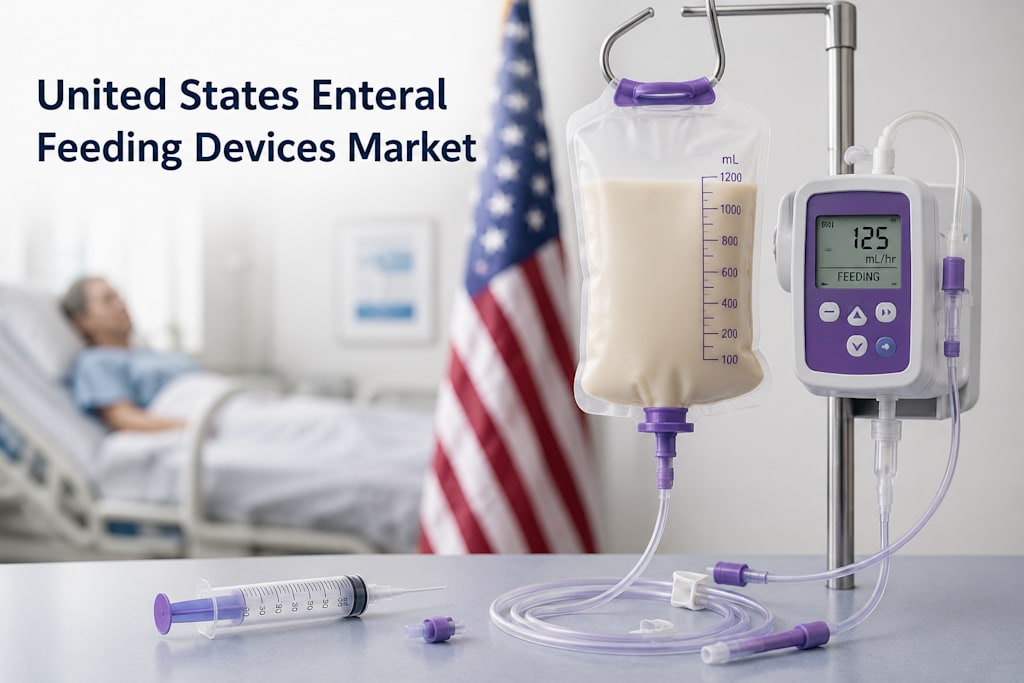
In the United States, a rapidly increasing need is being experienced for cutting-edge nutritional support solutions, especially among patients who are incapable of eating orally. Enteral feeding devices-which administer nutrients directly to the gastrointestinal tract-are becoming an integral part of managing the care of patients who have chronic illnesses, who are in a critical care setting, or who need long-term feeding. With the United States shifting toward patient-centered, home-based care, this market is steadily growing.
According to IMARC Group, in 2025 the United States enteral feeding devices market was valued at USD 1,048.19 million and will reach USD 1,763.70 million by 2034, showing a compound annual growth rate (CAGR) of 5.95% during 2026-2034.
A major growth driver for this market is the increasing incidence of chronic illnesses, such as cancer, neurological disorders, and GI disorders. Because these types of diseases generally affect the patient's ability to eat normally, a strong need is being observed for enteral nutrition support devices.
Another major factor shaping the market is the aging of the population in the United States. An increasing number of elderly individuals suffer from swallowing disorders (dysphagia) and malnutrition, thus requiring the continued use of enteral feeding devices for nutrition therapy over an extended period of time.
An integral trend transforming this market is the swift transition to home-based enteral nutrition. Both patients and their caregivers are recognizing the advantages of providing feeding in a home setting; it's more convenient, as well as cost-effective. This has led to the development of easy-to-use, portable devices that are suitable for home use.
In addition to these trends, the market is fueled by constant innovation in technology. Modern enteral feeding devices include smart sensors, programmability, real-time monitoring, and connectivity to facilitateremote monitoring and enhanced patient outcomes in clinical nutrition settings.
Looking at the segmentation, enteral feeding pumps currently hold the majority share of the market with roughly 28% in 2025; this is due to their precise control over rate and volume and the addition of enhanced safety features.
The adult population group is expected to dominate the market with nearly 82% of the share by 2025, owing to the prevalence of chronic and age-related conditions as well as nutritional deficiencies.
By application, gastroenterology accounts for approximately 33% of the share because enteral feeding is routinely prescribed for treating various digestive diseases and to aid those who have lost the ability to consume food orally.
Hospitals contribute 64% of the share because of the large number of patients being admitted into the ICU and high demand for a specialized feeding protocol.
Another prevalent trend includes the increased adoption of blenderized tube feeding, which refers to the use of whole food–based formulas over processed nutrition. The trend toward whole foods supports the overall shift towards a more natural, personalized approach to healthcare.
The reimbursement frameworks currently in place, including those offered by Medicare and Medicaid for enteral nutrition therapy, also provide a boost to the adoption rate.
The demand for enteral feeding devices spans across all major regions in the U.S., including the Midwest, the Northeast, the South, and the West. An advanced infrastructure, along with heightened awareness toward clinical nutrition, fuels the growing demand in these areas.
However, device-related issues like infection, blockage of the tube, and the need for the patient's or caregiver's trained application of these devices may restrain the growth of the market.
What makes the United States enteral feeding devices market unique is that it aligns with current healthcare trends like a rapidly aging population, the management of chronic diseases, and a move toward at-home care.
Technological innovation, the expansion of home-based care, an increased prevalence of disease, and enhanced clinical awareness are some factors which will influence the growth of the market in the years to come. As the health care systems focus on positive patient outcomes and cost efficiency, the enteral feeding devices market will continue to be a vital component in clinical nutrition practices.
Detailed United States Enteral Feeding Devices Market forecast and trends
About the Creator
michael matthew
I’m a market researcher passionate about understanding people, markets, and motivations. My work blends data analysis, consumer psychology, and strategic insight to help brands and businesses make informed, human-centered decisions.
Enjoyed the story? Support the Creator.
Subscribe for free to receive all their stories in your feed.
Comments
There are no comments for this story
Be the first to respond and start the conversation.