
Why the United States Carrier Screening Market Is Growing With Genetic Testing Innovation
The United States carrier screening market is expanding rapidly as advancements in genetic testing and growing awareness of inherited disorders drive demand for preventive healthcare solutions.

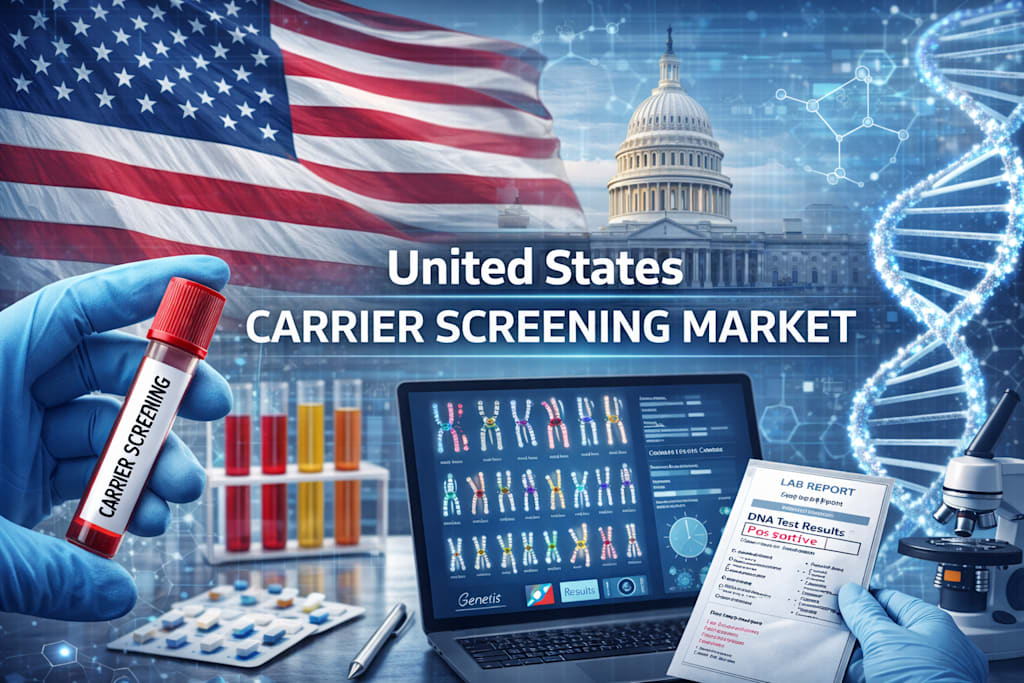
The escalating relevance of preventive healthcare and ongoing enhancements in genetic testing technology are orchestrating a profound shift in the reproductive medicine landscape of the United States. Carrier screening, a pivotal practice in family planning and early prevention of inherited disorders, is gaining prominence. Coupled with rising awareness regarding genetic health, the U.S. Carrier screening market is poised for remarkable growth.
IMARC Group's report states that the United States carrier screening market reached $562.5 million in 2025 and is predicted to reach $1,850.7 million by 2034 at a CAGR of 13.72% during 2026-2034.
One of the key factors driving the market is the increasing emphasis on early detection of inheritable genetic diseases. Healthcare providers recommend carrier screening tests to couples/individuals planning for pregnancy, assisting them in better understanding and managing the inherited genetic disorders associated with their reproduction process.
Another significant factor that is propelling the market is the rapid evolution of genetic testing technologies such as next-generation sequencing (NGS). NGS technologies allow laboratories to detect multiple genes more efficiently, accurately, and affordably than older methods, thereby making carrier screening accessible to more individuals.
Expanding carrier screening panels is a major trend in the market. Expanded carrier screening panels identify hundreds of genetic conditions in a single test, offering broader insights than traditional tests that only screen for a limited number of disorders.
With an increasing incidence of inheritable genetic disorders such as cystic fibrosis, sickle cell anemia, Tay-Sachs disease and spinal muscular atrophy, the carrier screening market is experiencing growth at a steady pace. Carrier screening can also help to reduce the transmission of these inherited diseases to offspring.
In terms of segmentation, the market is bifurcated into expanded carrier screening and targeted disease carrier screening. Expanded carrier screening holds a significant market share and offers a wider spectrum of disorders for screening.
On the basis of the medical condition, the market has been segmented into pulmonary conditions, hematological conditions, neurological conditions, and others. Pulmonary conditions account for a majority share due to the established procedure for the screening of cystic fibrosis in reproductive healthcare.
In the technology segment, the market has been classified as DNA sequencing, polymerase chain reaction (PCR), microarrays, and others. DNA sequencing has gained a substantial market share owing to its higher accuracy and efficiency in detecting genetic mutations.
In terms of end users, the market has been categorized into hospitals and clinics, reference laboratories, and others. Hospitals and clinics have a dominant share as they use genetic testing integrated into routine prenatal and reproductive healthcare.
Regionally, the market has been classified as Northeast, Midwest, South and West regions which have a well-established infrastructure for the delivery of genetic testing services. Increasing healthcare expenditure and awareness have fueled market growth across these regions.
The utilization of telehealth and digital health platforms is also emerging as a crucial market driver, making genetic counseling and carrier screening more accessible. The increasing adoption of personalized medicine and genetics research initiatives has further boosted investment in advanced testing solutions.
Conversely, ethical considerations regarding genetic information, the prohibitive cost of testing, and data security concerns may pose challenges to market expansion. Genetic counseling must be readily available and the management of patient data must be highly secure.
The key factor defining the dynamism of the US carrier screening market is its central role in preventive healthcare and personalized medicine. Given the healthcare systems' current focus on early intervention and well-informed reproductive choices, carrier screening has become an integral part of modern medicine.
Future market expansion will likely be driven by ongoing advancements in genomic technology, increased disease awareness, growing demand for personalized medicine, and enhanced accessibility to genetic testing. As personalized medicine continues its progression, carrier screening will undoubtedly remain a vital aspect of reproductive and preventive healthcare.
About the Creator
michael matthew
I’m a market researcher passionate about understanding people, markets, and motivations. My work blends data analysis, consumer psychology, and strategic insight to help brands and businesses make informed, human-centered decisions.
Enjoyed the story? Support the Creator.
Subscribe for free to receive all their stories in your feed.
Comments
There are no comments for this story
Be the first to respond and start the conversation.