
Why the United States Battery Recycling Market Is Growing With EV and Circular Economy Demand
The United States battery recycling market is expanding as EV adoption, stricter environmental rules, and demand for recovered critical minerals strengthen the case for circular battery systems.

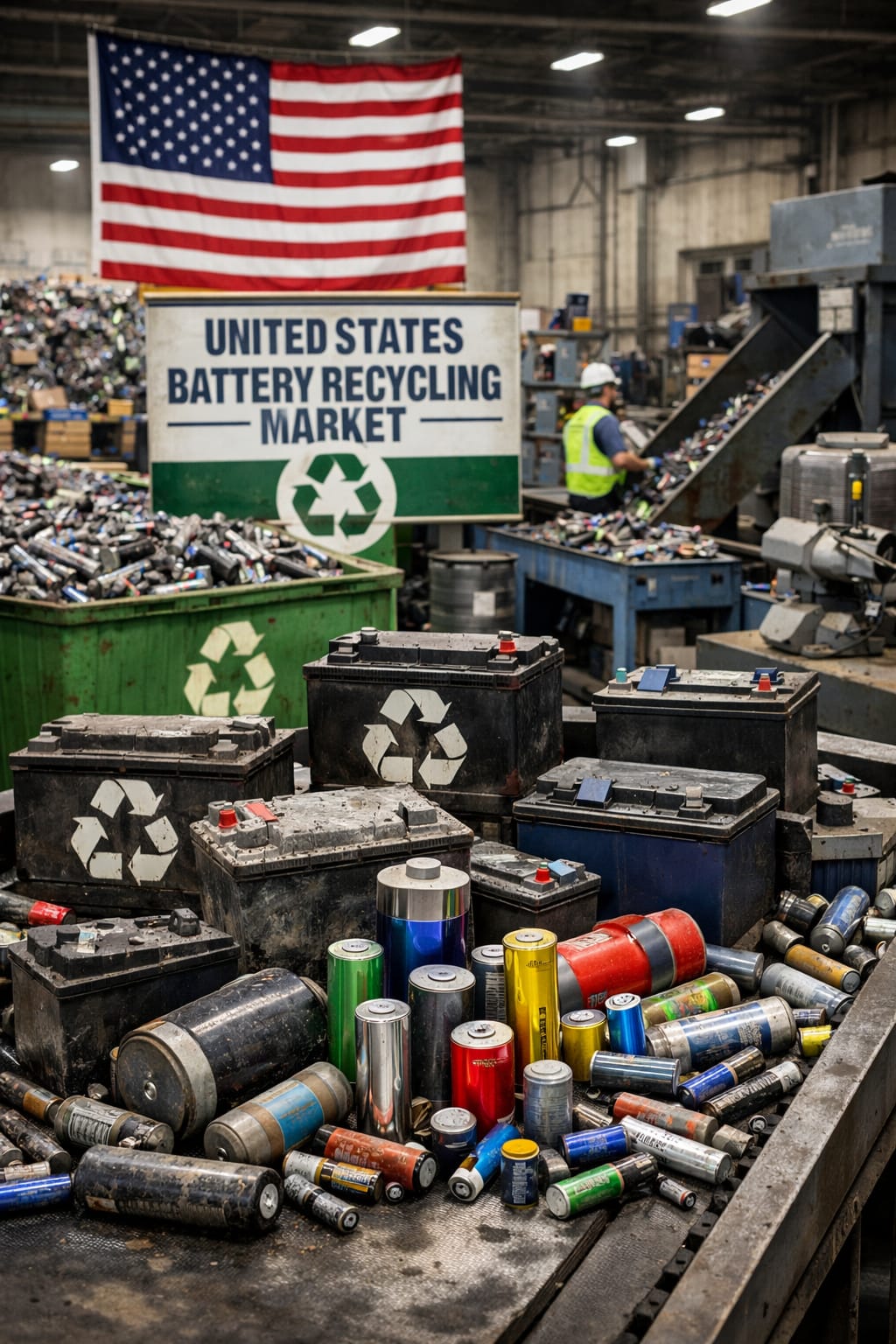
Battery recycling has become one of the quieter but more important parts of the clean-energy transition․ As electric vehicles‚ consumer electronics‚ and energy storage systems continue to grow‚ the question is not only how to make more batteries․ It is also how to recover the valuable materials already in circulation․ In the United States‚ that is helping turn battery recycling into a more calculated industry tied to sustainability‚ supply security and industrial resilience․ According to the IMARC Group‚ the US battery recycling market was worth USD 4․8 billion in 2025 and is expected to reach USD 8․1 billion in 2034․ The market is anticipated to grow at a CAGR of 5․90% between 2026 and 2034․ Sustainable waste management‚ growing awareness of environmental regulations‚ demand for EVs‚ and conservation of resources are driving the market growth․
One of the clearest reasons for this growth is regulation: according to IMARC‚ environmental regulations to reduce pollution in landfills and limit hazardous waste are increasing the recycling of lithium-ion and lead-acid batteries․ Batteries matter because they contain metals and chemicals that can have long-term impacts on the environment if not disposed of properly․ As regulations tighten‚ recycling will no longer be optional but an important aspect for the long-term sustainability of the batteries․
The rise in the use of EVs has caused increased interest in recycling‚ IMARC stating that rising EV adoption is creating a growing stream of end-of-life batteries․ Recycling the lithium‚ cobalt and nickel in existing batteries may be a more sustainable way to create new batteries and reduce the need for raw materials․ Additionally‚ in October 2024‚ the U․S․ Department of Energy announced USD 44․8 million in Bipartisan Infrastructure Law funding to eight projects to reduce battery-recycling costs and‚ in the long term‚ electric vehicle costs․
Because battery recycling is a supply chain issue as much as it is a waste management issue‚ the more we can do to recover these valuable minerals ourselves‚ the less we have to depend on newly mined materials․ In that sense‚ recycling is becoming part of how the United States thinks about material independence and long-term sustainability of battery manufacturing․ It is inferred from IMARC's reference to metal recovery‚ DOE support for it‚ and circular-economy goals․
Another major trend in the market is the use of advanced recycling technologies․ As reported by IMARC‚ hydrometallurgical and pyrometallurgical recycling processes are improving material recovery efficiency and reducing recycling costs․ Reference is made to Novocycle Technologies' announcement in July 2024 that it made progress improving battery recycling technology․ Such innovations matter because recycling also becomes much more scalable once recovery rates and energy consumption improve․
An expanded definition of circular economy is also emerging‚ with IMARC reporting that closed-loop systems are becoming more common as auto makers‚ recyclers and battery manufacturers seek to recirculate components rather than dispose of them․ Partners such as BMW and Redwood Materials are recovering materials and feeding them back into the battery supply chain‚ according to the report․ The report mentions that Redwood Materials received a USD 2 billion conditional loan from the Department of Energy's Advanced Technology Vehicles Manufacturing Loan Program to increase domestic battery-cell manufacturing․
This matters because it shows that battery recycling is becoming an important part of industrial strategy․ A circular economy can maximize the value of material‚ minimize waste and support more resilient domestic manufacturing․ Instead of being viewed as a waste to be eliminated‚ used batteries are viewed by more companies as a source of reusable industrial feedstock materials that IMARC calls the circular-economy / closed-loop model․
From the market structure standpoint‚ IMARC has segmented the market by type․ These include: lead-acid batteries‚ nickel-based batteries‚ lithium-based batteries‚ and others․ On the basis of source‚ the market has been classified into industrial‚ automotive‚ consumer products‚ electronic appliances‚ and others․ The report goes on to break out the market by end use (reuse‚ repackaging‚ extraction‚ and so on) and by region (Northeast‚ Midwest‚ South‚ and West)‚ which highlights that the market is relatively broad and diverse rather than a specific niche․
A convenient example of this in the US is battery recycling‚ which sits at the interface of waste management‚ clean energy and resource strategy․ The battery materials market increases in parallel with the market for electric vehicles and electronics․ The benefits of recycling are not solely environmental‚ and companies that have good recovery systems and can incorporate them into circular supply chains will play an increasing role in the energy sector and manufacturing in the U․S․ over the next few decades․ The conclusion of this report is based on the market drivers‚ trends‚ and segmentation by IMARC․
About the Creator
michael matthew
I’m a market researcher passionate about understanding people, markets, and motivations. My work blends data analysis, consumer psychology, and strategic insight to help brands and businesses make informed, human-centered decisions.
Enjoyed the story? Support the Creator.
Subscribe for free to receive all their stories in your feed.
Comments
There are no comments for this story
Be the first to respond and start the conversation.