
Why the United States 3D Cell Culture Market Is Growing With Smarter Biomedical Research
The United States 3D cell culture market is expanding as researchers and drug developers adopt more human-relevant models for disease study, drug discovery, and regenerative medicine.

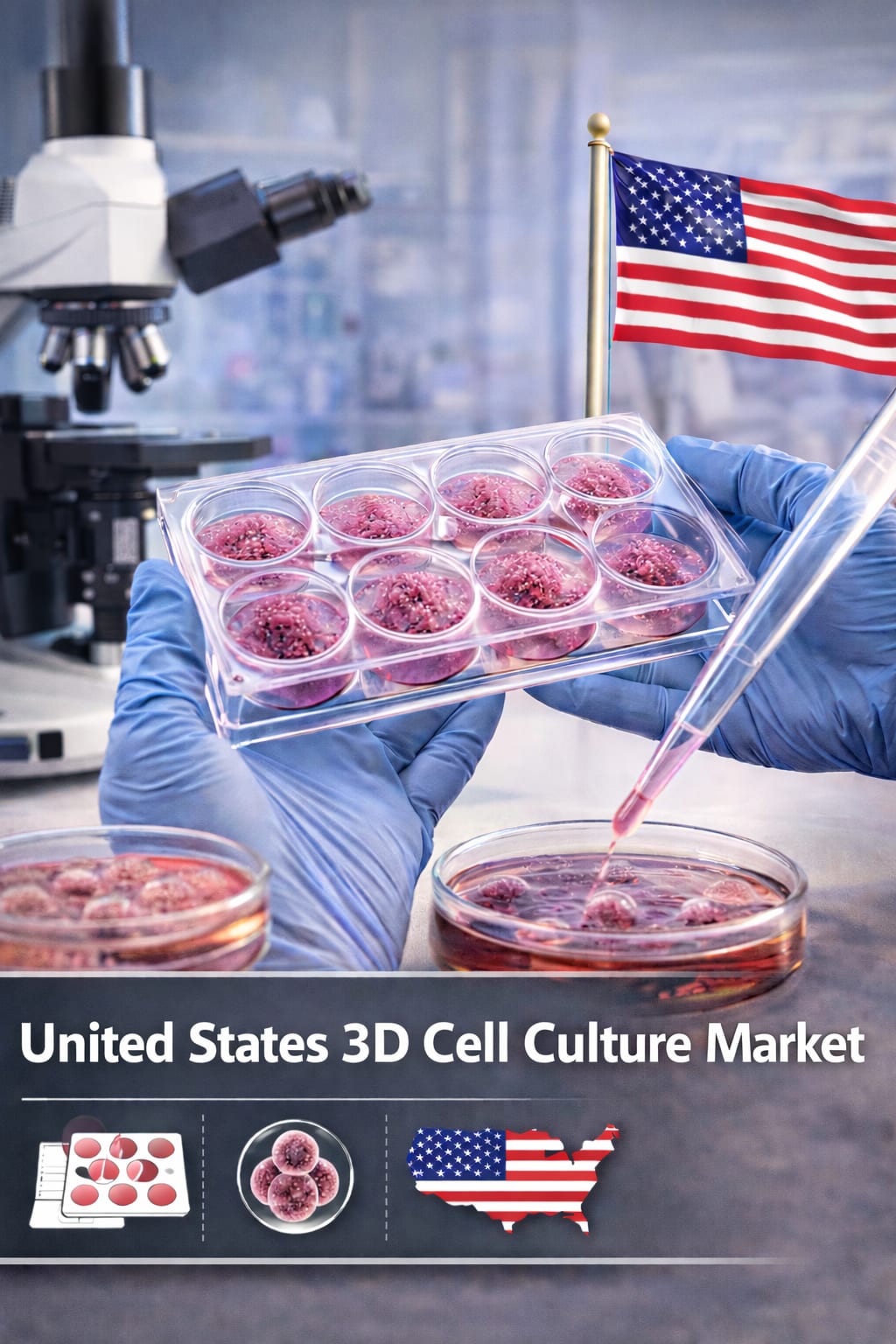
In fact‚ some of the most important changes in health care often come long before a person is treated: in the lab‚ as scientists study disease‚ test treatments‚ and try to figure out how the body will respond to the changes․ In that environment‚ the model really matters․ That's why 3D cell culture is becoming so popular in the United States at the moment․ 3D systems have been used to better mimic real human tissue than 2D cell cultures in a flat‚ two-dimensional form․ According to the IMARC Group‚ the 3D cell culture market in the US was worth $2‚997․1 million in 2025 and is expected to reach $8‚998․6 million in 2034 with a CAGR of 12․34% during the period of 2026-2034․ For these reasons‚ the market is driven by growth in biomedical research and drug development‚ a growing prevalence of chronic diseases‚ and investment in more predictive preclinical testing․
The market is also driven by limitations of conventional 2D lab models․ According to IMARC‚ customary two-dimensional (2D) cultures are unable to fully replicate the cellular interactions and tissue structure in an organism's body‚ leading to less reliable or applicable results for drug efficacy and safety․ In contrast‚ 3D cell culture is more physiologically relevant‚ making it better suited to modeling disease and use in drug discovery․
That matters because drug development demands are growing․ IMARC notes chronic diseases such as cancer‚ diabetes‚ chronic kidney disease and neurological disorders continue to rise‚ which drives the need for predictive‚ human-relevant testing platforms․ The report also references a 2023 estimate that nearly 76․4% of U․S․ adults (approximately 194 million people) have one or more chronic conditions and that 51․4% of U․S․ adults (approximately 130 million people) have two or more chronic conditions‚ consistent with increased investment by biotechnology and pharmaceutical companies to improve research tools․
The general trend is toward earlier application of 3D systems in drug discovery․ In the words of the International Market Analysis Research and Consulting‚ pharmaceutical companies are increasingly using 3D technology in an effort to avoid the costly consequences of late-stage failures by generating more relevant in vivo data․ Failing drug development costs money‚ and better preclinical models speed and build confidence in the decision-making․ In that sense‚ 3D cell culture is not just a more advanced research model‚ but also a tool to increase the efficiency of R&D․ This is inferred from the drug development trends described by IMARC․
The use of high-throughput screening‚ imaging systems‚ microfluidics‚ and automation in 3D cell culture is on the rise with the advance of technology: IMARC reports that they allow researchers to observe cell behavior in complex environments and screen for more drug candidates with less effort․ According to the report‚ in 2022 the NIH funded 57422 biomedical research grants‚ the most of any country in the world‚ according to WHO․ The grants pay for advanced platforms using 3D models․
Another big driver is the move towards alternatives to animal testing․ According to IMARC‚ ethical concerns and stricter regulations are increasing the demand for human-relevant lab models․ The report noted that a United States FDA policy had been announced on April 14‚ 2025‚ indicating the agency's preference for the use of 3D human organoids‚ organ-on-a-chip systems‚ and AI models instead of studying animal test results for investigational new drug development when possible․ The report indicated that 3D cell culture was showing traction not only with academics and corporate sponsors‚ but also with regulators․
This also gives understanding into where the demand for them is most concentrated․ The market research company IMARC found that in 2025‚ scaffold-based platforms represented the largest product segment (48․1% market share) as these mimic the native extracellular matrix․ They are most commonly used in cancer research and regenerative medicine․ By application‚ stem cells accounted for 34․9% of the market share․ By end-use‚ biotechnology and pharmaceutical companies were the leading segment with 46․8% market share․ By 2025‚ the Northeast region of the United States was the largest regional market for proteomic research‚ due to the high concentration of academic institutes‚ biopharma centers‚ and government research․
The US 3D cell culture market is particularly interesting as it mirrors a wider trend in biotechnology in that researchers want models that resemble humans more closely․ From a regulatory perspective the need for non-animal alternatives exists to minimize pain‚ save time and money․ Biopharma companies need tools to avoid wasting the time and money of drug development․ As these various trends converge‚ it is likely that 3D cell culture will play an even more important role in the translation of biomedical innovation from the laboratory into the clinic․ This is an inference based on the trends‚ the market drivers‚ and the market segmentation presented by IMARC․
About the Creator
michael matthew
I’m a market researcher passionate about understanding people, markets, and motivations. My work blends data analysis, consumer psychology, and strategic insight to help brands and businesses make informed, human-centered decisions.
Enjoyed the story? Support the Creator.
Subscribe for free to receive all their stories in your feed.
Comments
There are no comments for this story
Be the first to respond and start the conversation.