
Why the U.S. Kids Food and Beverage Market Is Entering a New Era of Health-Focused Growth
Parents are demanding healthier, cleaner, and more nutritious options for children, reshaping one of America's fastest-evolving consumer food categories.

Today, American families are placing greater emphasis on health, wellness, ingredient transparency, and nutritional value than ever before. Parents are reading labels carefully, avoiding excessive sugar, seeking organic products, and looking for foods that support growth, immunity, digestion, and overall development.
This shift is creating a major transformation across the kids food and beverage industry.
Manufacturers are responding with innovative products that combine convenience with nutrition, while retailers are expanding shelf space for healthier alternatives. Functional beverages, organic snacks, probiotic-rich products, and clean-label offerings are rapidly gaining popularity as families seek better choices for children.
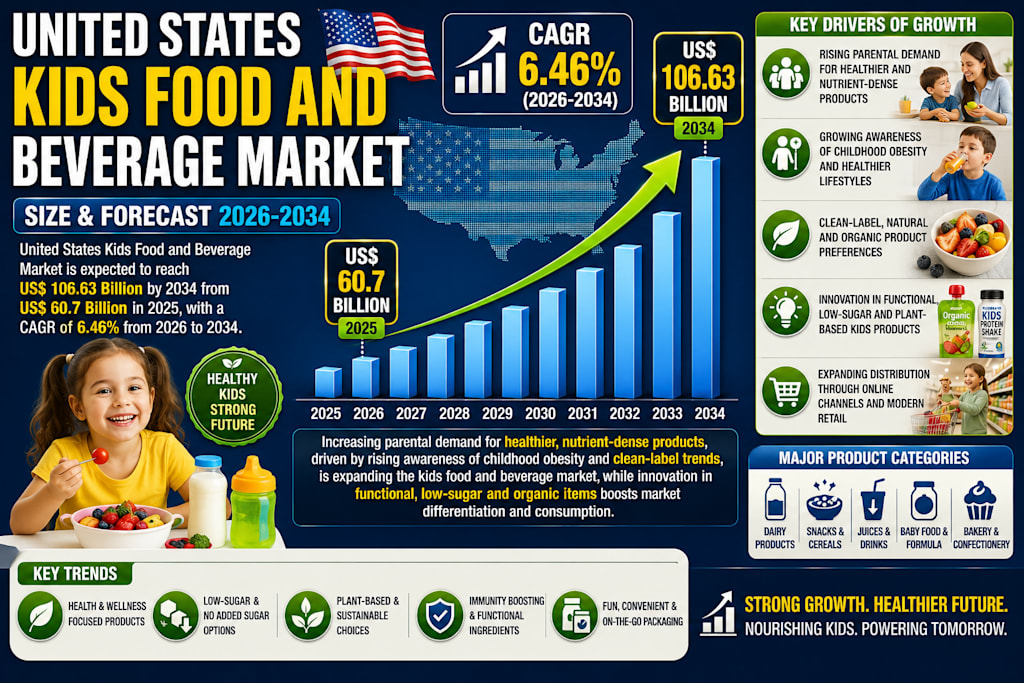
According to Renub Research, the United States Kids Food and Beverage Market is expected to grow from US$ 60.7 billion in 2025 to US$ 106.63 billion by 2034, expanding at a CAGR of 6.46% during 2026–2034. This growth is being driven by increasing parental demand for healthier products, growing awareness of childhood obesity, and continued innovation in nutrient-rich foods and beverages.
As nutrition becomes a top priority for American families, the market for children's food and beverages is entering a period of significant evolution and opportunity.
Parents Are Redefining Children's Nutrition
The biggest force shaping the market today is changing parental behavior.
Modern parents are significantly more informed about nutrition than previous generations. Access to health information, pediatric guidance, social media discussions, and scientific research has increased awareness about the impact of diet on childhood development.
Parents increasingly prioritize lower sugar content, natural ingredients, organic certification, functional nutrition, protein-rich snacks, digestive health support, and clean-label formulations.
Rather than viewing snacks and beverages as simple treats, many families now see them as opportunities to support children's physical and cognitive development. This shift is encouraging manufacturers to rethink product development strategies and introduce offerings that satisfy both nutritional requirements and children's taste preferences.
Health and Wellness Trends Are Driving Product Innovation
Health-conscious parenting has become one of the most powerful growth drivers within the industry.
Growing concerns about childhood obesity, excessive sugar consumption, and nutrient deficiencies are encouraging families to seek healthier alternatives to traditional children's products. Manufacturers are responding by creating products that deliver nutritional benefits while maintaining flavor and convenience.
Innovation now focuses on lower-sugar formulations, functional ingredients, whole-food nutrition, and fortified products that offer meaningful health benefits. Many companies are significantly reducing sugar content while preserving taste appeal. Products increasingly include vitamins, minerals, probiotics, electrolytes, and other ingredients designed to support health and wellness.
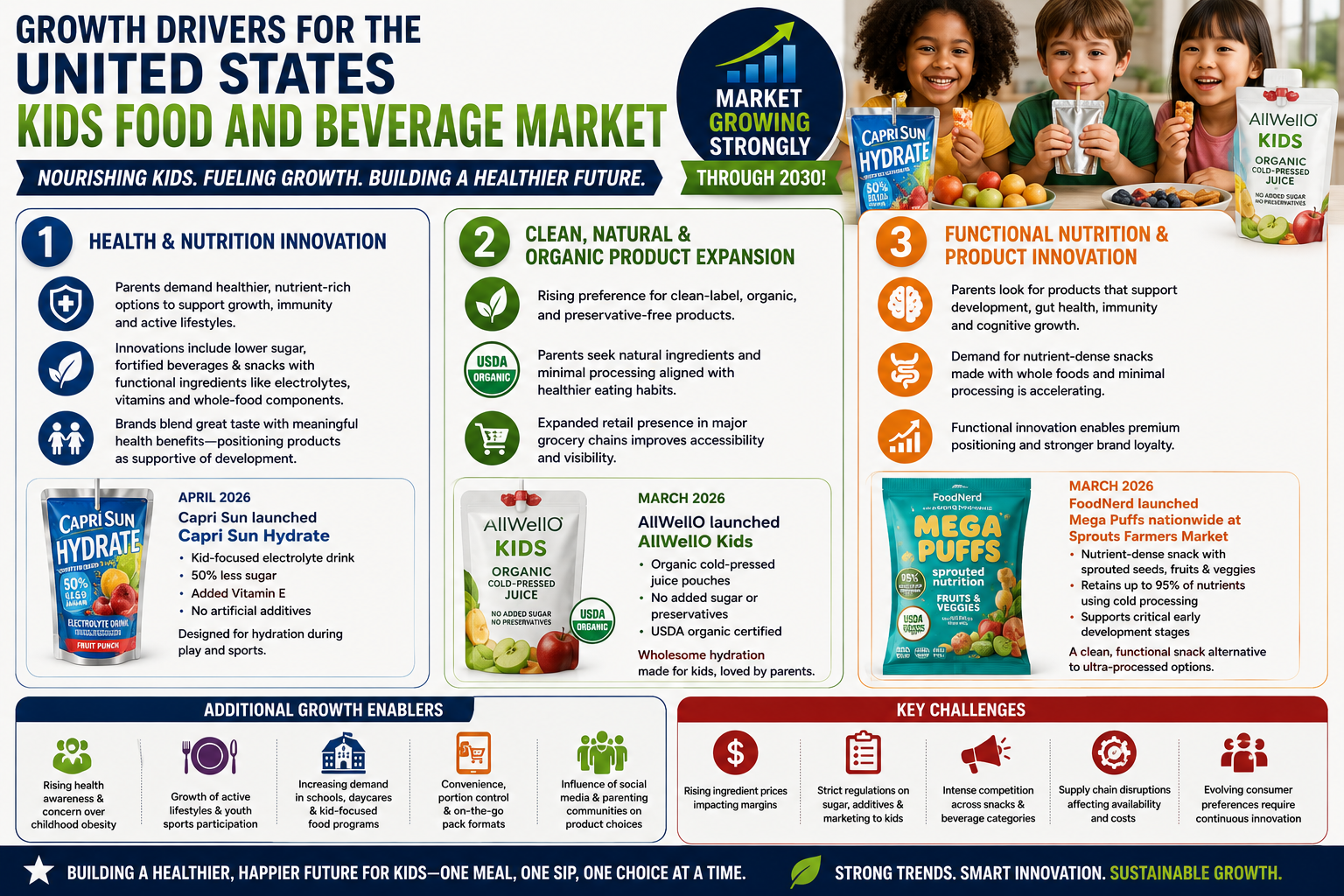
One notable example occurred in April 2026 when Capri Sun introduced Capri Sun Hydrate, a children's electrolyte beverage containing 50% less sugar and added vitamin E. The product reflects the broader trend toward combining hydration and nutritional benefits in kid-friendly formats.
These innovations are helping transform the perception of children's foods from indulgent treats into functional nutritional solutions.
Clean-Label Products Continue Gaining Popularity
The clean-label movement has become a major force within the children's food and beverage market.
Parents increasingly want products with simple ingredient lists, recognizable components, and minimal processing. Artificial flavors, colors, preservatives, and sweeteners are becoming less acceptable to many consumers.
As a result, brands are focusing on organic ingredients, no added preservatives, natural flavoring, minimal processing, and transparent sourcing practices.
In March 2026, AllWellO launched AllWellO Kids, an organic cold-pressed juice pouch line produced without added sugars or preservatives and certified under USDA organic standards. The launch highlights growing demand for cleaner beverage options tailored specifically to children.
As consumers become more ingredient-conscious, clean-label positioning is increasingly serving as a key differentiator within the marketplace.
Functional Nutrition Is Creating New Opportunities
One of the most exciting developments in the industry is the rise of functional children's foods and beverages.
Today's parents increasingly seek products that offer benefits beyond basic nutrition. Popular functional benefits include gut health support, immune system support, hydration, cognitive development, digestive wellness, and protein supplementation.
Manufacturers are incorporating probiotics, prebiotics, vitamins, minerals, and other beneficial ingredients into products designed specifically for children.
A strong example emerged in March 2026 when FoodNerd launched Mega Puffs, a nutrient-dense snack made from sprouted seeds, fruits, and vegetables processed using proprietary cold-processing technology designed to preserve nutritional content.
These products appeal strongly to parents seeking ways to improve children's nutrition without creating additional complexity during meal planning.
Convenience Remains a Key Purchasing Factor
Despite growing interest in health and nutrition, convenience continues to play a crucial role in purchasing decisions.
Modern families often balance demanding work schedules, school activities, sports programs, and other commitments. As a result, products that combine nutrition with convenience remain highly attractive.
Popular formats include snack pouches, portable smoothies, ready-to-eat snacks, yogurt tubes, single-serve beverages, and lunchbox-friendly products that fit easily into busy family lifestyles.
Parents want options that can be packed quickly, consumed conveniently, and still provide nutritional value. The most successful products are often those that effectively combine portability, convenience, taste, and health benefits.
E-Commerce Is Expanding Product Accessibility
Digital commerce has significantly transformed how parents discover and purchase children's food and beverage products.
Online platforms provide access to a wider variety of products, improve product discovery, support subscription-based purchasing, and allow parents to compare reviews before making decisions.
The growth of e-commerce is particularly beneficial for emerging brands specializing in organic, functional, or premium children's nutrition products. Digital platforms make it easier for niche companies to reach highly targeted audiences seeking healthier food and beverage solutions.
Challenges Around Ultra-Processed Foods Continue Growing
Despite strong market growth, the industry faces important challenges.
One of the most significant concerns involves increasing scrutiny of ultra-processed foods. Parents, healthcare professionals, advocacy organizations, and regulators are paying closer attention to ingredient quality and processing methods. Concerns about excessive sugar, artificial ingredients, and long-term health effects are influencing consumer behavior.
This trend creates pressure on manufacturers to reformulate existing products, improve ingredient transparency, reduce artificial additives, and enhance nutritional profiles while maintaining flavors children enjoy.
Balancing health improvements with taste expectations remains one of the industry's greatest challenges.
Competition Is Becoming More Intense
The kids food and beverage market is becoming increasingly competitive.
Traditional food manufacturers now compete with organic specialists, functional nutrition brands, startup innovators, private-label retailers, and direct-to-consumer companies.
Parents are increasingly selective and often evaluate products based on organic certification, allergen-friendly ingredients, plant-based formulations, low-sugar content, sustainability practices, and overall nutritional value.
This crowded marketplace forces companies to invest heavily in innovation, branding, packaging, and consumer education. Differentiation has become more important than ever.
Looking Ahead: The Future of Children's Nutrition
The future of the U.S. kids food and beverage market will likely be shaped by functional nutrition, clean-label innovation, organic product expansion, personalized nutrition, digital commerce growth, ingredient transparency, and reduced-sugar formulations.
Manufacturers that successfully combine nutrition, convenience, transparency, and taste are likely to be best positioned for long-term success.
As parental expectations continue to evolve, innovation will remain essential.
Final Thoughts
The U.S. kids food and beverage market is undergoing a significant transformation.
Parents today expect far more than convenience and taste. They increasingly seek products that contribute positively to their children's growth, development, and long-term health. This shift is encouraging companies to rethink traditional formulations and invest in cleaner, more functional, and nutritionally focused offerings.
With the United States Kids Food and Beverage Market projected to grow from US$ 60.7 billion in 2025 to US$ 106.63 billion by 2034, the sector is entering a new era defined by health, innovation, and consumer empowerment.
For manufacturers, retailers, and investors, the message is clear: the future of children's nutrition will be shaped not only by what kids want to eat, but also by what parents believe will help them thrive.
About the Creator
Enjoyed the story? Support the Creator.
Subscribe for free to receive all their stories in your feed.
Comments
There are no comments for this story
Be the first to respond and start the conversation.