
Why the Tire Vulcanizer Market Is Heating Up Again
Radial tires, EV demand, and smarter curing presses are reshaping a quietly essential machine category.
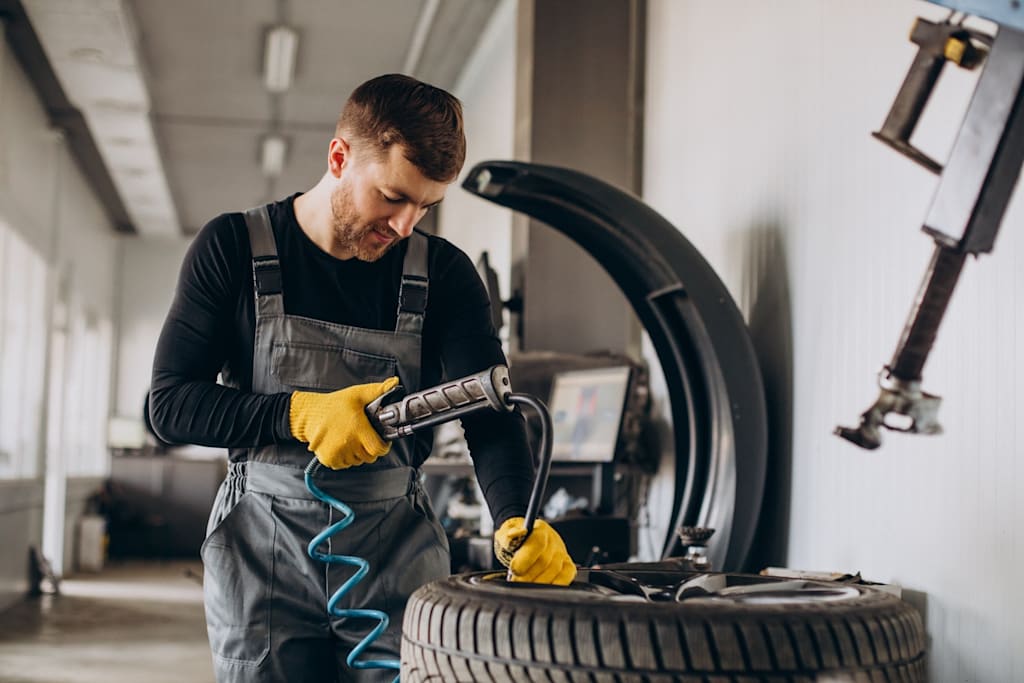
There's a machine sitting inside almost every tire plant on Earth that most drivers will never hear of, yet it determines whether the tire on your car holds together at highway speed. That's the job of the tire vulcanizer market — the industrial presses that apply heat and pressure to turn raw rubber into a finished, road-ready product. It's a bigger business than the name suggests: valued at USD 1.5 billion in 2025, the market is projected to reach USD 2.6 billion by 2035, growing at a 5.7% annual rate as global vehicle production and tire replacement cycles both keep climbing.
For anyone curious how that growth breaks down by tire type, power source, or region, it's worth pulling the detailed segment figures straight from the source rather than relying on summary numbers alone.
Radial Tires Are Quietly Running the Show
Radial construction now accounts for 55.4% of the tire-type segment, and that dominance is doing more to shape equipment demand than almost anything else in the industry. Radial tires need tighter, more consistent high-temperature curing than older bias-ply designs, which means manufacturers can't get away with legacy presses anymore — the equipment has to keep pace with the tire technology riding on top of it. Hot vulcanization, which uses high-pressure steam or electric heat, holds 70.8% of the method segment for exactly this reason: it's still the most reliable way to hit the bonding strength and dimensional accuracy that radial production demands at scale.
Electric power sources have overtaken hydraulic systems too, now holding 50.4% of the power-source segment. That shift isn't cosmetic. Electric vulcanizers give plant operators finer temperature control and lower running costs, and tightening energy regulations across Asian and European manufacturing zones are accelerating the retirement of older hydraulic lines.
A Repair Detail That Explains a Lot About Demand
One number tucked into the industry's technical guidelines says more about the smaller end of this market than any growth chart does. Under common tire-repair standards, a puncture is generally only repairable if it measures less than 0.25 inches across and sits at least 16 inches from any other damage. That narrow margin is exactly why so many tire service centers and fleet workshops keep their own compact vulcanizers on hand — repair work that falls outside that window simply isn't viable, and demand for portable, workshop-grade equipment tracks closely with how often that threshold gets crossed.
That same logic explains why cold vulcanization, which bonds rubber chemically at ambient temperature without heavy industrial hardware, has carved out a durable niche among independent repair shops and field service crews who can't justify a full hot-press setup.
Where the Next Decade of Growth Is Actually Coming From
Asia Pacific remains the center of this industry, holding 40.1% of global demand and valued at roughly USD 0.60 billion in 2025, driven largely by China, India, Japan, and South Korea's combined manufacturing footprint. But the more interesting story may be what's happening at the edges of that footprint. In November 2025, Prinx Chengshan Tire broke ground on a new manufacturing facility in Kedah Rubber City, Malaysia, building dedicated passenger and truck tire production lines around advanced curing systems from day one — a sign that Southeast Asia isn't just absorbing overflow demand but actively competing for new capacity.
Electric vehicles are adding a layer to this that didn't exist a decade ago. EV tires carry heavier loads and need different rolling-resistance characteristics, which means they require their own curing parameters — pushing manufacturers serving this segment of the tire vulcanizer industry to retool rather than simply scale up what they already had running.
What's Next for the Industry
The next decade of growth in this sector won't come from doing the same thing faster — it'll come from equipment that can think a little. Touchscreen controls, remote diagnostics, and cloud-connected monitoring are turning vulcanizers from isolated machines into networked production assets, and that shift matters as much for a two-person retreading shop as it does for a 24-line OEM plant. As EV tire formulations multiply and sustainability rules tighten further, the manufacturers who treat their curing equipment as a long-term software-and-hardware investment, rather than a one-time capital purchase, are the ones likely to come out ahead.
About the Creator
Enjoyed the story? Support the Creator.
Subscribe for free to receive all their stories in your feed.
Comments
There are no comments for this story
Be the first to respond and start the conversation.