
Why the Smart Homes Market Is Quietly Reshaping Daily Life
From voice assistants to AI thermostats, connected living is moving from novelty to norm.
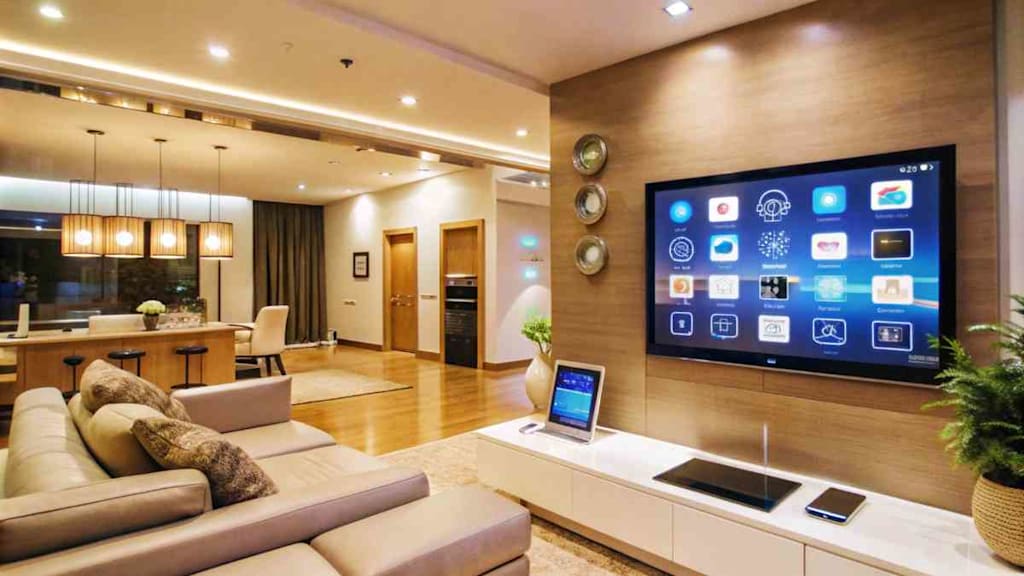
Walk into almost any newly built apartment today and you'll likely find a doorbell that streams video to a phone, a thermostat that learns your schedule, or a speaker that turns off the lights on command. That shift is exactly what's fueling the smart homes market, which is expanding at a pace few other consumer technology categories can match. What started as a niche interest for early adopters has become a mainstream expectation, woven into how people heat their houses, watch television, and keep an eye on their front doors.
Anyone curious about how this growth breaks down by product category, region, or technology type can get a free sample report that outlines the underlying research methodology and segment data in more detail.
From Convenience to Necessity
The appeal of a connected home used to be framed as a luxury — flip a switch from your phone instead of walking to the wall panel. That framing has changed. Energy costs, security concerns, and the sheer convenience of automation have turned smart devices into something closer to a default home feature. Thermostats that adjust themselves based on household patterns, locks that can be checked remotely, and cameras that send real-time alerts have all moved from gadget-store curiosities to standard renovation requests. Builders have noticed too: new construction projects are increasingly wired for smart systems from the start, since retrofitting walls after the fact is far more disruptive than installing the infrastructure during the build.
The Numbers Behind the Boom
The scale of this shift shows up clearly in the data. Industry research values the global smart homes market at roughly USD 132.2 billion in 2023, with projections pointing toward USD 503.1 billion by 2032 — a compound annual growth rate near 16.8%. Security and access control products, including smart locks and video doorbells, currently make up the largest product segment, while Asia Pacific leads regionally with close to a third of global revenue share, driven largely by urban growth in China and India. For readers who want a fuller breakdown of how the smart homes market is segmented by product type, application, and geography, that level of detail is laid out in the complete industry analysis. In the U.S. specifically, surveys from the Consumer Technology Association have found that a majority of households already own at least one connected device, with audio-video products and home networking tools leading ownership rates.
What's Powering the Next Wave
A lot of the next phase of growth traces back to interoperability. For years, getting a smart lock, a thermostat, and a speaker from three different brands to work together was a genuine headache. The introduction of the Matter standard has started to chip away at that problem, and 2024 brought a wave of products built around it — LG's updated ThinQ platform, Bosch's second-generation Smart Home Controller, and Amazon's Matter Casting tools among them. Voice assistants like Alexa and Google Assistant continue to act as the connective tissue between devices, while AI-driven features are increasingly used to anticipate routines rather than just respond to commands. There's also a quieter trend worth watching: health monitoring is creeping into the smart home space, with air-quality sensors and wellness tracking tools showing up alongside traditional security and entertainment products.
The Hurdles Still Ahead
None of this growth comes without friction. Privacy and data security remain the most persistent concerns, since every connected device is, by definition, another potential entry point for a cyberattack. Compatibility issues haven't fully disappeared either — even with standards like Matter gaining traction, plenty of households still juggle multiple apps and hubs to manage their devices. These aren't small obstacles, and they'll likely shape how quickly certain markets, particularly more cautious or budget-conscious ones, adopt new products.
Even with those challenges, the trajectory looks fairly settled. As construction practices, energy policy, and consumer habits continue to favor connected systems, the home itself is becoming less of a static structure and more of a responsive environment — one that adjusts, monitors, and learns. Whatever friction remains around privacy and compatibility will likely get resolved the way most tech growing pains do: gradually, through better standards and more competition. The bigger story is that the smart home, once an experiment for tech enthusiasts, has quietly become the default blueprint for how houses get built and lived in.
About the Creator
Enjoyed the story? Support the Creator.
Subscribe for free to receive all their stories in your feed.
Comments
There are no comments for this story
Be the first to respond and start the conversation.