
Why the Sanitary Diaphragm Pump Market Is Quietly Booming
Pharma's biologics boom and stricter hygiene rules are reshaping demand for fluid-transfer equipment.

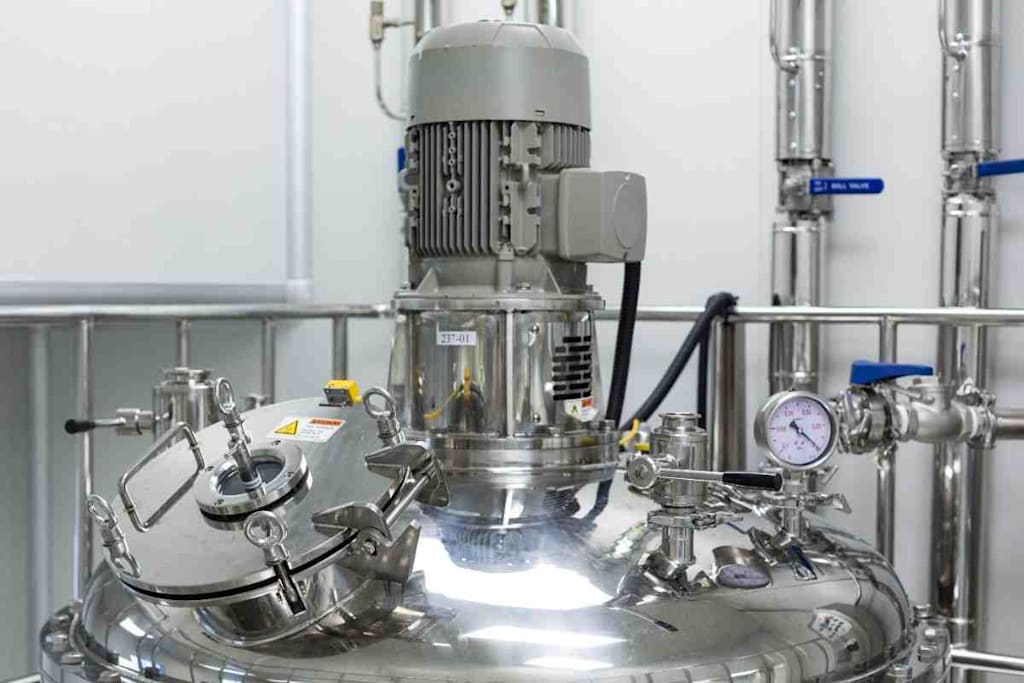
Most people will never think about how a vaccine, a yogurt cup, or a bottle of shampoo actually moves through a factory before it's sealed and shipped — but somewhere in that process, a pump has to transfer the liquid without contaminating it, damaging it, or letting it touch machinery it shouldn't. That narrow, unglamorous job is exactly what's driving the Sanitary Diaphragm Pump Market, which industry research projects will grow from roughly $419.8 million in 2025 to $975.7 million by 2035 — an 8.8% annual growth rate, among the faster-moving niches in industrial equipment.
A more detailed breakdown of how that growth splits by technology, actuation method, and end-use industry sits in a preview section of the underlying study, distributed separately from the full report.
Why Pneumatic Still Wins in a Sterile Room
Air-Operated Double Diaphragm pumps hold the largest technology share, at 47.2%, and pneumatic actuation leads overall at 49.1%. The logic is fairly simple once you think about where these pumps actually operate: a pump with no electrical components can't spark, which matters enormously in facilities handling flammable solvents or fine powders. Pneumatic units are also self-priming and can run dry without damage, which is exactly what you want in equipment that gets cleaned and restarted constantly throughout a shift. Double diaphragm configurations dominate pump design overall, at 52.7%, because the alternating chamber setup smooths out pulsation in a way single-diaphragm designs can't quite match.
A Quiet Acquisition Signals Where the Big Players Are Headed
In June 2025, PSG, one of the largest names in fluid-handling equipment, acquired ipp Pump Products GmbH, a manufacturer of high-performance rotary lobe pumps and related processing equipment. The deal wasn't about diaphragm technology specifically — it was about rounding out PSG's broader hygienic processing portfolio so it can offer pharmaceutical and food clients a wider range of certified equipment under one roof. That's a pattern worth watching across the broader sanitary diaphragm pump market size as a whole: consolidation among established players is increasingly about breadth of certified product lines rather than any single pump innovation, since large pharmaceutical and food manufacturers increasingly prefer sourcing multiple equipment types from one validated supplier rather than juggling several vendors through a compliance audit.
What These Pumps Can Actually Handle
The technical range here is wider than it might seem. According to pump manufacturer Tapflo, most sanitary diaphragm pumps operate somewhere between 500 and 950 liters per minute, with standard 3-inch configurations capable of peak flows approaching 980 liters per minute. Medium-flow models lead the market by range, at 46.5% share, simply because that throughput band covers the bulk of mainstream food, beverage, and pharmaceutical production needs without requiring the more specialized engineering that very high or very low flow rates demand. Temperature tolerance varies by housing material — stainless steel bodies handle up to 110°C, while plastic-bodied variants are typically limited to 70-100°C, a distinction that matters a great deal when a cleaning-in-place cycle runs hot water or steam through the system multiple times a day. Food and beverage remains the largest end-use industry, at 38.1%, though pharmaceutical and biotechnology demand is climbing quickly as biologics and cell-therapy manufacturing scale up worldwide.
Where the Demand Is Concentrated
North America holds the largest regional share, at 43.2% and roughly $181.3 million, driven heavily by FDA enforcement of current Good Manufacturing Practice standards that effectively force continuous equipment upgrades. Europe follows closely, anchored by Germany, France, and Switzerland's long-standing pharmaceutical and dairy processing base, along with EHEDG hygienic design standards that shape how equipment gets specified in the first place. Asia Pacific is growing fastest, as China and India pour investment into biopharmaceutical manufacturing capacity that didn't exist at this scale even a few years ago.
Looking Ahead
The next phase of growth here probably won't come from a dramatically different pump design, but from what gets built around the pump itself. Smart monitoring sensors that track diaphragm wear and cycle counts are already moving from pilot programs into standard specification, giving maintenance teams a way to predict failures before they cause downtime rather than reacting after the fact. Advanced elastomer materials that resist aggressive cleaning agents and modular cartridge designs built for single-use bioprocessing are likely to keep expanding alongside them, particularly as contract manufacturers chase the flexibility to switch between client products without risking cross-contamination. None of it changes what the pump fundamentally does. It just makes the job a little harder to get wrong.
About the Creator
Enjoyed the story? Support the Creator.
Subscribe for free to receive all their stories in your feed.
Comments
There are no comments for this story
Be the first to respond and start the conversation.