
Why the Safety Lancets Market Keeps Growing
Diabetes rates, home healthcare, and smarter devices are turning a simple blood-draw tool into a $5 billion category.

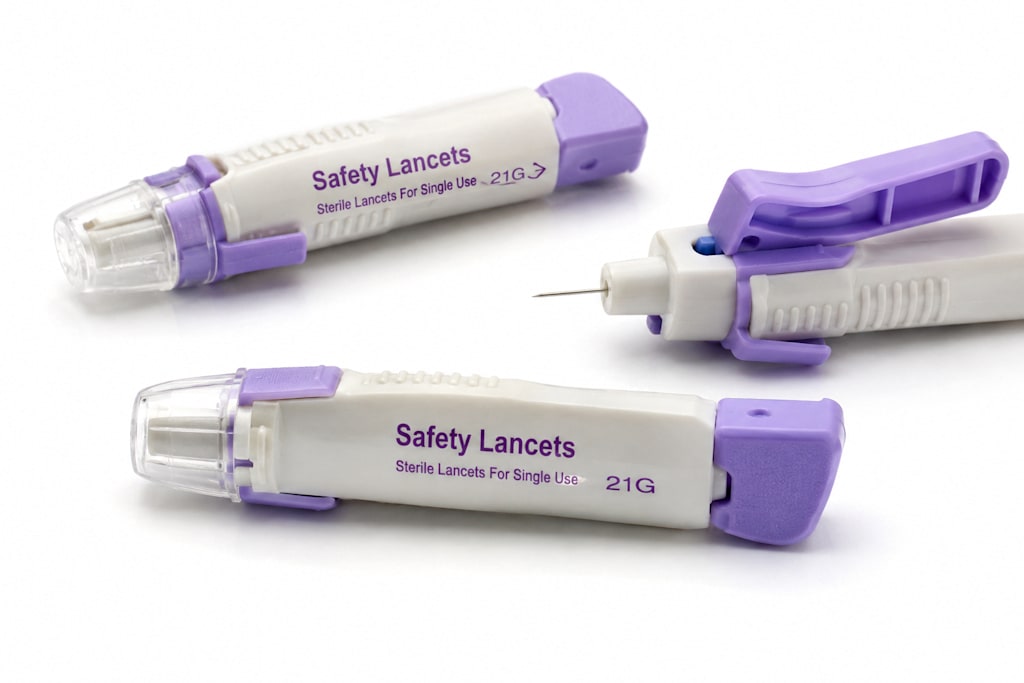
Prick your finger to check blood glucose today and you're using roughly the same basic idea as patients did decades ago — a small needle, a drop of blood, a reading. What's changed is everything around that moment: who's doing it, where they're doing it, and how the device is built to protect them in the process. That shift is what's driving the Safety Lancets Market from $1.71 billion in 2025 toward $4.95 billion by 2035, a compound annual growth rate of 11.21%. The pitch is straightforward: safer design, fewer needlestick injuries, and a device that works as well on a kitchen counter as it does in a hospital ward.
What's Actually Driving the Numbers
The primary engine here isn't hard to find. Nearly 589 million adults worldwide are living with diabetes, and the International Diabetes Federation expects that number to climb sharply in the coming decades. Patients managing the disease typically test their blood glucose two to four times daily — which translates to somewhere between 730 and 1,460 lancets per person per year. That's recurring, non-optional demand, and it compounds as diagnosis rates improve. Right now, 43% of people with diabetes globally remain undiagnosed, meaning a large population still hasn't entered the testing cycle at all.
Button-Activated Leads, But Pressure-Activated Is Catching Up
Among device types, button-activated lancets hold the largest share at 56.48%, preferred in clinical and home settings alike for their consistent penetration depth and reduced pain. Needle-based incision designs dominate their category too, at 61.32%, valued for precision and compatibility with most glucometers on the market. What's more interesting is where the growth is actually moving: pressure and contact-activated lancets are expanding at a 12.14% CAGR, particularly in emerging markets where cost-effectiveness and portability matter more than feature sets. Blade-based devices are following a similar arc, gaining traction as pain-free ergonomic designs pull in home-care users who'd previously avoided self-testing.
Home Care Is the Fastest-Growing End-User — By a Meaningful Margin
Hospitals and clinics still account for 58.94% of end-user demand, driven by high patient throughput and institutional procurement at scale. But home care is growing at 12.72% annually, the fastest of any segment, as patients increasingly prefer managing chronic conditions outside clinical environments. Telemedicine expansion is accelerating this: when a remote consultation depends on a patient's self-reported glucose reading, the reliability and safety of the lancet doing the blood draw suddenly matters a lot more than it used to.
A March 2025 Launch Shows Where the High End Is Headed
Not every development in this market is about cost reduction. In March 2025, Roche Diagnostics launched a new single-use safety lancet with improved pain reduction and automatic retraction, reinforcing its Accu-Chek franchise in diabetes management. A month later, Terumo launched a new line built around optimized ergonomics and single-use technology. In June, Nipro followed with devices emphasizing minimal discomfort for self-testing. Three major product launches in a four-month window from three different continents signals something: the competitive pressure in this category is real, and the battleground is increasingly user experience rather than basic function.
Where the Demand Sits Geographically
North America leads with 38.10% revenue share, backed by high diabetes prevalence, strict safety regulations, and a healthcare infrastructure that heavily favors safety-engineered devices over conventional alternatives. The U.S. market alone sits at $0.46 billion in 2025 and is projected to reach $1.31 billion by 2035. Europe holds steady behind it, driven by aging populations, established diabetes management programs, and institutional demand in countries like Germany and the U.K. Asia Pacific is the fastest-growing region at a 12.14% CAGR, where China and India are seeing rapid adoption from buyers entering the self-monitoring category for the first time rather than upgrading from older devices.
Looking Ahead
The next phase of growth in safety lancets probably depends less on the lancet itself and more on what surrounds it. Smart devices integrated with digital glucometers and mobile apps already account for 35–40% of newly sold lancets in developed markets, and that share is moving higher. Modular, connected monitoring ecosystems — where the lancet is one node in a broader chronic disease management platform — are shifting from early adoption into mainstream product strategy. The brands that figure out how to sell continuity of care, rather than just a safer needle, are likely to define the category's next decade.
About the Creator
Mayur Pande
Mayur Pande is an experienced SEO Specialist with 7 years of experience in Digital Marketing. Throughout his career, he has developed strong expertise in client relationship management, achieving business targets.
Enjoyed the story? Support the Creator.
Subscribe for free to receive all their stories in your feed.
Comments
There are no comments for this story
Be the first to respond and start the conversation.