
Why the Radiation Detection Drones Market Is Taking Off
Nuclear plants and emergency teams are sending drones, not people, into the riskiest radiation zones.
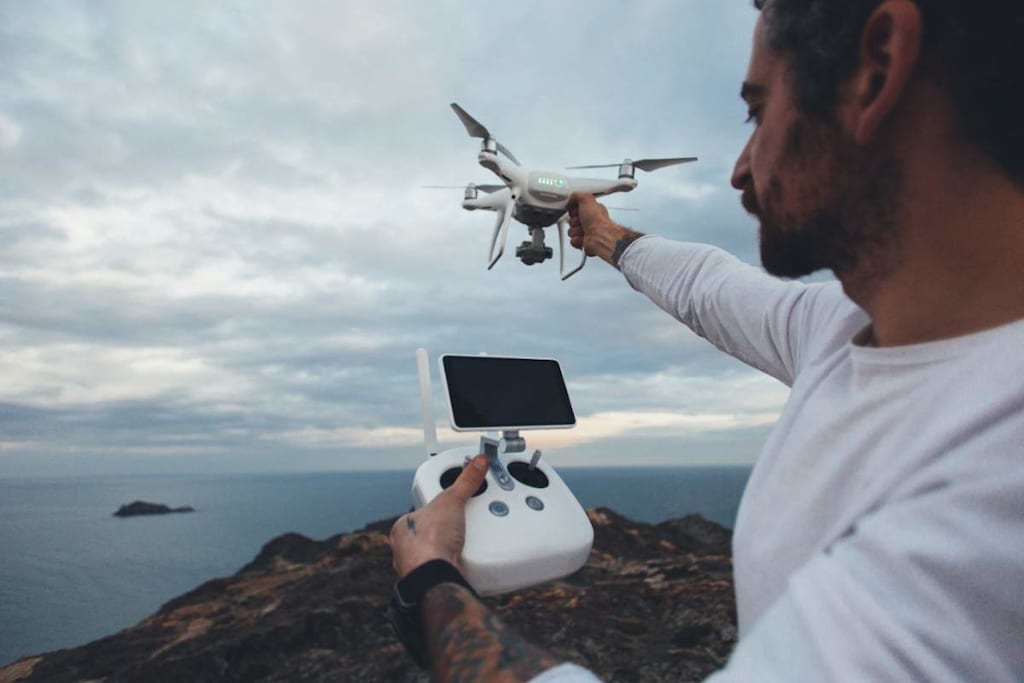
Sending a worker into a high-dose radiation zone has always been one of the riskiest parts of nuclear and emergency-response work — and it's exactly the task drones are now taking over. The radiation detection drones market is projected to grow from $310.4 million in 2025 to $1.08 billion by 2035, a striking 13.3% annual growth rate driven by nuclear safety rules, faster emergency response needs, and a push to keep human surveyors out of hazardous zones altogether.
Anyone curious about how this market breaks down by drone type, sensor, and end-user can request the full sample dataset for a closer look at the segment-level numbers.
Why Hovering Beats Walking Into a Hot Zone
Most radiation detection drones on the market today are rotary-wing models, which hold a commanding 54.8% product-type share. The reason is practical: rotary drones can hover, move slowly, and hold a stable position over a contaminated area — something fixed-wing aircraft can't do as easily, and something a human surveyor would only do at real personal risk. Paired with scintillation detectors, which lead the sensor category at 35.6% share for their gamma-sensitivity and reliability in the field, these drones can shorten radiation surveys by more than 50% compared with manual ground checks.
That speed isn't just convenient — it directly reduces how long a human ever needs to be near a radiation source in the first place.
A Real Deployment: Drones Inside Reactor Buildings
One of the clearest examples of this shift in practice comes from Flyability's collision-tolerant indoor drones, which are increasingly used to inspect confined nuclear and industrial spaces fitted with radiation sensors. Their caged airframes let operators fly into tight pipe runs, reactor buildings, and storage halls to gather dose data, cutting personnel exposure and inspection downtime in places no one wants to linger. Building on that, Mirion Technologies' partnership with Flyability integrated the RDS-32 radiation survey meter onto the Elios 3 drone, letting operators capture live and post-processed radiation readings while mapping hazardous or confined spaces — a combination that has helped reinforce U.S. leadership in this space.
Nuclear Plants Are Driving the Biggest Share of Demand
Nuclear power plants represent the single largest application segment in the broader radiation detection drones market, holding 31.5% share, as operators look to cut down on the number of staff hours spent in restricted zones during routine and emergency inspections. Military users aren't far behind, accounting for 29.7% of end-user demand, largely for border surveillance, port security, and assessing contaminated areas before personnel are sent in. Programs like the RaDron miniature radiation-detecting drone, tested across multiple civil-defence exercises with national nuclear and CBRN institutes, show how the same compact technology serves both civilian safety drills and military-style threat assessment.
Where the Technology Goes From Here
The next phase for this market looks less about basic detection and more about precision and autonomy. Multi-detector drones are already mapping dose variations with spatial resolution down to just a few metres in European nuclear research trials, and autonomous path-planning systems are improving coverage by more than 30% on the same battery budget — useful in GPS-denied spaces like reactor interiors. As AI takes on more of the job of flagging unusual radiation patterns and converting raw sensor data into clear risk maps, radiation detection drones are likely to shift from a specialized safety tool into a routine fixture of nuclear, defense, and emergency-response operations worldwide.
About the Creator
Enjoyed the story? Support the Creator.
Subscribe for free to receive all their stories in your feed.
Comments
There are no comments for this story
Be the first to respond and start the conversation.