
Why the Precision Turned Product Manufacturing Market Keeps Growing
Behind every steady industrial number is a wave of factory consolidation, EV demand, and capacity upgrades.

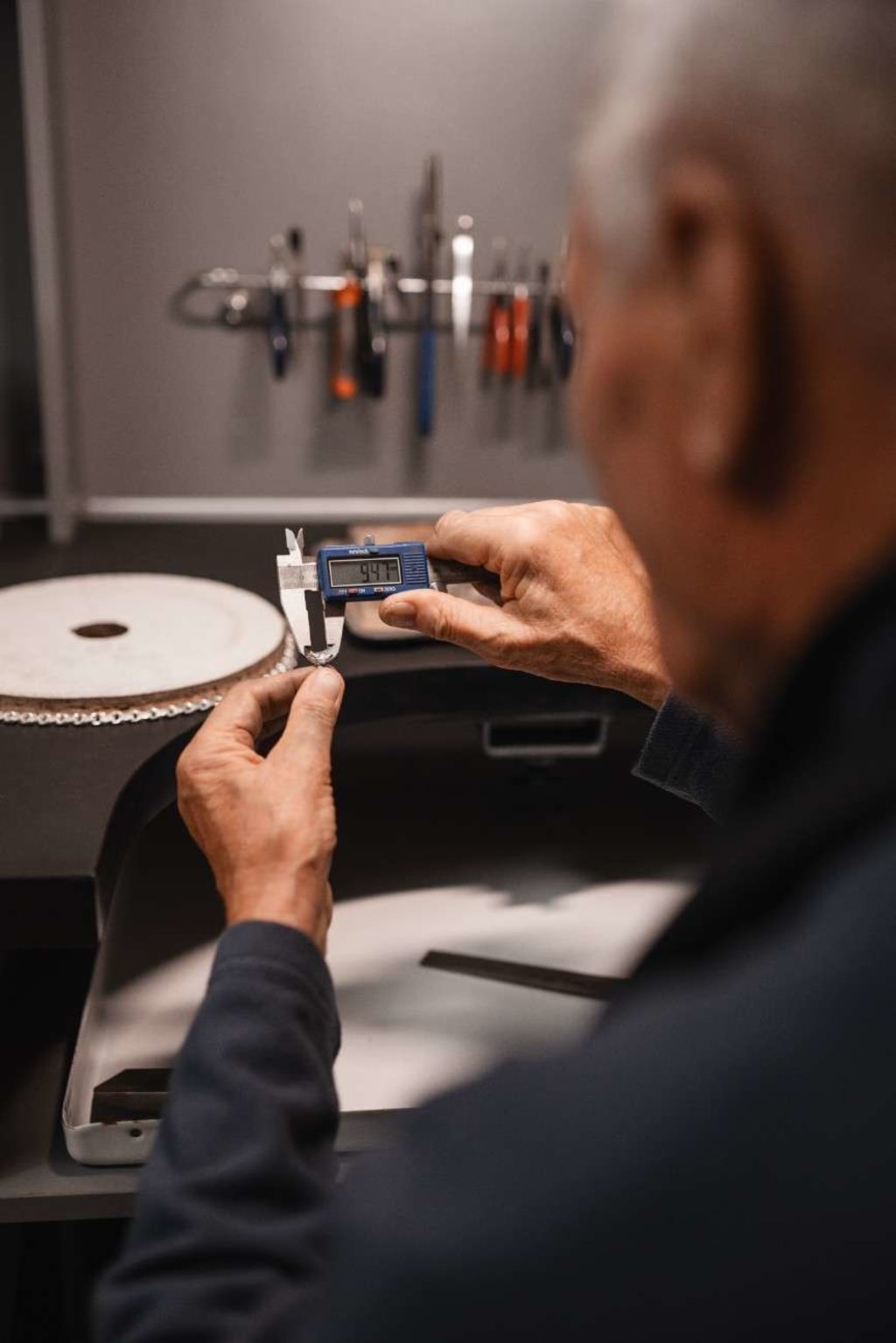
Precision turned parts are the kind of component nobody notices until one fails — a tiny steel shaft inside a fuel injector, a turned pin holding a surgical instrument together, a connector buried inside an EV battery pack. None of it is glamorous, but all of it has to be machined to tolerances measured in microns. That unglamorous reliability is exactly what's kept the Precision Turned Product Manufacturing Market expanding at a steady clip, with industry research projecting it to grow from roughly $108.9 billion in 2025 to $202.5 billion by 2035.
A closer look at how that growth splits by machine type, material, and end industry is laid out in the report's preview materials, prepared alongside the full study.
Why a CNC Machine Doesn't Replace Skilled Judgment Entirely
CNC operations now account for roughly 68% of all precision turning activity, and CNC equipment itself makes up just over half of the machine types in use. That's not surprising — programmable, repeatable accuracy is exactly what automotive and electronics manufacturers need when they're ordering parts by the hundreds of thousands. What's more interesting is that manual operation hasn't disappeared. It's shrunk into a specific niche: prototype runs, custom one-off parts, and the kind of low-volume work where a skilled machinist's judgment still beats a programmed cycle. The split isn't really automation replacing craft — it's automation absorbing the repetitive work and leaving craft to handle everything that doesn't fit a standard run.
The Industry Is Consolidating Fast
It helps to watch what private equity is actually buying here. In August 2024, CORE Industrial Partners' portfolio company PrecisionX Group acquired MSK Precision Products, expanding its footprint across automotive and industrial customers. Less than a year later, in July 2025, PrecisionX Group went back to the table and acquired Hudson Technologies, picking up additional turning capacity and geographic reach. Two acquisitions in eleven months from the same buyer isn't a coincidence — it's a strategy. Precision turning is a fragmented industry full of small, regionally focused shops, and that fragmentation is exactly what makes roll-up acquisitions attractive: buy capacity, buy customer relationships, and consolidate before competitors do the same. That dynamic is reshaping the broader precision turned product manufacturing market faster than any single technology shift could on its own.
Steel Still Dominates, But the Edges Are Shifting
Steel accounts for nearly 68% of the materials used in this industry, and that's unlikely to change soon — it machines well, holds tight tolerances, and costs less than most alternatives. The movement is happening at the margins. Plastics are picking up share in electronics and medical applications, where weight and corrosion resistance matter more than raw strength. Titanium, Inconel, and other specialty alloys are showing up more often too, mostly because aerospace and medical device makers need materials that tolerate extreme heat or sit safely inside the human body. None of these alternatives will overtake steel anytime soon, but they're forcing manufacturers to invest in tooling and machining expertise that a steel-only shop simply doesn't need.
Where the Demand Is Actually Coming From
Automotive remains the single largest end-user, at roughly 37.5% of total demand, and the shift toward electric vehicles is adding to that rather than subtracting from it — EVs still need precision-turned shafts, connectors, and battery housing components, just different ones than a combustion engine required. Healthcare and defense are smaller but growing steadily, both driven by stricter tolerance and traceability requirements that favor specialized suppliers over generalist shops. Asia-Pacific holds the largest regional share, at nearly 46% of global revenue and roughly $49.8 billion, supported by deep automotive and electronics manufacturing bases in China, Japan, and South Korea. In the US, the Federal Reserve reported manufacturing capacity utilization climbing to 76.3% in December 2025 — a sign that factories aren't just adding orders, they're running closer to their physical limits.
Looking Ahead
The next decade of growth here probably won't come from any single breakthrough technology, but from a slow accumulation of smaller shifts: more EV-specific components, more multi-axis machines handling jobs that used to require several setups, and more consolidation as larger players absorb the regional shops that can't afford the next round of equipment upgrades. Nearshoring is likely to keep pulling some production back toward North America and Europe, even if Asia-Pacific keeps its lead on sheer volume. None of this will make precision turning a headline industry. It'll just keep quietly making the parts that everything else depends on.
About the Creator
Enjoyed the story? Support the Creator.
Subscribe for free to receive all their stories in your feed.
Comments
There are no comments for this story
Be the first to respond and start the conversation.