
Why the Military Cloud Computing Market Is Heating Up
Defense agencies are racing to secure cloud platforms, and the numbers show where the money is headed.
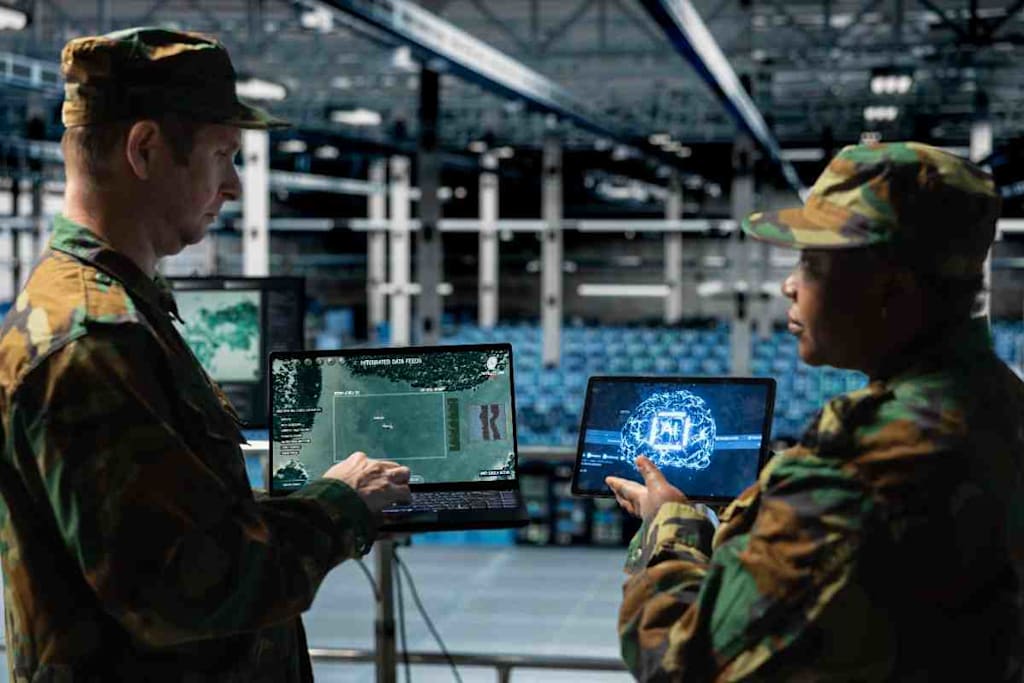
For decades, military IT ran on isolated data centers and proprietary hardware that took years to upgrade. That's changing fast. The Military Cloud Computing Market is projected to grow from roughly $10.2 billion in 2025 to $30.1 billion by 2035, expanding at an 11.4% annual rate, as defense agencies swap aging infrastructure for cloud platforms built around encryption, elastic scaling, and faster deployment cycles. The shift isn't cosmetic — it reflects a structural rethink of how armies, navies, and air forces store data, run simulations, and coordinate operations across continents.
Anyone curious about how this spending breaks down by branch, region, and deployment model can request the full dataset behind these figures to see exactly where defense budgets are flowing.
Why Private Cloud Still Leads Defense Computing
Private cloud deployments account for the largest slice of military adoption, at 58.3%, and that's not a surprise once you consider what's at stake. Defense organizations need full control over where data physically sits and who can touch it, which makes shared public infrastructure a harder sell — at least for now. Infrastructure as a Service follows closely behind at 52.7% of usage, largely because it lets defense IT teams provision computing power on demand for training exercises, intelligence processing, or sudden surges in mission activity without committing to new hardware.
The Deals That Are Actually Driving Growth
Numbers on a slide only tell part of the story; the contracts behind them tell the rest. In November 2025, Hewlett Packard Enterprise landed a $931 million, ten-year deal with the Defense Information Systems Agency to deploy its GreenLake Private Cloud across Department of Defense data centers, pairing public-cloud-style management tools with on-premises control and zero-trust security. Around the same time, AWS announced a $50 billion buildout of AI and supercomputing capacity for U.S. federal agencies, extending services like Bedrock and SageMaker into its GovCloud environment. Taken together, these moves show how concentrated spending in the military cloud computing market has become among a small set of certified providers capable of meeting defense-grade compliance standards.
Smaller but no less telling: Oracle's migration of the Army's Integrated Personnel and Pay System onto its Defense Cloud infrastructure now supports more than a million users, a sign that even routine back-office systems are being pulled into the cloud migration wave.
Classified Data Changes the Security Calculus
Nearly half of all military cloud deployments — 48.9% — now involve classified workloads, which says a lot about how far trust in these systems has come. It also raises the stakes considerably. Cyberattacks targeting defense cloud infrastructure are estimated to shave close to three percentage points off the market's growth rate over the near term, a reminder that adoption and risk are rising together. That tension is part of why contracts like Leidos's $455 million Air Force Cloud One award, covering architecture and shared services for classified environments through 2031, have become some of the most closely watched deals in the sector.
Where This Goes From Here
The next phase of growth looks less about whether militaries move to the cloud and more about how intelligently they use it once they're there. Edge computing paired with centralized cloud resources is already letting tactical units process sensor and targeting data with far less lag, while AI-driven analytics are being layered on top to support faster threat detection and decision-making. As joint and coalition operations become the norm rather than the exception, the pressure to standardize data-sharing across allied forces will likely push hybrid architectures — already the preferred model for more than two-thirds of new deployments — even further into the mainstream. The infrastructure question is mostly settled; the harder one, about how much autonomy to hand these systems next, is just getting started.
About the Creator
Enjoyed the story? Support the Creator.
Subscribe for free to receive all their stories in your feed.
Comments
There are no comments for this story
Be the first to respond and start the conversation.