
Why the Mexico Industrial Couplings Market Is Growing With Automation and Manufacturing Expansion
The Mexico industrial couplings market is expanding rapidly as automotive production, mining activities, and smart manufacturing technologies increase demand for advanced power transmission systems.

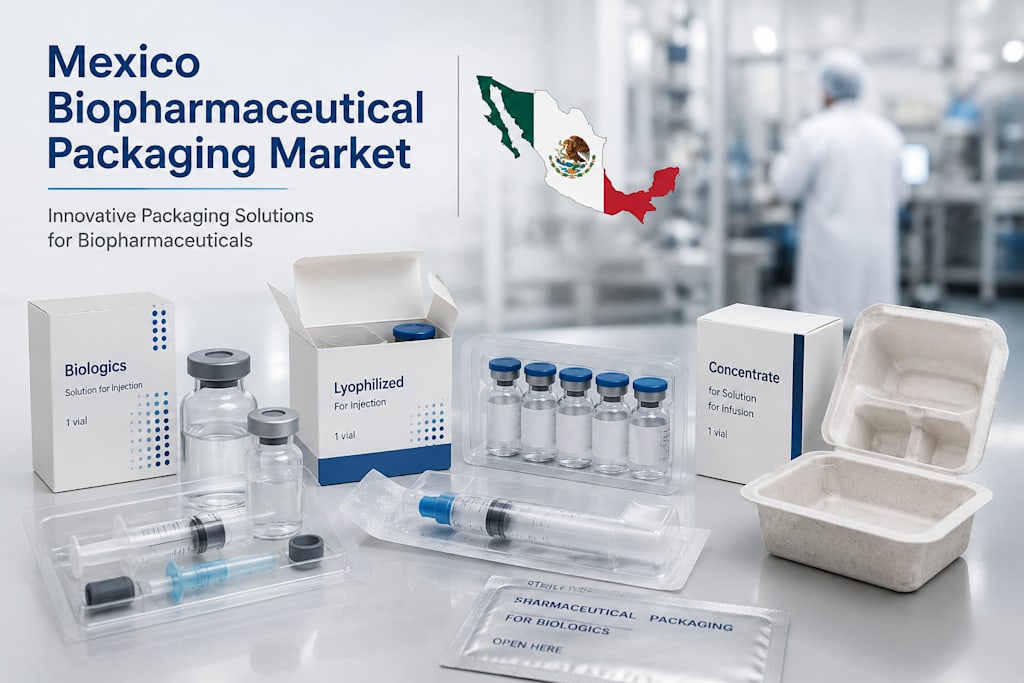
Mexico’s health care and pharmaceutical industries are moving at an incredibly fast pace, spurring demand for cutting-edge packaging solutions capable of safely housing biopharmaceuticals, vaccines, and other sensitive medicines. With biopharmaceutical products becoming more sophisticated and susceptible to temperature-controlled environments, packaging has moved beyond storage to becoming an essential element in drug safety, stability, and patient experience.
IMARC Group reports that the Mexico biopharmaceutical packaging market stood at USD 342.3 million in 2025, and is projected to grow to USD 724.8 million by 2034 at a compound annual growth rate (CAGR) of 8.43% during 2026-2034.
A key factor in this growth is the rapid expansion of Mexico’s biopharmaceutical industry. Increased production of vaccines, biologics, biosimilars and injectable therapies have created high demand for advanced packaging materials that can ensure sterility and product integrity throughout the transportation and storage cycle. Pharmaceutical companies are increasingly investing in sophisticated packaging solutions that satisfy regulatory and safety requirements.
The growing acceptance of advanced drug delivery systems such as prefilled syringes, auto-injectors and single dose packaging is another important market trend. These systems can improve dosage precision, lower contamination risk and offer greater patient convenience. As healthcare moves toward a patient-centric model, demand for easy-to-use packaging is on the rise.
A major trend impacting the biopharmaceutical packaging market is a commitment to developing more sustainable packaging options. The pressure of environmental regulations and public opinion is driving pharmaceutical companies to implement eco-friendly materials that are recyclable and biodegradable, as well as implementing production methods that are efficient and cause less harm to the environment. This focus on sustainability has resulted in innovations like mono-material packaging, recyclable plastics, and energy-efficient manufacturing processes.
Technology is another disruptive force. Smart packaging systems, including QR codes, RFID tags, and embedded sensors, enhance product traceability, authentication and supply chain visibility. Such systems are particularly valuable for temperature-sensitive biologics and vaccines as they can track their journey, ensure integrity throughout the cold chain, and combat counterfeiting.
Another major growth driver is the increasing demand for the cold chain. Many biopharmaceuticals must be maintained at very specific temperature ranges throughout their entire lifecycle to prevent product degradation. As Mexico expands its capabilities in pharmaceutical manufacturing and exportation, investment in cold chain packaging is critical.
Regarding market segmentation, materials like plastic, paper, glass, and aluminum can be broadly categorized, but plastic continues to hold a large portion of the market share. Its adaptability, light weight, and suitability for sterile applications have made it an obvious choice for many pharmaceuticals. Vials, bottles, ampoules, syringes, and cartridges are key packaging types in this market segment with high demand noted in prefilled syringes and vials for injectable biopharmaceutical applications. The application market includes vaccines, monoclonal antibodies, gene therapies, cell-based therapies, cytokines, and other cutting-edge pharmaceuticals with increasing demand coming from biologic research and personalized medicine development, necessitating sterile, specific, and safe packaging solutions. Regionally, Northern and Central Mexico represent major growth areas due to established pharmaceutical manufacturing activity, an expanding healthcare system and foreign investment influx. Mexico’s geographical proximity and role within the North American pharmaceutical supply chain, combined with its investment in technology and infrastructure, make it a desirable destination for pharmaceutical production and an excellent location for packaging companies that can meet the demanding requirements. Companies are further investing in sterile packaging technology, enhancing manufacturing capabilities for ready-to-fill syringes, high-barrier containment solutions, and tamper-evident closures to meet growing pharmaceutical demands and ensure rigorous regulatory compliance.
The Mexican biopharmaceutical packaging market is crucial in that it complements its broad trend toward medical modernization and sustainability. Packaging is increasingly considered a critical link in the entire drug delivery system rather than a simple container to protect products.
Future expectations suggest that advances in biologics, smart packaging technologies and sustainable materials will continue to drive the market for biopharmaceutical packaging in Mexico. Continued pharmaceutical innovation, and an expanding healthcare system, will ensure the market plays a significant role in the life sciences sector of Mexico.
About the Creator
michael matthew
I’m a market researcher passionate about understanding people, markets, and motivations. My work blends data analysis, consumer psychology, and strategic insight to help brands and businesses make informed, human-centered decisions.
Enjoyed the story? Support the Creator.
Subscribe for free to receive all their stories in your feed.
Comments
There are no comments for this story
Be the first to respond and start the conversation.