
Why the Global Generic Injectables Market Could Surpass $100 Billion by 2034
Patent expirations, oncology demand, and healthcare cost pressures are accelerating the growth of injectable generics worldwide.

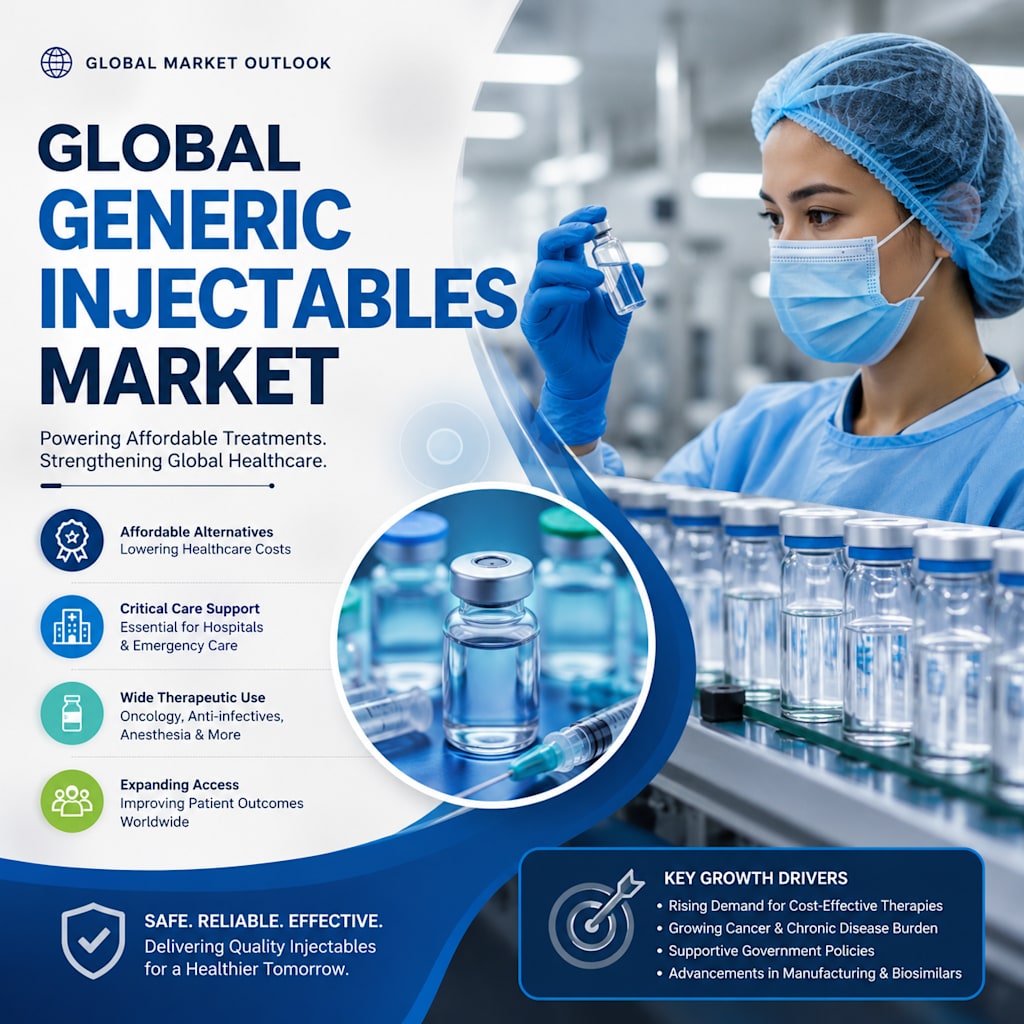
The pharmaceutical industry is heading for a major transformation, and generic injectables seem to be silently one of the biggest winners.
As healthcare systems around the globe face pressure from mounting treatment costs, rising cancer incidents, and increasing demand for more affordable medicines, hospitals and governments are turning to more cost-effective injectable treatments that have the same effect as their branded counterparts.
This phenomenon is transforming the generic injectables industry worldwide from just a cost-saving product into an integral pillar of healthcare systems globally.
Today, generic injectables are used not just for standard hospital medicines, but they include sophisticated oncology therapies, biosimilars, life-saving emergency care products, anesthetic agents, and new generation injectable drugs to treat complicated diseases.
And the market for this category is exploding.
A Market Positioned for Long-Term Growth
The global generic injectables market size was valued at roughly USD 54.5 billion in 2025 and is projected to grow to nearly USD 100.3 billion by 2034, a compound annual growth rate (CAGR) of 6.67% between 2026 and 2034.
This growth is being driven by a confluence of several huge global healthcare trends occurring in tandem:
- Expiration of patents for high-value biologic drugs.
- Increasing cancer prevalence worldwide.
- Global healthcare systems face enormous price pressures.
- Expansion of hospital infrastructure in emerging economies.
- Growing demand for biosimilars and other affordable injectable treatments.
All these factors together are transforming the global pharmaceutical market on a grand scale.
Why Generic Injectables Matter More Than Ever
Unlike their oral generic counterparts, injectable drugs are often used in a critical or life-threatening setting. These products can be commonly found administered in ICUs, emergency rooms, oncology treatment centers, during surgeries and hospital inpatients wards.
As such, these drugs play a significant role in patient survivability and the efficiency of the health system. This type of drug is routinely used for:
- Chemotherapy treatment.
- Antibiotic treatments for severe infection.
- Analgesic management during surgery.
- Emergency cardiovascular conditions.
- Nutritional support for severely ill patients.
With the growing number of patients entering the global health system, demand for these more affordable injectable medicines continues to grow rapidly.
Oncology Is Driving a New Wave
One of the most significant drivers in the injectable market today is oncology. As cancer prevalence in the world is growing rapidly, demand for injectable cancer drugs is increasing significantly. Many modern treatments like chemotherapy, biologics, and immunotherapies rely on injectables or infusions, which is why the opportunity in this area for generic and biosimilar drug manufacturers is so significant.
This product category makes up for the largest chunk of the generic injectables market currently and is poised for further growth as blockbuster biologic drugs are starting to lose their patent exclusivity. Many major drugs like trastuzumab, rituximab, and bevacizumab have already laid the ground work for biosimilar competitors to hit the market and, thus, are making a significant difference to treatment costs in many parts of the world. It is predicted that checkpoint inhibitor biosimilars will hit the market next and are expected to be a further breakthrough for the market, as they include some of the most expensive drugs in the world.
Hospitals Remain the Core Distribution Channel
Given the complexity and clinical requirements of administering injectable drugs, hospitals dominate as the core distribution channel of the generic injectables market today. Unlike tablets or capsules, many injectable drugs involve processes that may require specialized knowledge of administering IV infusions, precise real time patient monitoring, specific administration conditions and controlled sterile preparation and storage conditions. Therefore, hospitals constitute the bulk of injectable drug usage on a worldwide basis.
However, the traditional hospital dominated channels may soon change, as home infusion services, specialty pharmacies and other specialized outpatient treatment centers will slowly bring injectable treatment out of the hospital and into patient's homes.
Biosimilars Are Transforming the Industry
One of the most influential trends that will shape the future of generic injectables is the rise of biosimilars. Biosimilars are cheaper alternatives to high-priced biologic treatments, that are still equally effective as their branded counterparts, and therefore make treatment much more accessible. This phenomenon has also received massive endorsement from the governments and healthcare bodies, as they help to reduce the healthcare budget without compromising patient outcomes. Biosimilars are of critical importance for the treatment of diseases like cancer, diabetes and other autoimmune diseases, where treatment costs are often prohibitively expensive to both the patient and health systems. This is expected to be the next key growth sector in the pharmaceutical market over the next ten years as more biological treatments are about to reach patent expiry.
Asia-Pacific Is Emerging as a Manufacturing Powerhouse
Although North America is currently the largest market, it is predicted that the Asia-Pacific region will soon become the fastest-growing manufacturing sector. India, and China especially, are quickly becoming key manufacturing bases in the world for injectable drugs. This has been enabled by the cost advantages in the region, the large capacity of the Indian pharmaceutical industry to churn out a large number of drugs, and strong global export infrastructure. Many global pharma companies have already started relying on the manufacturing facilities in Asia for producing active pharmaceutical ingredients (APIs) and sterile injectable drugs. Along with manufacturing, the domestic market in Asia-Pacific is also booming, which is contributing towards growth in this market.
The Shift Toward Advanced Injectable Formats
The generic injectables market is changing in many ways technologically as well. It is expected that in the future manufacturers will come up with more specialized formats such as prefilled syringes and auto injectors. As the ease of administration, the accuracy of dosage and patient safety continues to remain primary considerations, these product formats are already showing huge potential for growth, especially prefilled syringes which reduce the contamination risks and help the patients and the caregivers administer them with ease.
Challenges Facing the Industry
While the growth opportunities appear to be substantial, the market still has significant challenges that it needs to overcome. Injectable drug production requires sterile manufacturing which is much more complex than that of ordinary oral generic drugs. The entire process requires highly controlled environments, and adherence to stringent regulatory standards, especially when dealing with bodies like the FDA and the EMA. Huge investments are required for manufacturing plants in sterile environments and that often causes a number of difficulties in their establishment and expansion. The industry also faces numerous issues concerning:
- Drug shortages
- Risks associated with supply chain concentration
- Dependence onAPI imports
- Drug prices being continually lowered by the health systems
- Intense competition in the more established generic drug segments.
These are some of the important factors that would influence efficiency and reliability in the generic injectables market in the near future.
Supply Chain Security Is Becoming a Global Priority
The issues with global pharmaceutical supply chain brought forth by COVID-19 were an eye opener for many countries, as it turned out that their reliance on single country manufacturers for essential life-saving injectables and raw materials was a massive vulnerability. Due to these reasons, governments are heavily investing into domestic manufacturing and reshoring programs in order to guarantee supply chain security in the future. Over the next decade, many of the world's largest economies are expected to boost their support for sterile injectable drug manufacturing, most notably countries such as the US and in Europe.
Innovation Is Becoming the Key Competitive Advantage
While generics are normally known as cost competitive drugs, innovation is becoming the major unique selling point in the competitive generic injectables market. This is where the leading companies will differentiate themselves. They will rely on:
- Manufacturing excellence in advanced sterile facilities
- Capabilities in producing Biosimilars
- Reliability in their supply chains
- Strong regulatory expertise
- A niche in specialty areas like oncology
Top pharma companies are heavily investing in research, in advanced manufacturing technology for producing high quality drugs, and using AI in quality control to maintain the required standards. It will become evident over the next few years that providing quality, sterile, and on time drug supply will be among the largest competitive advantages that the manufacturers can hold over their competitors.
Going Forward
The future looks very positive for the generic injectables market worldwide. With governments and health systems around the globe struggling to manage soaring healthcare costs and an ever-increasing demand for healthcare, generics offer the only feasible way forward. Along with this, the continuous expiration of biological patents has opened a huge vista for biosimilar manufacturers. Injectable therapies will remain at the forefront of a wide variety of modern medical treatments; from oncology and intensive care, to the treatment of diabetes and autoimmune disorders, among many other diseases. The global market is forecast to be well over USD 100 billion in the year 2034, and this figure reflects how critical generic injectables will be in the global healthcare future. What was once perceived as just another low-cost pharmaceutical segment has now transformed itself into one of the most significant strategic sectors in the healthcare industry.
The growth of generic injectables reflects the changing priorities of modern healthcare.
About the Creator
Robert
Senior Market Researcher at IMARC Group, specializing in global market analysis, industry trends, and data-driven insights across diverse sectors.
Enjoyed the story? Support the Creator.
Subscribe for free to receive all their stories in your feed.
Comments
There are no comments for this story
Be the first to respond and start the conversation.