
Why the Global Beef Market Is Poised for Steady Growth Through 2034
Rising protein consumption, expanding foodservice industries, and evolving consumer preferences are helping drive the next phase of growth in the global beef industry.

For centuries, beef has been one of the world's most important sources of animal protein. From family dinners and traditional recipes to premium restaurant menus and fast-food chains, beef remains deeply embedded in food cultures across continents.
Today, the global beef industry stands at an important crossroads.
Growing populations, rising incomes, urbanization, and changing dietary habits are driving demand for protein-rich foods. At the same time, the industry faces increasing pressure to improve sustainability, reduce environmental impact, and adapt to evolving consumer expectations.
Despite these challenges, demand for beef remains strong in many parts of the world. Consumers continue to value beef for its taste, nutritional profile, versatility, and role in both everyday meals and premium dining experiences.
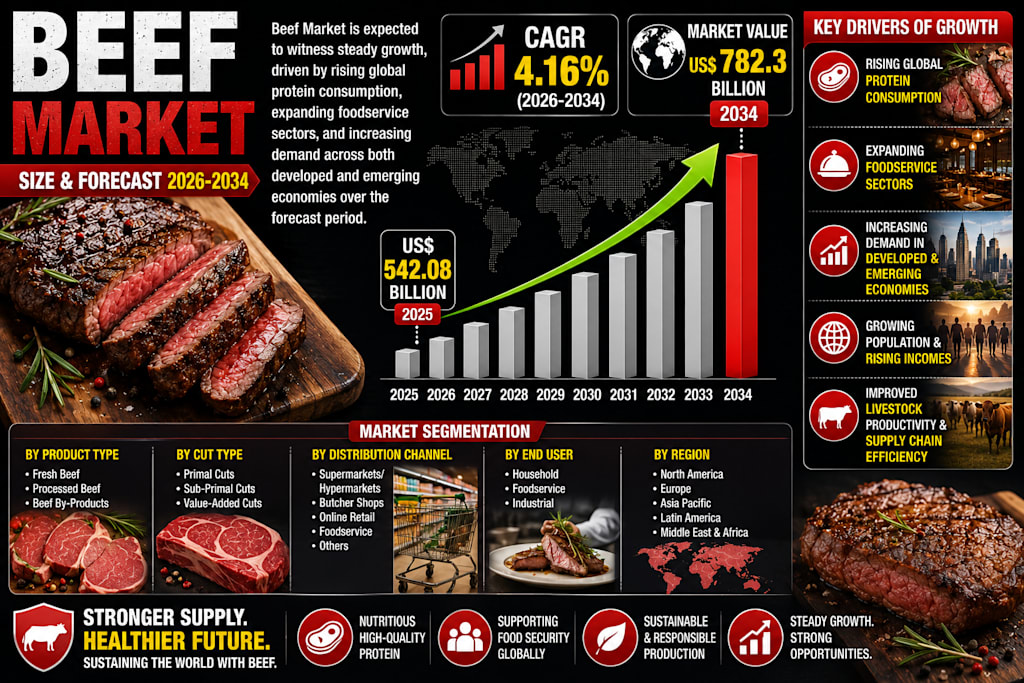
According to Renub Research, the global Beef Market is expected to grow from US$ 542.08 billion in 2025 to US$ 782.3 billion by 2034, expanding at a compound annual growth rate (CAGR) of 4.16% during 2026–2034. The market's growth is being supported by rising protein consumption, expanding foodservice industries, and increasing demand across both developed and emerging economies.
As global food systems evolve, beef is expected to remain a critical component of the worldwide protein market.

Beef's Role in the Global Food Economy
The beef industry is one of the largest segments within the global meat sector.
Its value chain extends far beyond livestock production and includes:
- Cattle farming
- Feed production
- Veterinary services
- Meat processing
- Cold chain logistics
- Distribution networks
- Retail operations
- Foodservice businesses
Collectively, these activities support millions of jobs and contribute significantly to economic activity in both developed and emerging markets.
Beef remains popular because it provides high-quality protein along with essential nutrients such as iron, zinc, and vitamin B12. Its versatility across cuisines and dining formats has helped sustain long-term consumer demand worldwide.
As disposable incomes continue rising in many countries, demand for beef products is expected to expand further.
Rising Protein Consumption Is Fueling Demand
One of the strongest drivers of market growth is the increasing global demand for protein.
As populations grow and living standards improve, consumers are placing greater emphasis on nutrient-rich diets that include animal proteins.
This trend is particularly evident in emerging economies where rising household incomes are allowing consumers to diversify their diets and consume more meat products. Beef is often viewed as a premium protein source, making it especially attractive as purchasing power increases.
Several factors are supporting this demand:
Population Growth
A growing global population naturally increases demand for food and protein sources.
Urbanization
Urban consumers often have greater access to supermarkets, restaurants, and modern foodservice channels.
Changing Dietary Preferences
Consumers are increasingly seeking diverse meal options that include higher-quality protein products.
Together, these trends are creating a favorable environment for sustained growth in the global beef industry.
Foodservice Expansion Continues to Boost Consumption
The foodservice industry remains one of the most important demand drivers for beef products.
Restaurants, hotels, cafés, quick-service chains, and catering businesses rely heavily on beef for menu offerings ranging from burgers and steaks to processed meat products and premium culinary experiences.
Several trends are contributing to increased foodservice demand:
- Rising disposable incomes
- Increased dining-out culture
- Growth of tourism
- Expansion of quick-service restaurants
- Growth of food delivery platforms
The popularity of online food delivery services has further strengthened beef consumption by making restaurant meals more accessible to consumers.
As foodservice infrastructure expands globally, beef demand is expected to remain robust across multiple market segments.
Retail Modernization Is Improving Accessibility
The growth of organized retail is also supporting market expansion.
Supermarkets, hypermarkets, specialty meat stores, and e-commerce platforms are making beef products more accessible than ever before.
Modern retail channels provide consumers with:
- Fresh beef products
- Frozen beef options
- Processed meat products
- Premium beef selections
- Organic and specialty offerings
Improved product availability and wider consumer choice are helping stimulate market growth.
The rise of online grocery platforms is particularly important, enabling consumers to purchase meat products conveniently from home while accessing a broader range of options.
Technology Is Improving Efficiency Across the Industry
Technological innovation continues to transform beef production and processing.
Advances in livestock management, breeding programs, veterinary care, and feed optimization are helping producers improve productivity and animal health.
Modern technologies are contributing to:
Better Cattle Productivity
Improved breeding and nutrition programs help maximize production efficiency.
Enhanced Meat Quality
Advanced processing technologies support consistent quality and food safety.
Stronger Supply Chains
Cold chain innovations improve storage conditions and reduce product loss during transportation.
Greater Operational Efficiency
Automation and digital technologies help processors reduce costs while maintaining quality standards.
These innovations are helping producers meet growing demand while improving profitability and sustainability.
Consumer Preferences Are Evolving
Today's beef consumers are increasingly focused on product quality and transparency.
Modern purchasing decisions are influenced by factors such as:
- Animal welfare
- Product traceability
- Sustainability
- Food safety
- Ethical sourcing
As a result, producers are adapting production methods and supply chain practices to meet changing consumer expectations.
Demand for premium and organic beef products is growing in several markets, creating opportunities for companies that emphasize quality differentiation.
This shift is encouraging greater investment in traceability systems and sustainable production practices.
Sustainability Is Becoming a Central Industry Focus
While demand remains strong, environmental concerns represent one of the industry's most significant challenges.
Beef production is frequently associated with:
- Greenhouse gas emissions
- Land use
- Water consumption
- Biodiversity impacts
As awareness of climate change increases, consumers, policymakers, and investors are paying closer attention to the environmental footprint of livestock production.
Producers are responding by exploring more sustainable approaches, including:
- Improved feed efficiency
- Better waste management systems
- Regenerative grazing practices
- Carbon reduction initiatives
- Enhanced resource management
Although implementing these measures often requires significant investment, sustainability is increasingly viewed as essential for long-term industry growth.
Alternative Proteins Are Creating Competitive Pressure
Another emerging challenge is the growing popularity of alternative protein products.
Plant-based meats and cultivated meat technologies have attracted attention from consumers interested in environmental sustainability, animal welfare, and dietary diversity.
These products are often marketed as:
- Environmentally friendly
- Ethically produced
- Health-conscious alternatives
While beef continues to maintain strong consumer loyalty, alternative proteins are creating additional competition within the broader protein market.
Industry participants may need to continue emphasizing quality, nutrition, sustainability, and product innovation to maintain competitiveness.
The United States Remains a Global Leader
The United States continues to be one of the world's largest and most influential beef markets.
Strong domestic consumption, advanced livestock infrastructure, and significant export activity support the country's leadership position. Beef remains a staple within American food culture and is widely consumed across households and foodservice establishments.
According to USDA projections referenced in the report:
- U.S. beef consumption is expected to remain approximately 28.6 billion pounds in 2025
- Consumption is projected to decline only slightly to around 28 billion pounds in 2026
- These figures highlight the resilience of consumer demand despite elevated prices.
- The United States also remains a major importer and exporter within the global beef trade network.
China Is Driving Significant Demand Growth
China represents one of the most important growth opportunities for the global beef industry.
Rising incomes, urbanization, and changing dietary preferences are increasing demand for protein-rich foods throughout the country.
Several factors support growth:
- Expanding middle class
- Growing restaurant industry
- Rising e-commerce adoption
- Increasing consumer spending
Domestic production is being supplemented by imports as demand continues to outpace local supply in certain segments.
China's growing appetite for beef is expected to remain a major influence on global trade flows over the coming decade.
The United Kingdom Focuses on Quality and Sustainability
The UK beef market is characterized by stable demand and strong consumer emphasis on quality.
British consumers increasingly prioritize:
- Traceability
- Animal welfare
- Locally sourced products
- Sustainable production
Retail innovation and online grocery growth are improving accessibility while supporting market development.
Although alternative proteins are gaining attention, quality-focused beef products continue to enjoy strong consumer support.
The UAE Continues to Expand Beef Imports
The United Arab Emirates represents a dynamic market supported by tourism, hospitality, and a diverse consumer base.
Because domestic production is limited, the UAE relies heavily on imports to satisfy demand.
According to the report, the country imported more than 27 million kilograms of fresh or chilled boneless beef, sourced from countries including:
- Australia
- Brazil
- United States
- India
- New Zealand
This reflects the country's strong demand for premium meat products and highlights opportunities for international suppliers.
Looking Ahead: The Future of the Beef Industry
The future of the beef market will likely be shaped by a combination of growth opportunities and evolving challenges.
Key trends expected to influence the industry include:
- Rising global protein demand
- Expansion of foodservice industries
- Sustainable production initiatives
- Technological innovation
- Premiumization strategies
- Supply chain modernization
Companies that successfully balance efficiency, quality, sustainability, and consumer expectations are likely to be best positioned for long-term success.
Final Thoughts
The global beef industry continues to play a crucial role in feeding a growing world population.
Despite increasing competition from alternative proteins and rising sustainability concerns, demand for beef remains strong across both developed and emerging markets. Consumers continue to value beef for its nutritional benefits, culinary versatility, and cultural significance.
With the global Beef Market projected to grow from US$ 542.08 billion in 2025 to US$ 782.3 billion by 2034, the sector is expected to maintain steady momentum over the next decade.
As the industry adapts to changing consumer preferences and environmental expectations, the future of beef production will likely be defined not only by growth but also by innovation, transparency, and sustainability.
About the Creator
Enjoyed the story? Support the Creator.
Subscribe for free to receive all their stories in your feed.
Comments
There are no comments for this story
Be the first to respond and start the conversation.