
Why the Fireworks Market Is Booming Despite the Bans
Festivals, drone shows, and Diwali's new UNESCO status are reshaping how the world lights up the sky.
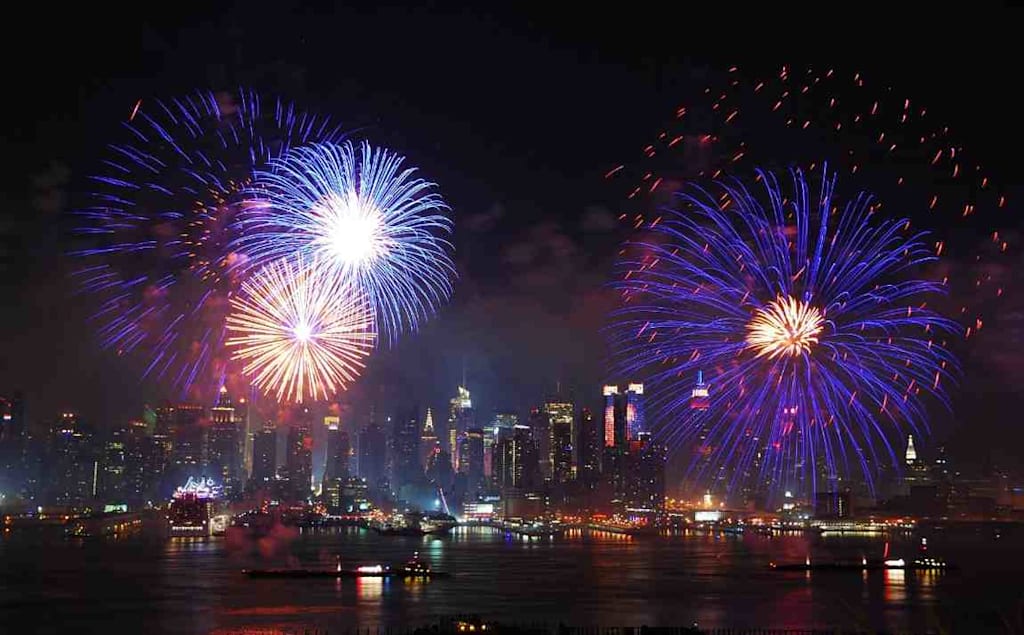
Every Diwali, Lunar New Year, and Fourth of July sends the same signal up into the night sky: demand for fireworks isn't going anywhere, even as cities debate banning them. The global fireworks market is valued at $2.7 billion in 2025 and is projected to reach $4.1 billion by 2035, growing at a steady 4.10% CAGR, driven by expanding festival calendars, growing diaspora celebrations abroad, and a shift toward professionally managed displays rather than backyard retail purchases.
Anyone curious about how this market splits across product categories and buyer types can request the full sample dataset to see the regional and segment-level breakdown.
Asia Pacific Still Lights the Way
Asia Pacific dominates the fireworks market with a 58.70% share, worth roughly $1.58 billion, anchored almost entirely by China's manufacturing base. China accounts for an estimated 90% of global production and 80% of international trade volume, and the scale of regional demand backs that up — Lunar New Year 2026 marked the start of the Year of the Fire Horse, a once-in-60-years event that Chinese authorities projected would drive a record 9.5 billion passenger trips during the 40-day Spring Festival window. With Diwali 2026 falling on November 8, manufacturers in hubs like Sivakasi and Liuyang are now facing back-to-back peak demand cycles within the same fiscal year.
That concentration cuts both ways, though. The U.S. sourced 98% of its fireworks imports from China in 2024, meaning any disruption to Chinese export logistics ripples almost immediately through American and European supply chains, with no alternative manufacturing base currently able to absorb that volume within a three-to-five-year horizon.
Diwali's UNESCO Recognition Is Changing the Math
One of the clearest recent examples of how culture drives this industry came in December 2025, when UNESCO inscribed Diwali on its Representative List of the Intangible Cultural Heritage of Humanity, making it the 16th Indian cultural element on that global list. That recognition is already accelerating government-hosted Diwali events across North America, the EU, and Southeast Asia, as diaspora communities translate growing visibility into professional pyrotechnic purchasing rather than smaller private celebrations. It's a useful illustration of why, within the broader fireworks market, government and cultural-institution spending now outpaces individual consumer purchases — government buyers hold the largest application share at 39.20%, compared to just 18.80% for individual purchases.
Drones Are Quietly Eating Into Traditional Displays
Not every trend favors traditional pyrotechnics, though. Drone light shows, laser projections, and AI-coordinated swarm displays are emerging as zero-emission substitutes, and the shift is already policy-driven in places: the Netherlands' upcoming ban on F2–F4 consumer fireworks, effective July 2026, explicitly positions drone shows as the sanctioned replacement format for public celebrations. Germany's expanding fireworks-free urban zones lean on the same drone vendors to fill the entertainment gap. Analysts expect this substitution pressure to shave roughly 1.0 percentage point off professional display growth through 2033, even as overall demand for spectacle-driven entertainment keeps climbing.
There's a financial undercurrent here too — Disney alone is estimated to spend $50 million annually on park pyrotechnics, a reminder that even as regulation tightens around consumer fireworks, big institutional buyers are still investing heavily in professionally produced shows.
Where the Industry Lights Up Next
The road ahead for fireworks looks less like a binary choice between bans and bonfires, and more like a slow professionalization of the entire industry. Expect continued growth in government and commercial bookings tied to expanding festival calendars, greater investment in eco-friendly and green-certified pyrotechnic formulations as regulators tighten emissions and noise rules, and a growing overlap between traditional shells and drone-based hybrid formats rather than one fully replacing the other. As supply chains diversify beyond China and municipalities lean further into licensed, insured display contracts, the fireworks industry seems set to keep its place in the sky — just increasingly alongside, rather than instead of, the drones.
About the Creator
Enjoyed the story? Support the Creator.
Subscribe for free to receive all their stories in your feed.
Comments
There are no comments for this story
Be the first to respond and start the conversation.