
Why the Edible Packaging Market Could Reach $1.67 Billion by 2034
Rising environmental concerns, stricter regulations, and growing demand for sustainable alternatives are driving the edible packaging industry toward a projected value of $1.67 billion by 2034.

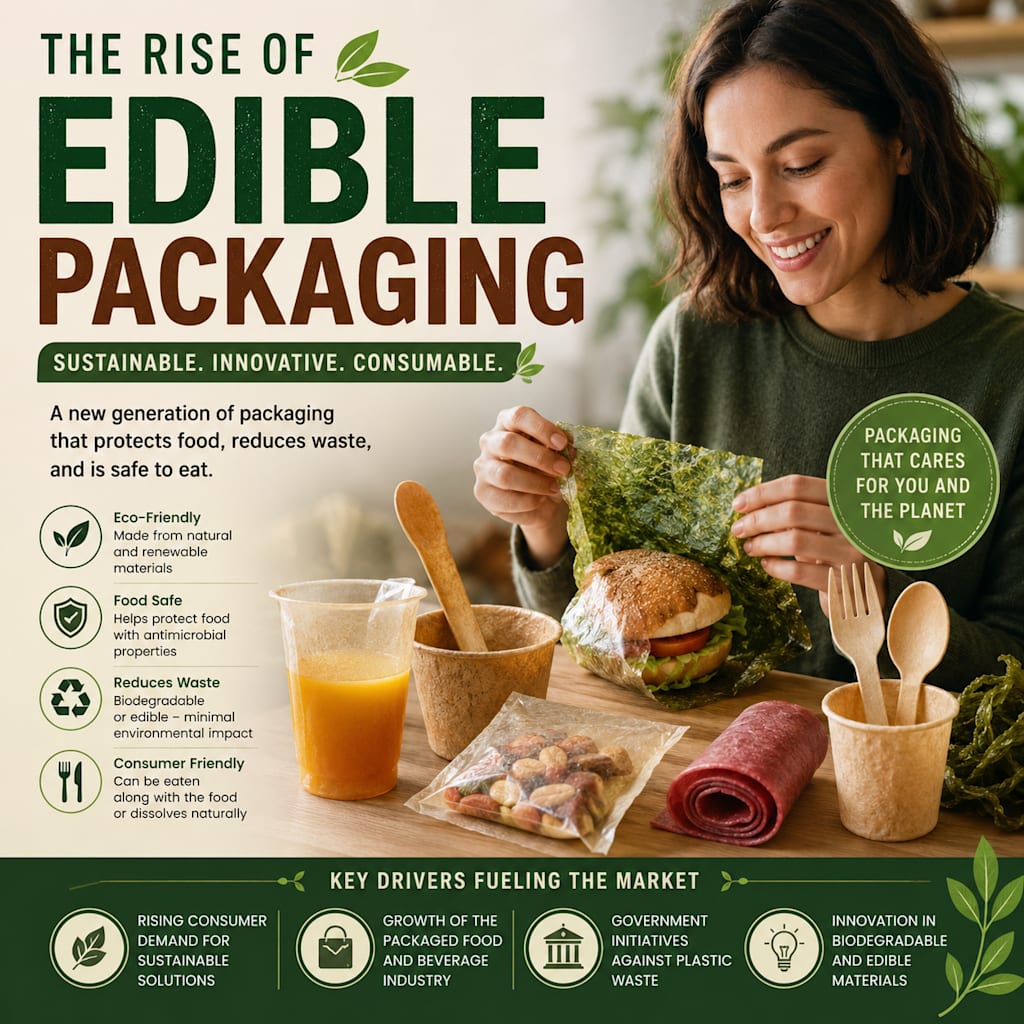
Could You Soon Eat Your Food Packaging? The Growing Market for Edible Packaging
Plastic packaging has become so common that most people rarely think about it. Every snack wrapper, takeaway container, and beverage bottle serves a purpose for a short period before often ending up in a landfill or the environment.
As concerns about plastic pollution continue to grow worldwide, companies and researchers are searching for alternatives that can reduce waste without compromising convenience. One of the most fascinating solutions emerging from this search is edible packaging.
What once sounded like science fiction is quickly becoming a real industry. From seaweed-based wrappers to edible cutlery and dissolvable food films, edible packaging is transforming how products are protected, transported, and consumed.
And according to industry projections, this innovative sector is poised for significant growth over the next decade.
A Market Built Around Sustainability
The global edible packaging market size was valued at approximately USD 1.07 billion in 2025 and is expected to reach nearly USD 1.67 billion by 2034.
While the market is still relatively small compared to traditional packaging industries, its growth reflects a larger shift in consumer behavior. More people are actively looking for products that reduce waste and support environmentally responsible practices.
Governments, businesses, and consumers are increasingly aligned in their efforts to reduce reliance on single-use plastics, creating favorable conditions for edible packaging technologies to advance.
The idea is simple but powerful: instead of throwing packaging away, consumers can safely consume it or allow it to naturally biodegrade with minimal environmental impact.
Why Plastic Waste Is Driving Innovation
The packaging industry faces mounting pressure to address the environmental challenges associated with plastic waste.
Every year, millions of tons of plastic enter oceans, rivers, and landfills. Despite recycling programs, a large percentage of plastic packaging still ends up discarded after a single use.
This growing environmental burden has encouraged companies to rethink packaging from the ground up.
Edible packaging offers a unique solution because it tackles waste at its source. By creating materials that are either consumable or naturally biodegradable, manufacturers can significantly reduce the amount of packaging entering waste streams.
As public awareness of environmental issues continues to rise, demand for sustainable alternatives is becoming stronger than ever.
What Exactly Is Edible Packaging?
Edible packaging refers to materials that can safely be consumed along with the product they contain.
These materials are typically derived from natural ingredients such as:
* Seaweed
* Starch
* Rice
* Plant proteins
* Gelatin
* Collagen
* Natural lipids and waxes
Unlike traditional packaging, edible materials are designed to provide protection while remaining safe for human consumption.
In some cases, consumers can eat the packaging itself. In others, the material naturally decomposes much faster than conventional plastics.
The goal is not only to reduce waste but also to create packaging solutions that align with modern sustainability goals.
The Food Industry Is Leading Adoption
The food and beverage industry currently represents the largest user of edible packaging technologies.
Consumers increasingly expect brands to demonstrate environmental responsibility. As a result, food companies are exploring innovative ways to reduce packaging waste while maintaining product quality.
Applications include:
* Edible wrappers for snacks
* Dissolvable beverage pods
* Edible coatings for fruits and vegetables
* Compostable food films
* Edible spoons, forks, and straws
Many companies are also using edible coatings to extend product shelf life by creating protective barriers against moisture, oxygen, and contamination.
This not only reduces packaging waste but can also help reduce food waste a major environmental challenge in its own right.
The Surprising Connection Between Packaging and Food Safety
One of the lesser-known advantages of edible packaging is its potential contribution to food safety.
Modern edible films often contain antimicrobial properties that help prevent the growth of harmful microorganisms.
Materials such as chitosan, derived from natural sources, have demonstrated the ability to inhibit bacterial growth and extend food freshness.
For consumers, this means packaging can do more than simply contain food—it can actively help protect it.
As health-conscious shoppers become more focused on hygiene and product quality, packaging solutions that contribute to food safety are attracting increasing attention.
Plant-Based Packaging Is Becoming the Preferred Choice
Among all edible packaging materials, plant-based solutions currently dominate the market.
This trend aligns closely with broader consumer preferences toward sustainable and vegan-friendly products.
Plant-derived materials offer several advantages:
* Renewable sourcing
* Lower environmental impact
* Biodegradability
* Broad availability
* Compatibility with various food products
Seaweed-based packaging has become particularly popular because it requires minimal freshwater resources and grows rapidly without fertilizers.
As technology improves, plant-based packaging solutions are becoming stronger, more flexible, and more commercially viable.
How Major Brands Are Responding
Large food and beverage companies are beginning to take edible packaging seriously.
Several multinational corporations have launched pilot programs exploring edible utensils, sustainable wrappers, and biodegradable alternatives.
Innovation is no longer limited to startups. Major brands recognize that consumer expectations are changing, and sustainable packaging has become a competitive advantage.
Companies that successfully reduce packaging waste may strengthen customer loyalty while also meeting evolving environmental regulations.
This combination of consumer demand and regulatory pressure is accelerating investment throughout the industry.
Regional Markets Are Taking Different Approaches
North America currently represents the largest market for edible packaging.
Strong consumer awareness, environmental initiatives, and corporate sustainability programs have helped drive adoption across the region.
Europe is also experiencing significant growth due to strict regulations aimed at reducing single-use plastics and encouraging sustainable alternatives.
Meanwhile, countries across Asia-Pacific are becoming important innovation hubs. Growing environmental awareness, expanding food industries, and rising consumer demand are supporting adoption throughout the region.
Emerging economies are increasingly viewing edible packaging not only as an environmental solution but also as a business opportunity.
Challenges Still Remain
Despite its promise, edible packaging faces several hurdles before achieving widespread adoption.
Some of the biggest challenges include:
* Higher production costs compared to conventional plastics
* Consumer acceptance and education
* Limited scalability for certain materials
* Shelf-life and storage considerations
* Regulatory compliance across different markets
Manufacturers continue investing heavily in research and development to overcome these obstacles.
As production methods improve and economies of scale develop, costs are expected to decline over time.
The Future of Packaging Could Be Edible
The packaging industry is undergoing one of the most significant transformations in its history.
For decades, convenience and affordability dominated packaging decisions. Today, sustainability is becoming equally important.
Edible packaging represents a bold reimagining of how products are protected and delivered to consumers.
While traditional plastics are unlikely to disappear overnight, the momentum behind sustainable alternatives continues to grow.
As innovation advances and consumer expectations evolve, edible packaging could move from a niche concept to a mainstream solution.
The next time you purchase a snack, beverage, or takeaway meal, don't be surprised if part of the package is designed to be eaten rather than discarded.
What sounds futuristic today may soon become an everyday reality.
About the Creator
Robert
Senior Market Researcher at IMARC Group, specializing in global market analysis, industry trends, and data-driven insights across diverse sectors.
Enjoyed the story? Support the Creator.
Subscribe for free to receive all their stories in your feed.
Comments
There are no comments for this story
Be the first to respond and start the conversation.