
Why the Cricket Bat Market Keeps Outgrowing the Sport
From willow shortages to lightweight blades, cricket's most personal piece of gear is changing fast.

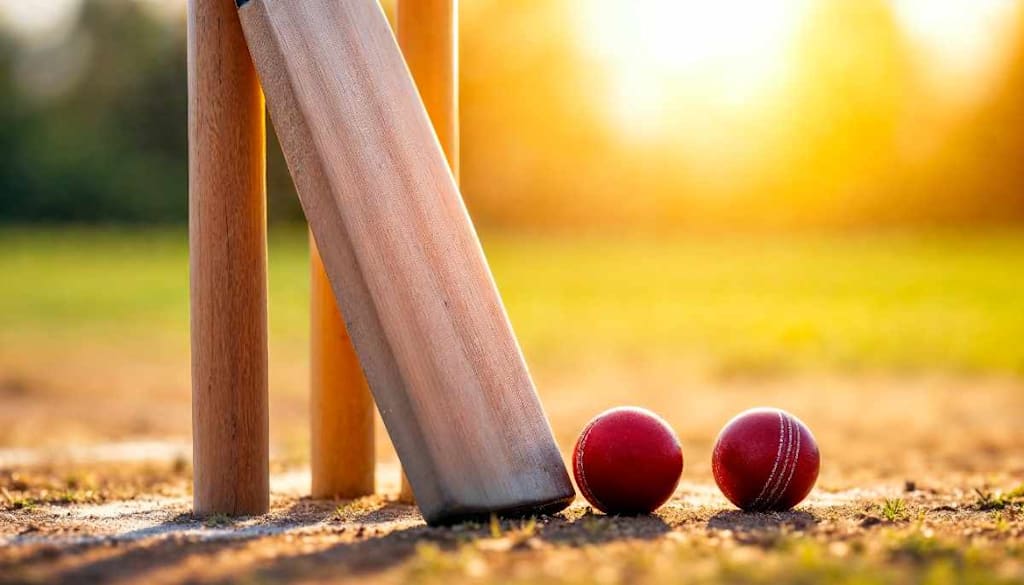
A cricket bat looks like one of the simplest pieces of sporting equipment out there — a flat wooden blade and a handle. In practice, it's one of the most personal: weight, balance, and willow grade can change how a player feels at the crease as much as technique does. That personal relationship between player and bat is part of what's kept the Cricket Bat Market growing steadily even as global sports spending shifts toward gadgets and wearables, with industry research projecting the market to climb from roughly $229 million in 2025 to $373 million by 2035.
The publisher has made a condensed sample of the dataset available for anyone wanting that level of segment detail.
Why Willow Still Wins
For all the materials science available today, willow still accounts for the overwhelming majority of bats sold — well over 80% of the market by some estimates — and that's not really about tradition for its own sake. Willow's particular mix of flexibility and shock absorption is hard to replicate, which is why aluminium and composite bats have stayed confined to training settings rather than competitive play. The catch is that willow is a slow, geographically limited crop: English willow grows in a narrow band of conditions, and Kashmir willow, the more affordable alternative used by recreational and amateur players, faces its own regional supply pressures. That scarcity is quietly one of the bigger long-term risks to the category, since strict equipment regulations also limit how much manufacturers can lean on synthetic substitutes even if they wanted to.
The Real Case for Going Lighter
If you talk to players rather than manufacturers, the willow conversation often takes a back seat to weight. One recent player survey found that roughly three-quarters of respondents said they preferred lighter bats over heavier ones, even though fewer than half reported actually using full-size bats in regular play. Most finished bats land somewhere between 2 pounds 7 ounces and 2 pounds 10 ounces, a narrow window that's become something like an industry standard for balancing power against control. That preference is pushing manufacturers toward more advanced wood-pressing techniques that shave weight without sacrificing the sweet spot, and it's also fueling a wave of direct-to-consumer customization, where players can now specify handle thickness, blade profile, and balance point online rather than picking off a shop shelf.
What Sponsorship Deals Reveal About the Business
It's worth looking at how the commercial side of this market actually operates, because it runs heavily on long-term brand relationships rather than one-off retail sales. Kookaburra Sport extended its equipment partnership with Cricket Australia through the end of the 2025–26 season, and Queensland Cricket renewed its own sponsorship arrangement with the brand around the same period — both signs that national bodies prefer locking in multi-year equipment relationships over shopping the market each season. Gray-Nicolls took a slightly different approach, partnering with Backyard Cricket UK on content and marketing aimed at grassroots players rather than elite ones. Together, these moves point to where the broader cricket bat market is actually competing: not just on bat performance, but on which brand a young player grows up associating with the sport in the first place.
Growth Is Concentrated, But Not Static
Asia Pacific currently accounts for close to two-thirds of global market value, unsurprising given the size of the player base across India, Pakistan, Bangladesh, and Australia, along with the region's concentration of manufacturing and willow-processing capacity. But the more interesting movement is happening at the edges: cricket development programs in parts of Africa, Southeast Asia, and even North America are slowly building participant bases that didn't exist a decade ago. None of these markets will rival Asia Pacific's scale anytime soon, but they represent a meaningfully different kind of growth — new players entering the sport rather than existing ones upgrading equipment, which tends to be stickier demand over time.
Looking Ahead
The cricket bat business is unlikely to ever move at tech-industry speed, and that's arguably its strength — equipment regulations and player conservatism both act as a natural brake on hype cycles. What's changing is less the bat itself and more who's buying it and how: younger players entering through development programs, amateurs customizing specifications online that used to require a professional fitting, and brands competing for loyalty earlier in a player's career rather than later. As women's cricket continues to professionalize and grassroots formats keep pulling in new participants, the next decade of growth looks less like a story about better wood and more about a wider, more diverse base of players picking up a bat for the first time.
About the Creator
Enjoyed the story? Support the Creator.
Subscribe for free to receive all their stories in your feed.
Comments
There are no comments for this story
Be the first to respond and start the conversation.