
Why the Construction Glass Market Is Built to Keep Climbing
Skylines are getting more transparent, and building codes are quietly forcing the shift.

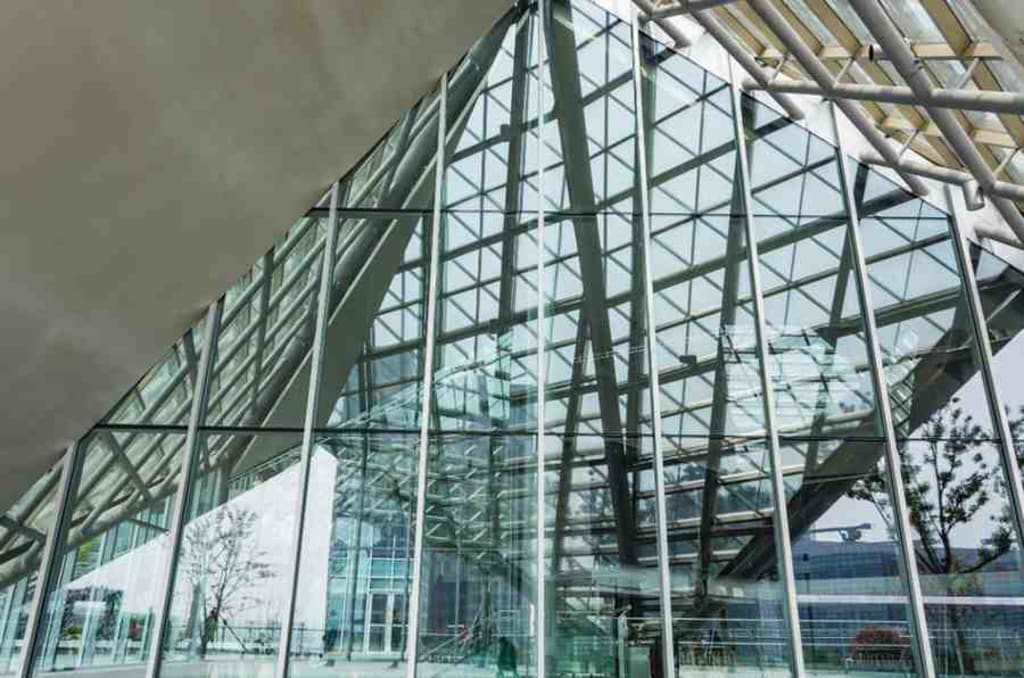
Glass has quietly become one of the most strategically important materials in modern construction, and the numbers behind the construction glass market reflect that shift. Valued at around 138.1 billion dollars in 2025, the market is projected to reach roughly 206.8 billion dollars by 2035, growing at a steady 4.1 percent annually. This isn't growth driven by architectural fashion alone. It's being pushed forward by something more structural: building codes, energy mandates, and a construction boom that shows no signs of slowing down.
Anyone who wants to see how that growth breaks down by glass type, coating, and region can look over a free copy of the underlying sample report before going any further.
Tempered Glass Wins Because Building Codes Demand It
Among all glass types, tempered or heat-treated glass holds the largest share at 40.3 percent in 2025, and that dominance isn't really up for debate in most major markets. This glass is processed through controlled thermal or chemical treatment that significantly increases its strength compared to standard glass, which is exactly why building safety codes mandate it for doors, facades, and high-traffic areas. When a material becomes a legal requirement rather than a design preference, demand tends to stay remarkably stable regardless of broader economic cycles.
Laminated glass, meanwhile, is carving out its own growth lane in premium projects. Made from two or more glass layers bonded with an interlayer, it offers better sound insulation and UV protection, and its use is expanding into skylights, structural floors, and hurricane-resistant glazing systems, applications where safety and resilience matter as much as appearance.
Energy Codes Are Doing More Work Than Marketing Ever Could
If there's one force quietly reshaping this entire industry, it's energy regulation. According to the International Energy Agency, buildings account for roughly 30 percent of global energy consumption, and the United Nations Environment Programme reports that the construction sector is responsible for around 38 percent of global carbon emissions. Those numbers have turned glass specification into a policy lever rather than just a design choice.
That regulatory pressure shows up directly in the coating data. Low-E, or low-emissivity, coatings lead the segment with 45.5 percent share, because they reduce heating and cooling loads by limiting infrared and ultraviolet transmission while still letting visible light through. Solar control coatings are gaining ground too, particularly in warmer climates, where they're increasingly required for LEED and BREEAM certified buildings rather than simply recommended.
Commercial Buildings Are Where the Real Volume Lives
Within the broader construction glass market, non-residential applications, offices, retail centers, hospitals, airports, and industrial facilities, dominate end-use demand with 55.6 percent share. The shift toward glass-intensive commercial design, curtain walls, all-glass facades, frameless structural glass, is a major driver here, and it's not slowing down as architects keep pushing for more transparency and natural light in large public and corporate spaces.
Residential demand is growing too, just for different reasons. Rising urban housing development, especially across Asia Pacific and the Middle East, combined with consumer preference for open-plan layouts and more natural light, is increasing the amount of glass used per housing unit, even if the segment trails commercial in total volume.
One Region Is Building Faster Than Anywhere Else
Asia Pacific dominates the regional landscape, holding a 45.6 percent share worth about 62.9 billion dollars in 2025. That lead comes down to massive infrastructure investment across China, India, and Southeast Asia, paired with government-backed housing programs and rapid commercial real estate expansion. According to Global Construction Perspectives and Oxford Economics, global construction output is forecast to grow by 42 percent to reach 15.5 trillion dollars by 2030, and a meaningful share of that growth is concentrated in exactly the markets already leading glass demand.
The consolidation happening among manufacturers backs up that growth story. In February 2025, Trulite and Dependable Glass Works announced an acquisition agreement aimed at strengthening Trulite's position as a leading glass distributor and fabricator in the United States, a move expected to improve supply chain efficiency for commercial and residential customers alike. Earlier, in August 2024, Architectural Glass & Metals was acquired by the owner of Sobie Company, consolidating fabrication and installation capabilities across North American commercial construction markets.
What's ahead for construction glass looks less like a trend and more like a structural realignment of how buildings get designed. Between tightening energy codes, the rise of smart and electrochromic glass technologies, and sustained construction booms across emerging markets, this industry is positioned to keep expanding right alongside the skylines it's quietly reshaping, one facade, one curtain wall, and one energy code update at a time.
About the Creator
Enjoyed the story? Support the Creator.
Subscribe for free to receive all their stories in your feed.
Comments
There are no comments for this story
Be the first to respond and start the conversation.