
Why the Cleaning Services Market Keeps Scaling Up
Outsourcing, eco-friendly products, and a wave of acquisitions are reshaping who cleans our offices and homes.
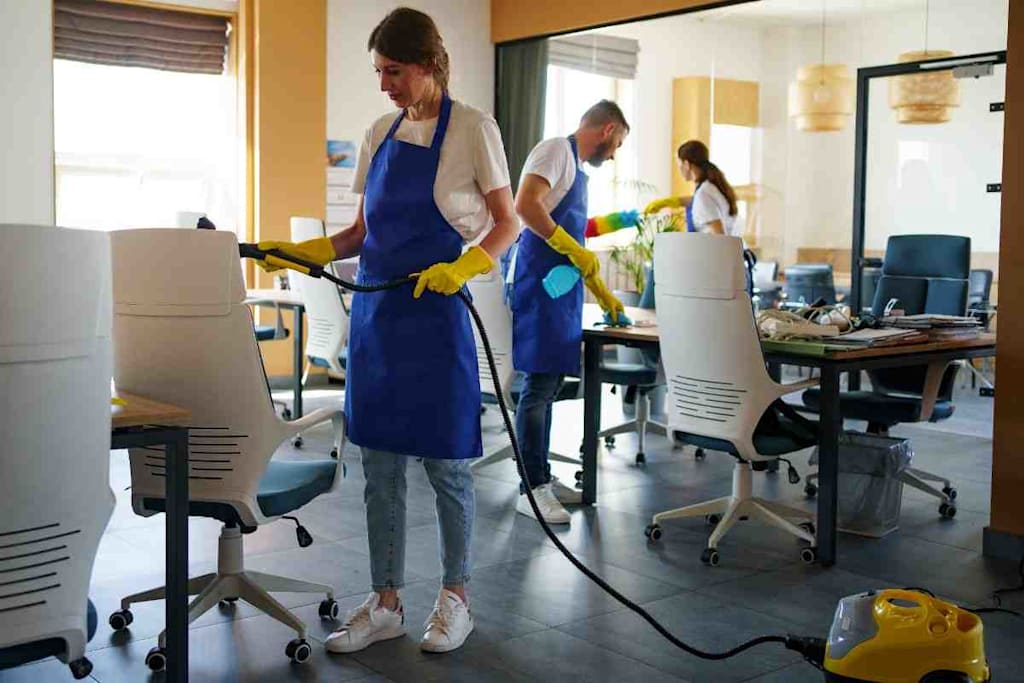
Most people never think twice about who cleans their office building or shows up to scrub their apartment between tenants — but that quiet, unglamorous work has turned into a genuinely large industry. The global cleaning services market is valued at $418.7 billion in 2025 and is projected to reach $823.6 billion by 2035, growing at a 7% CAGR, driven by urbanization, rising hygiene standards, and a steady shift away from in-house janitorial staff toward outsourced providers.
Anyone curious about how this market splits by service type and end-use sector can get a free copy of the sample report covering the full regional and segment breakdown.
Floor Care and Office Buildings Still Run the Show
Among service types, Floor Care leads with a 32.8% share, simply because nearly every commercial and residential space needs it regardless of size or industry. On the end-use side, Commercial Spaces dominate at 34.2%, reflecting how much weight office buildings, retail stores, and shopping malls put on cleanliness as part of brand image and workplace compliance. Healthcare facilities round out a notably demanding niche, requiring terminal cleaning and biohazard handling protocols that command premium pricing compared to standard janitorial work.
The outsourcing shift behind much of this growth isn't subtle either — roughly 60.3% of janitorial services are now handled by outside contractors rather than managed internally, as companies decide that cleaning simply isn't worth running as an in-house function anymore.
A Wave of Acquisitions Is Consolidating the Industry
One clear sign of where this market is heading: in August 2025, 4M Building Solutions acquired both Miracle Clean Services and FKI Cleaning Services in quick succession, substantially expanding its scale in multi-site facility and janitorial contracts. That deal wasn't isolated — Truelink Capital acquired Zep, a long-established cleaning products and maintenance services provider, in July 2025, while Spotless absorbed Eco-Clean that December to strengthen its regional coverage across commercial and industrial accounts. Within the broader cleaning services market, this kind of rapid consolidation suggests buyers increasingly value scale and multi-site reliability over smaller, single-region operators.
Booking Habits Are Changing Faster Than the Mops
What's less obvious from the outside is how much digital behavior now shapes who actually gets hired. Around 78% of local mobile searches for services result in a booking or purchase within 24 hours, which means a cleaning company without a fast, mobile-friendly booking flow is effectively invisible to a huge share of potential residential customers. That pressure is pushing smaller operators toward the same subscription apps and digital scheduling tools that larger franchise brands have used for years, narrowing the competitive gap between a neighborhood cleaning service and a national chain.
Equipment is shifting too, even if slowly. Robotic vacuum cleaners, automated floor scrubbers, and UV disinfection tools are becoming standard in larger commercial contracts, not because they replace cleaning staff outright, but because they free workers to focus on detail work machines still can't handle well.
Where the Industry Cleans Up Next
The next stretch of growth looks less about new cleaning techniques and more about how the industry organizes itself. Expect continued acquisitions as mid-sized players chase the scale needed to service multi-site corporate and healthcare contracts, growing demand for eco-certified products as both consumers and regulators push sustainability, and deeper reliance on digital booking systems to win residential customers who decide in minutes, not days. As workforce shortages keep pressure on labor costs and automation slowly takes over repetitive tasks, the providers that combine reliable staffing with smooth digital experiences look best positioned to keep growing — even as the work itself stays as unglamorous as ever.
About the Creator
Enjoyed the story? Support the Creator.
Subscribe for free to receive all their stories in your feed.
Comments
There are no comments for this story
Be the first to respond and start the conversation.