
Why the Biodegradable Plastic Market Is Growing Faster Than Ever
Environmental awareness, corporate sustainability goals, and innovation are fueling steady global expansion.

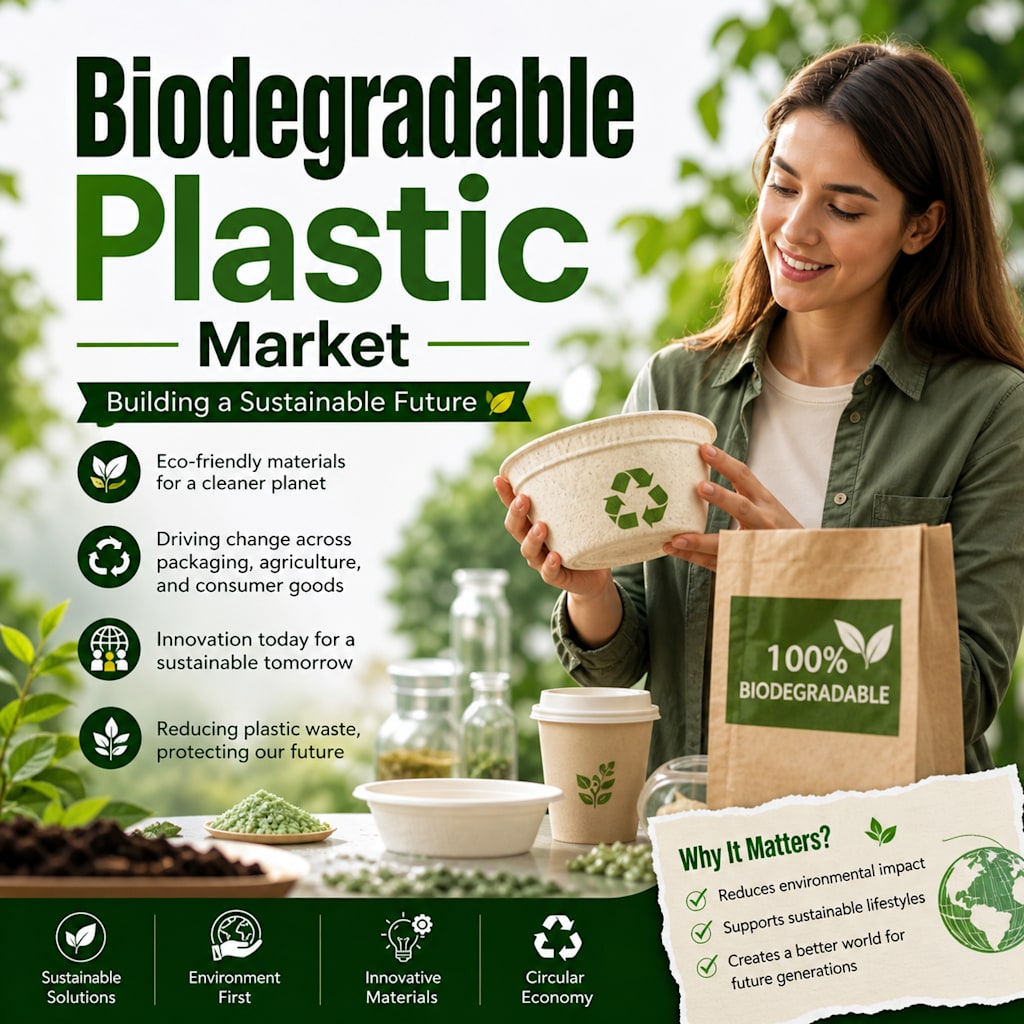
Plastic: a world-changing material of modern times. It is inexpensive, hardwearing and versatile. The one thing about plastic is, in the long term, its durability has become a serious problem for the planet that cannot be ignored. From landfill and overflowing oceans to the long-term environmental threat, governments, companies and customers around the world realize something has to be done. As such, there is a transition occurring for biodegradable plastics – a product designed to degrade into natural substances without causing any harm to the planet.
Market Growing with Environmental Awareness
In 2025, the global biodegradable plastic market size was valued at around USD 6.1 billion and is projected to reach just under USD 11.5 billion by 2034. This constitutes a steady compound annual growth rate of nearly 7%. This growth means something more than just an expanding industry, it shows a paradigm shift is underway. This shift is driven by consumers wanting to embrace a lifestyle that focuses more on environmental well being than anything else, which has spurred industries into producing more sustainable products. With 'sustainability' no longer just a option but a requirement, biodegradable plastics have moved on from being a unique alternative, to being a truly viable option to conventional materials.
The reasons that have driven the world towards biodegradable plastics
With growing concern about our environment the world is heading towards biodegradable plastics, thanks to reasons like, increasing demand from various countries regarding plastics and the strict legislation imposed on their use. Meanwhile, the consumer is also beginning to understand the far-reaching damage that can be caused by traditional plastics and according to latest studies, a vast number of the world population supports a move away from plastic, proving a clear paradigm shift is taking place. Companies have been prompt to respond. No longer are businesses simply looking to improve their brand image with such practices, but they also consider it a necessity for survival in today's business environment.
The importance of biodegradable plastics
One of the reasons for the huge popularity and growth of the market for biodegradable plastics has to do with modern technology. The development of polylactic acid (PLA) and polyhydroxyalkanoates (PHA), both widely accepted biodegradable plastics, has significantly improved performance, and made them suitable for widespread usage. The starch-based bioplastics are just one among many that are now extensively being used in several different sectors ranging from agriculture to cosmetics. Even in the field of textiles and many consumer products the material is being rapidly adopted. Simultaneously the methods and processes for producing these new biodegradable plastics have become more efficient helping to drastically reduce manufacturing costs and consequently, making them comparable with traditional plastics.
Packaging Industry Leads the Way
Of all possible applications, packaging materials represent a very large market for biodegradable plastics. In an age where single use plastics are being restricted by governments, consumers and businesses within food and beverage, retail, and e-commerce sectors have quickly opted for sustainable packaging options. Biodegradable packaging is proving to be a popular choice for numerous reasons including, environmental impact and speed of degradation compared to their traditional alternatives, consumer desire to adopt environmentally friendly alternatives, and adherence to government restrictions. Large brands such as L'Oreal and Apple have begun to incorporate these environmentally friendly alternatives into their product strategies as part of their future sustainability goals.
Global environmental issues driving global change
The plastic waste crisis has reached an alarming peak in numerous parts of the world. Every year, million of tons of plastic are disposed of in landfill, and our oceans, destroying wildlife and ecosystems across the planet. The need for alternative, more sustainable options to the problem have led to increased global demand for biodegradable plastics which are seen as a solution to the problem of persistent waste, along with better policies, and corporate commitments. The fact that the environmental groups, governments, and organizations globally share similar visions shows a consensus is being achieved.
Policy Changes Accelerating Adoption
The adoption rate of biodegradable plastics has been directly influenced by global government policies. Measures such as, bans on certain plastic bags and regulations enforcing the reduction of plastic waste, have all provided the incentive for many industries to quickly embrace sustainable alternative materials. Many governments, organizations and even consumers are now keen on implementing better practices, with most western countries leading by example through strict plastic related legislation and incentives, which has helped them to witness significant reductions in the amount of plastic waste along coastlines. Governments too are keen to invest in research and innovation of sustainable technologies, and have taken up support of the same by investing and promoting it widely.
Regional Growth: Europe leading the market
Although the biodegradable plastic market is seeing substantial growth everywhere, Europe remains at the forefront, due to strict regulations, high levels of awareness and public support for the material, and their well established waste management systems. In most of Europe, biodegradable plastics are widely being adopted across sectors, be it in Germany, France, Italy or the United Kingdom. Simultaneously, North America and Asia Pacific regions are also seeing a growth which is very significant and growing fast.
Expanding Applications
Biodegradable plastics are not only suitable for packaging, but are also gaining significant importance in the field of agriculture (plant containers and mulch films), consumer goods (cups, plates, packaging), medical applications and industrial uses. The affordability and wide availability, and ease of degradation are now being explored through technologies such as starch based bioplastics, leading to wider use in the packaging of food and in consumer products. However, with constant R&D the usage is also set to broaden in many more industries worldwide.
Challenges in achieving adoption rates
Despite considerable interest and significant growth of the market for biodegradable plastics, some challenges remain. Cost competitiveness with traditional plastics remains the biggest concern for most businesses, along with the proper infrastructure to ensure that all plastic is disposed of effectively. There is also significant lack of understanding with regard to biodegradability and compostability which are both quite different, as well as performance limitations.
Innovation and competition are driving market forward
The biodegradable plastics market is becoming highly competitive, with the market players increasingly relying on innovation and effective differentiation strategies to secure a significant position in this evolving market. Their primary strategies are the development of advanced and improved biodegradable plastics, efficient and cost effective production process, and development and exploration of wider application sectors. Some of the recent advancements made have been able to produce very robust products for practical real-life uses with guaranteed degradation in natural environments.
A Look Into The Future: Sustainable Materials
The success of the biodegradable plastics market has always been intrinsically linked with the world's quest for a circular economy. The market will continue to expand beyond 2034 as companies make better use of sustainable raw materials than traditional petroleum-based alternatives. With the increasing importance of environmentally sound production processes coupled with innovation and governmental incentives, it is clear that biodegradable plastics are here to stay and will grow rapidly in importance over the years to come.
A New Age of Materials. Biodegradable plastics not only prove to be an alternative to the conventional plastics that we are currently used to, but are also a clear indicator of a positive shift that is occurring across the world. While there still may be a few challenges that need to be addressed such as cost, disposal, and usage, one cannot deny the tremendous impact that these biodegradable plastics are making. They are slowly but surely transitioning from being just another alternative product to becoming the standard material in most industries in years to come, especially with people increasingly becoming more aware of environmental issues.
About the Creator
Robert
Senior Market Researcher at IMARC Group, specializing in global market analysis, industry trends, and data-driven insights across diverse sectors.
Enjoyed the story? Support the Creator.
Subscribe for free to receive all their stories in your feed.
Comments
There are no comments for this story
Be the first to respond and start the conversation.