
Why the Automotive Junction Box Market Is Headed for $36.9B
The unglamorous power distribution component at the center of every EV platform is quietly becoming a major market story.
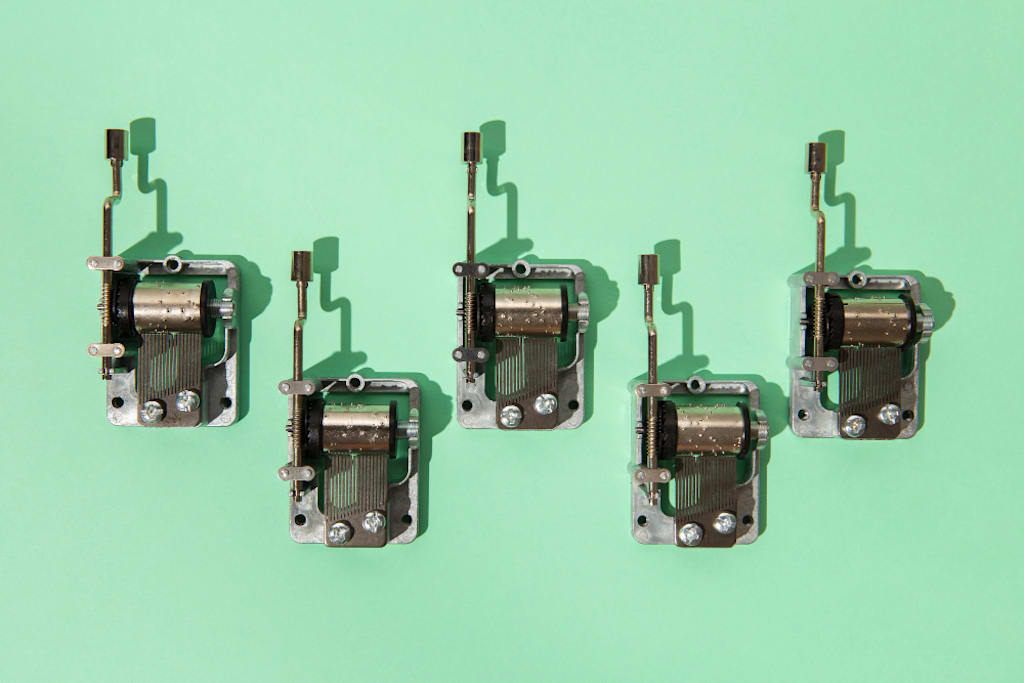
The Most Boring Part of Your EV Is About to Become a $36.9 Billion Business
Most people have never thought about a junction box. Fair enough — it doesn't have the drama of a lithium battery pack or the mystique of a self-driving sensor array. It's a box. It routes power. It protects circuits. And yet, the global market for automotive junction boxes is on a trajectory from $18 billion today to nearly $37 billion by 2035, which tells you something important about where the real money in EV electrification is quietly moving. The Automotive Junction Box Market size and share figures are expanding fast enough to make investors in flashier EV components take notice — and a detailed breakdown of this shift is available in this automotive electrical distribution industry overview.
When a Box Stops Being a Box
The junction box's long history as a passive component — fuses, relays, a bit of plastic housing — is ending. Modern electric vehicles running on 400V and 800V battery architectures can't use the same 12V distribution designs that served combustion-era cars for decades. They need purpose-engineered power distribution units with thermal management, fault isolation, and contact ratings that bear almost no resemblance to their predecessors.
This isn't incremental improvement. It's a category redefinition. Bosch and Continental don't just sell boxes now; they sell software-addressable electrical nodes. Denso's captive relationship with Toyota Group gives it design authority over some of the world's highest-volume hybrid programs, where junction box specs are locked in at the platform level, years before a consumer ever sits in the car.
The regulatory dimension makes this stickier than it might look. In the United States, Automatic Emergency Braking was standard equipment on 94.9% of new light-duty vehicles in 2023, according to the National Highway Traffic Safety Administration. Every one of those ADAS circuits needs protection. Every ADAS-equipped vehicle becomes, in effect, a mandatory buyer for compliant electrical distribution components. That's not a market trend — it's a floor that doesn't move downward.
China Runs the Table, for Now
Asia Pacific holds 45.8% of the global automotive junction box market, valued at $8.2 billion in 2025. China is the engine behind that dominance, and not by a small margin. As the world's largest EV production base, Chinese OEMs and their Tier 1 supply chains manufacture high-voltage junction boxes at a scale and cost structure that no Western region currently matches. When the IEA reported that global electric car sales hit 17 million units in 2024 — over 20% of all new car sales globally — the majority of those vehicles rolled off lines in China, each requiring purpose-built power distribution hardware.
Europe is not standing still. Germany and France concentrate the most OEM engineering activity outside Asia, and the continent's CO₂ emissions standards are forcing electrification timelines faster than consumer demand alone would dictate. In April 2025, Yazaki Corporation opened a new engineering center in Germany specifically focused on advanced vehicle electrical distribution — a signal that Tier 1 suppliers are repositioning their design presence closer to European OEM program teams before the next platform cycle locks in.
The Consolidation Move That Explains Everything
The acquisition of Intercable Automotive Solutions by Aptiv in January 2024 — a deal focused on high-voltage busbars and electrical distribution — illustrates where the competitive logic of this market is heading. Scale matters here. High-voltage capability matters. OEM qualification timelines are long, and once a supplier wins a platform award, the technical integration depth of junction boxes makes mid-cycle substitution essentially impractical.
That's a durable competitive moat, which is why companies like BorgWarner are migrating from combustion drivetrain components toward EV-compatible power management systems through acquisition rather than organic development. The prize isn't a single vehicle model — it's a design-in relationship that persists for the life of the platform.
The Automotive Junction Box Market size and share breakdown confirms that OEM channels account for 83.6% of revenue, with aftermarket playing a distinctly secondary role. That ratio isn't accidental. It reflects the design-lock dynamics that make junction box supply relationships among the more defensible positions in the broader auto components sector.
What Comes After the Box
The next version of this component isn't really a box at all. Smart junction boxes with embedded diagnostics report real-time load data, execute remote switching commands, and flag faults before circuit damage occurs. NXP Semiconductors launched its MC33777 battery junction box controller in September 2024, aimed directly at EV high-voltage battery management — which signals that semiconductor companies now compete in functional territory once owned by electrical assembly specialists. Zonal architecture, which consolidates vehicle electrical domains into fewer, smarter nodes, will further compress the number of physical junction points while raising the value — and the technical complexity — of each one. The humble box is becoming a system. And systems, as the numbers confirm, command very different prices.
About the Creator
Mark K. Belton
I’m Mark K. Belton, 26 years old, currently working as a Digital Marketing Intern. I have a strong interest in digital marketing and have been developing my skills in SEO, social media marketing, content creation, and online campaign
Enjoyed the story? Support the Creator.
Subscribe for free to receive all their stories in your feed.
Comments
There are no comments for this story
Be the first to respond and start the conversation.