
Why the Attraction Souvenir Retail Market Keeps Growing
That museum gift shop you can't skip is part of a $25.9 billion industry, and it's only getting bigger.

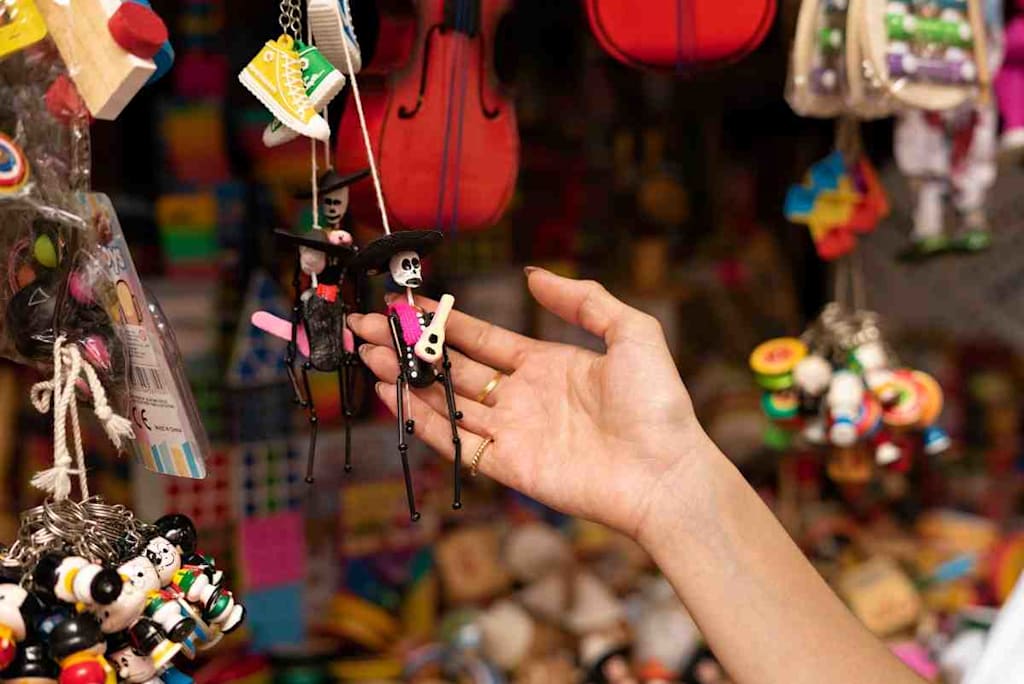
Anyone who's ever left a theme park with a stuffed mascot they didn't plan on buying has unknowingly contributed to the attraction souvenir retail market. It's bigger than most people assume: valued at around 25.9 billion dollars in 2025, the market is projected to climb to roughly 46.8 billion dollars by 2035, growing at a steady 6.1 percent annually. That growth isn't accidental. It's built on a behavior that turns out to be remarkably consistent across cultures and income levels: people want physical proof they were somewhere meaningful.
Anyone curious about how that growth breaks down by product category, distribution channel, and region can request a no-cost copy of the underlying sample report and look at the figures directly.
The Psychology Behind the Purchase Is Stronger Than It Looks
The numbers behind souvenir buying are more consistent than most retail categories ever achieve. According to Doyle and Associates, roughly 73 percent of museum visitors expect to stop at the museum store during their visit, and separately, 30 percent of theme park visitors actually buy merchandise while they're there. More broadly, over 60 percent of travelers purchase gifts or souvenirs while on vacation, and theme park visitors typically spend 15 to 20 percent of their total in-park budget on merchandise alone.
That's not impulse spending in the usual retail sense. It's closer to ritual, a way of converting an experience into something tangible that can sit on a shelf at home. Apparel leads all product categories at 36.28 percent share for exactly this reason: a branded hoodie or themed t-shirt does double duty as a keepsake and a walking advertisement for wherever it was bought.
Onsite Stores Still Win, But the Map Is Expanding
Within the broader Attraction Souvenir Retail Market, onsite stores dominate distribution with 62.40 percent share, and the logic is straightforward: a captive, emotionally engaged visitor base browsing on the way out the door converts at rates most retailers would envy. Tourists themselves make up the largest end-user segment, at 41.32 percent, reinforcing just how tightly souvenir buying is tied to the act of traveling somewhere new.
But the channel mix is shifting. Universal Products and Experiences launched its shopUniversal online store in November 2025, extending souvenir access to fans who never set foot in a park. That move signals something bigger than convenience, it's an acknowledgment that brand loyalty built inside a theme park doesn't have to end when the visit does, and operators are increasingly treating merchandise as a year-round revenue stream rather than a one-time, in-park transaction.
Collectibles and Limited Drops Are Changing the Sales Strategy
One of the more interesting shifts in this market is how deliberately operators are engineering scarcity. Collectibles, including limited-edition figurines and event-exclusive enamel pins, benefit from the same psychology that drives sneaker drops and trading card releases: people buy faster and pay more when they believe a product won't be available again. Timed releases and event-exclusive merchandise are increasingly used to create urgency and boost per-visit spending among repeat collectors.
Social media has accelerated this further. Viral souvenir "unboxing" content and theme park visit videos now actively shape what people buy before they even arrive, pushing retailers to design products that photograph well, not just ones that look good on a shelf.
Consolidation Shows Where the Real Money Is Moving
Few moves better illustrate how seriously this category is taken than the LEGO Group's 200 million pound acquisition of LEGO Discovery Centres and LEGOLAND Discovery Centres from Merlin Entertainments, completed in February 2026. That deal brought LEGO's retail and experience network fully under one corporate roof, eliminating the gap between brand and venue ownership entirely. Around the same time, Six Flags announced Six Flags Qiddiya City in Saudi Arabia, a major Middle East expansion expected to introduce entirely new branded retail experiences to a fast-growing tourism market.
Neither move was framed primarily as a souvenir retail strategy, but both point at the same underlying logic: owning the attraction and owning the merchandise pipeline are becoming inseparable business decisions, not separate revenue lines bolted together after the fact.
North America currently leads the market with a 34.90 percent share, worth about 9.0 billion dollars in 2025, supported by some of the world's most heavily attended theme parks and museums. But Asia Pacific is emerging as the faster-growing story, as rising middle-class incomes and aggressive new attraction development across China, Japan, South Korea, and India expand the addressable market well beyond its traditional Western base.
What's becoming clear is that souvenir retail has stopped being an afterthought tacked onto the exit of a theme park or museum. Between deliberate collectible scarcity, expanding digital storefronts, and major operators folding retail directly into their ownership structures, this market is positioned to keep growing right alongside global tourism itself, one keychain, hoodie, and limited-edition pin at a time.
About the Creator
Enjoyed the story? Support the Creator.
Subscribe for free to receive all their stories in your feed.
Comments
There are no comments for this story
Be the first to respond and start the conversation.