
Why the Argentina Two-Wheeler Market Is Growing With Affordable and Electric Mobility
The Argentina two-wheeler market is expanding as urban commuters and delivery services drive demand for affordable and fuel-efficient transportation.

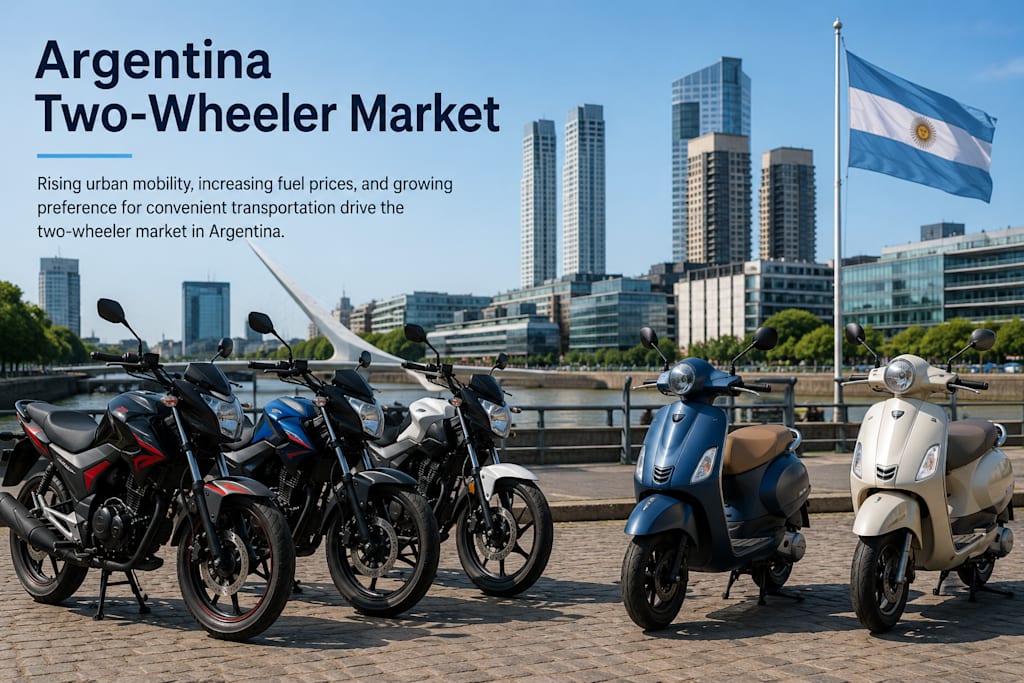
Argentina's transportation landscape is evolving, with consumers increasingly seeking budget-friendly, fuel-efficient, and adaptable transit solutions. This, coupled with increased urban congestion, rising fuel prices, and the rapid growth of delivery services, has propelled two-wheelers to the forefront as an essential component of daily commutes across the nation.
According to the IMARC Group, the Argentine two-wheeler market, valued at USD 902.5 million in 2025, is projected to reach USD 1,706.4 million by 2034, indicating a robust CAGR of 6.97% during 2026-2034.
Among the major driving factors for this market expansion is the rising demand for affordable personal mobility options. As the cost of transport escalates and city traffic intensifies, consumers are increasingly turning to two-wheelers as a pragmatic and cost-effective commuting alternative. The fuel efficiency, ease of navigation, and lower maintenance requirements of motorcycles and scooters make them particularly appealing for daily travel compared to automobiles.
Another significant factor fueling market growth is the swift development of the e-commerce and delivery industry. Food delivery platforms, courier services, and last-mile logistics operators rely on motorcycles for prompt and efficient delivery services, and the flourishing digital economy in Argentina has created a continuous upsurge in the demand for commercial two-wheelers.
A notable trend currently shaping the market is the escalating adoption of electric two-wheelers. Growing environmental consciousness among consumers, combined with rising fuel costs, has increased the appeal of electric mobility alternatives. Electric scooters and motorcycles offer the benefits of lower running expenses and reduced emissions, in line with global sustainability objectives. The market's growth in this segment is further bolstered by government incentives and an expanding charging infrastructure.
Technological innovations are also contributing to the transformation of the market. Manufacturers are integrating features such as smart connectivity, digital displays, GPS tracking, and advanced safety mechanisms to improve the user experience, while advancements in battery technology and longer-range electric models are making modern two-wheelers a more viable option for both personal and commercial use.
Segmentation of the market includes scooters, mopeds, motorcycles, and electric two-wheelers. Motorcycles currently hold a dominant position owing to their affordability and suitability for urban as well as rural transportation, but electric scooters are emerging as one of the fastest-growing segments due to their convenience and eco-friendly nature.
By technology, the market is segmented into internal combustion engine (ICE) and electric vehicles. ICE vehicles currently lead due to their established infrastructure and affordability, although electric models are rapidly gaining ground on account of improving battery technology and increasing environmental awareness.
Within engine capacity, the 100cc-125cc segment continues to be highly favored as it offers a balance of affordability, fuel efficiency, and adequate performance for everyday commuting.
The market is further segmented by end users into personal and commercial applications. Personal usage remains dominant as an increasing number of commuters seek low-cost mobility options, while the demand from commercial applications is growing rapidly with the rise of delivery and logistics services.
On a regional level, the market is distributed across the Buenos Aires Region, Crdoba Region, Patagonia, Litoral, Northern, and Cuyo regions, with Buenos Aires accounting for the largest share due to its dense urban population and high demand for efficient transport.
Another significant trend gaining prominence is the increasing popularity of automatic transmission scooters among younger users and urban commuters. The ease of operation, lightweight design, and maneuverability of these scooters make them ideal for navigating crowded city streets and are especially popular with first-time riders.
What makes the Argentina two-wheeler market exceptionally dynamic is its interconnectedness with broader mobility and sustainability trends. Consumers are prioritizing convenience, affordability, and fuel efficiency, while businesses are leveraging two-wheelers for rapid and cost-effective logistics operations.
In the future, the market is expected to continue to expand, driven by ongoing urbanization, escalating fuel costs, increased adoption of electric vehicles, and the proliferation of e-commerce delivery services. As Argentina's transportation infrastructure continues to evolve, two-wheelers are poised to play an increasingly vital role in shaping the future of mobility.
About the Creator
michael matthew
I’m a market researcher passionate about understanding people, markets, and motivations. My work blends data analysis, consumer psychology, and strategic insight to help brands and businesses make informed, human-centered decisions.
Enjoyed the story? Support the Creator.
Subscribe for free to receive all their stories in your feed.
Comments
There are no comments for this story
Be the first to respond and start the conversation.