
Why the Aircraft Paint Market Is Worth $4.4 Billion by 2035
The coatings on commercial and military aircraft are a high-stakes engineering challenge — and a fast-growing global business.
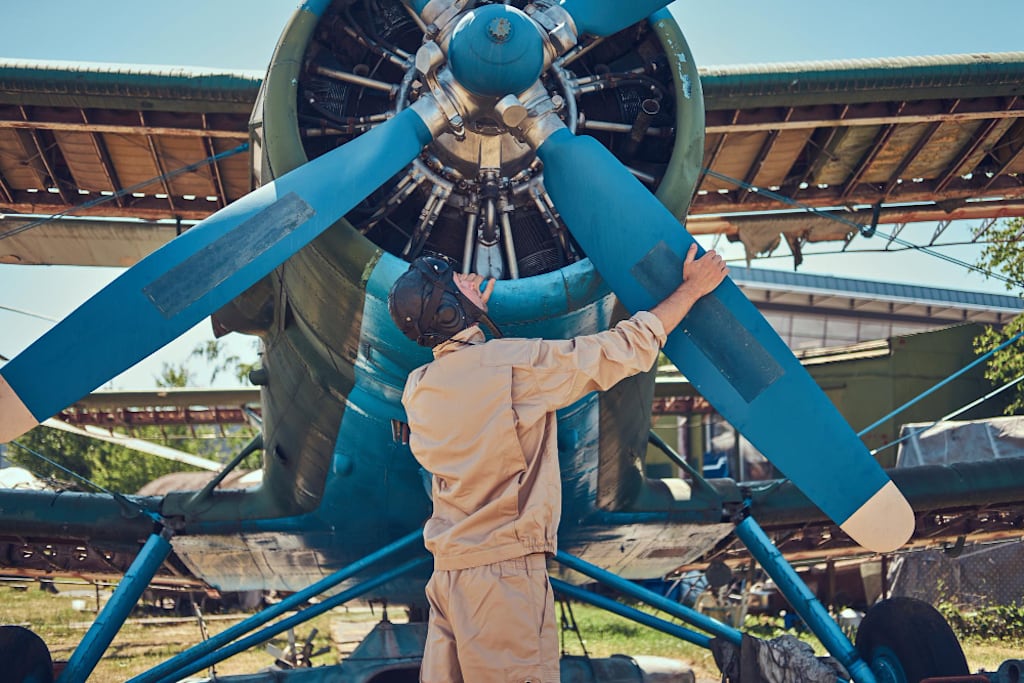
Why the Paint on Your Airplane Costs More Than Your Car
Every time an Airbus A320 rolls into a maintenance bay for repainting, the bill runs somewhere between $50,000 and $200,000 — just for the coatings. Not the labor. Not the downtime. The paint itself. That number surprises most people, and it should. The Aircraft Paint Market Size, already valued at around $2.5 billion in 2025, is on track to nearly double to $4.4 billion by 2035, expanding at a compound annual growth rate of 5.8%. A detailed breakdown of these projections is available in this aircraft coatings industry overview. The numbers reflect something most passengers never think about as they stare out the oval window: the skin of the plane is doing serious engineering work.
It's Not Decoration — It's Infrastructure
Aircraft coatings have to survive conditions that would destroy ordinary paint inside of a week. At cruising altitude, an exterior surface faces UV radiation intense enough to fade most commercial coatings within months, temperature swings of over 100°C between ground and cruising altitude, and sustained exposure to jet fuel, hydraulic fluid, and deicing chemicals. On top of that, every gram of coating adds to total aircraft weight, so formulators are perpetually trying to engineer coatings that are lighter, thinner, and longer-lasting simultaneously. That's a genuinely difficult problem, and the chemistry behind solving it is where most of the cost lives.
Polyurethane topcoats dominate the exterior segment for commercial aircraft because they balance durability and gloss retention better than any competing technology at scale. But chromate-based primers — long the corrosion-resistance standard in military applications — are being phased out in many markets due to hexavalent chromium regulations in the European Union and increasingly in North America. The hunt for viable non-chromate alternatives is one of the more consequential technical battles happening inside aviation MRO facilities right now, and it's reshaping supplier relationships and procurement decisions across the industry.
The Repaint Cycle Is the Business Model
Airlines don't repaint for vanity. The schedule is largely dictated by regulatory requirements and maintenance planning intervals — most operators follow a full exterior repaint every five to seven years. For a carrier like Ryanair, which operates over 570 Boeing 737s, that means a near-constant rolling program of aircraft moving through paint facilities. Emirates, with one of the most distinctive liveries in commercial aviation, spends extensively on specialized metallic and high-gloss finishes that require more preparation and curing time than standard airline liveries. These are not trivial procurement decisions; paint specification directly affects turnaround time in the hangar, which directly affects revenue-generating flight hours.
Military aviation adds a different kind of complexity. Low-observable coatings for stealth applications, radar-absorbent materials, and infrared-suppression finishes are specialty segments where unit economics look nothing like the commercial side. The U.S. Department of Defense has been investing in next-generation coating technologies as part of broader aircraft survivability programs, and several defense contractors have partnered with chemical companies like PPG Industries and Sherwin-Williams Aerospace to accelerate development timelines. Both companies hold significant aircraft paint market share globally, though the landscape between OEM supply and MRO aftermarket is divided differently than most outsiders assume.
Asia-Pacific Is Rewriting the Demand Map
For most of the 20th century, the center of gravity for aviation coatings demand sat firmly in North America and Western Europe — where the largest fleets operated, where the biggest MRO facilities clustered, and where the major chemical formulators were headquartered. That is shifting with meaningful speed. China's commercial aviation fleet has grown from roughly 1,000 aircraft in 2005 to over 4,200 today, and India's fleet has expanded dramatically alongside the explosive growth of carriers like IndiGo, which operates more than 300 aircraft and has hundreds more on order. Maintenance infrastructure in both countries is scaling rapidly, which means regional demand for coatings — both from OEM finishing and MRO repainting — is compounding in ways that didn't show up in demand models a decade ago.
Southeast Asia is also becoming a hub for MRO activity, with Singapore, Malaysia, and Thailand attracting heavy investment in aircraft maintenance facilities partly because of proximity to some of the world's fastest-growing aviation markets. This geographic diversification of demand is pushing global coating suppliers to build regional distribution and technical support networks they didn't need when most repaint work happened in Dallas or Hamburg.
The Next Coat Will Be Smarter
The most forward-looking development in this space isn't a new polymer — it's the convergence of coatings with sensing technology. Several research programs are exploring paint formulations that can visually indicate structural stress or microfractures through color change, essentially turning the exterior skin of an aircraft into a diagnostic layer. Others are working on self-healing coatings that partially restore themselves after minor impact damage. Neither technology is commercially deployed at scale yet, but with aviation regulators increasingly focused on predictive maintenance rather than calendar-based inspection intervals, the business case for "intelligent" coatings is strengthening every year. The next decade in this market will likely be defined less by who makes the best paint and more by who can make paint do things it has never done before.
About the Creator
Mark K. Belton
I’m Mark K. Belton, 26 years old, currently working as a Digital Marketing Intern. I have a strong interest in digital marketing and have been developing my skills in SEO, social media marketing, content creation, and online campaign
Enjoyed the story? Support the Creator.
Subscribe for free to receive all their stories in your feed.
Comments
There are no comments for this story
Be the first to respond and start the conversation.