
Why the Air Compressor Market Is Growing Steadily Worldwide
From automation to energy efficiency, the forces shaping this essential industrial technology

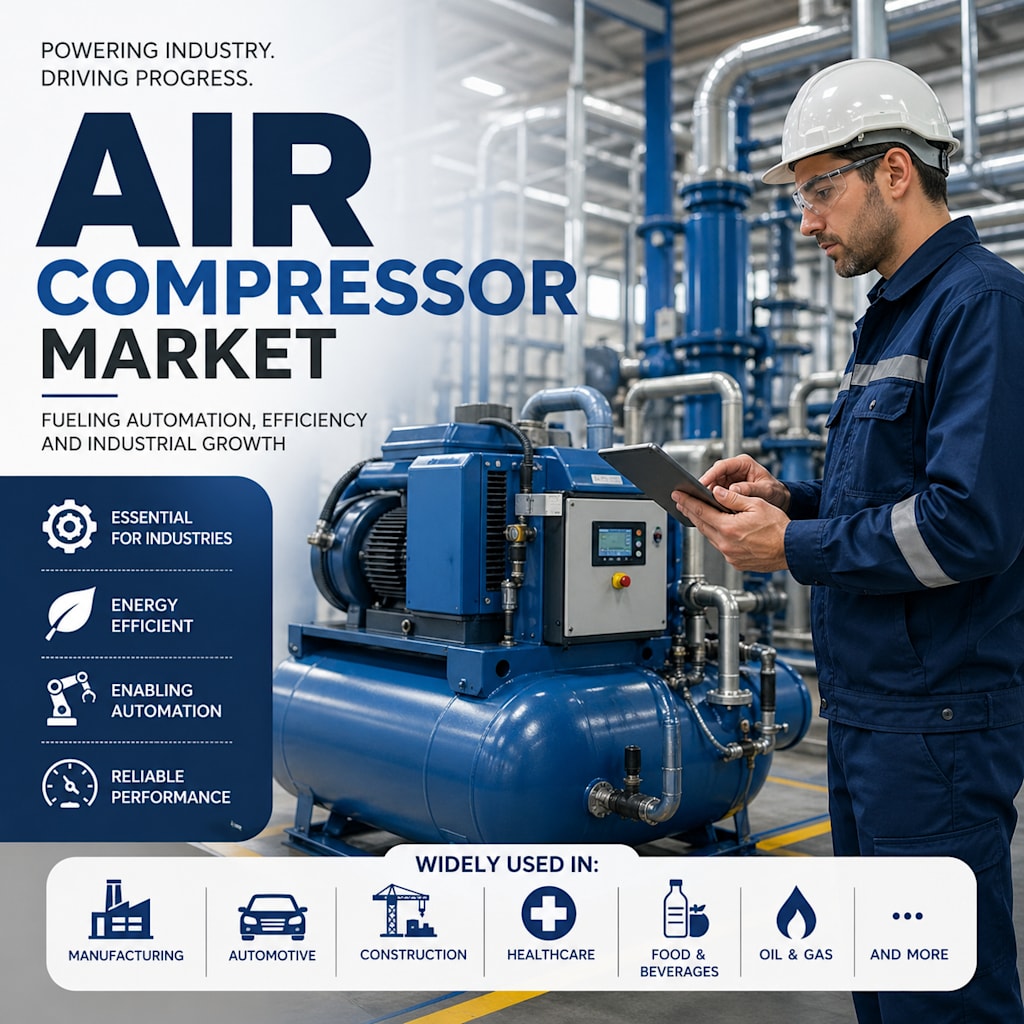
Compressed air is powerful and is common in factories‚ construction sites‚ hospitals‚ and small workshops․
Air compressors are the workhorses of industrial power in commerce and manufacturing․ They don't get nearly as much attention as robots or artificial intelligence‚ but without them‚ a lot of the jobs in our economy would come to a halt․
The market is driven by the rising demand from growing industries worldwide and technology advances meeting end-user requirements for efficiency‚ automation‚ and reliable power supply․
A Market Built on Consistent Industrial Demand
In 2025‚ the air compressor market size was valued at approximately USD 19․7 billion and is estimated to reach USD 25․9 billion by 2034․
This translates to an average annual growth rate of around 3% between 2026 and 2034․
This is a slower technological change than in the fast-moving technology markets‚ since it is driven by a fundamental‚ continuing industrial demand․ Air compressors are the infrastructure of many industries‚ and not optional․
Compressed air is an important part of daily operations‚ used in tools and precision machinery․
What Are Air Compressors Used For?
In short‚ an air compressor turns a power source‚ either electric or fuel-powered‚ into force by applying it to air and storing energy in compressed air․
This compressed air can then be used for a wide range of applications‚ including:
- Operating pneumatic tools
- Powering automated systems
- Filling gas cylinders
- Supporting manufacturing processes
- Functioning of HVAC and refrigeration systems
This versatility means air compressors are used in manufacturing‚ construction‚ automotive‚ healthcare‚ energy and food processing industries․
Why Demand Is Increasing Across Industries
One of the biggest drivers of growth is an increased demand for compressed air in industrial applications․
Pneumatic systems are employed in industry for many reasons:
- Reliable
- Easy to maintain
- Cost-effective
- Safer than electrical alternatives
But as more industrial and construction sites arise around the world‚ demand for a constant supply of high-pressure air is growing․
Emerging economies also considerably contribute to the demand․ Rapid industrialization and infrastructure development in Asian nations and emerging countries create major requirements for air compressor systems․
The Push Toward Energy Efficiency
Energy consumption has become a major concern for industries worldwide․
A problem with air compressors is that they consume a lot of power․ Manufacturers are addressing this problem by increasing their efficiency and performance at the same time․
More recent technologies‚ such as variable speed drive (VSD) compressors‚ help to reduce energy waste by tailoring output to match load demands․
In addition to the increased sustainability‚ this has been touted as a way for businesses to save cash‚ as the replacement of energy-saving compressors becomes more attractive as prices increase․
Automation Is Changing Everything
The increasing levels of automation has been another driver of the air compressor market․
Modern industrial automation technology relies on a constant‚ unbroken supply of compressed air to operate pneumatic control systems and equipment․
The level of dependence on stable air compressor systems also increases with increasing automation in factories․
Because automation requires precision and no sudden pressure changes‚ compressor manufacturers are producing more smart compressor systems that operate more efficiently under varying loads․
The Role of Smart Technology and IoT
Air compressors are getting smarter․
Modern compressors contain IoT technologies that can:
- Monitor the performance in real-time
- Detect faults before they occur
- Enable predictive maintenance
- Improve overall system efficiency
The ability to reduce downtime increases productivity‚ which is a major advantage in continuous process industries․
Smart compressors are no longer just machines‚ but rather part of connected industrial ecosystems․
Different Types for Different Needs
Many different designs of air compressor exist‚ and the design often depends closely on the application․
Stationary compressors are used in industrial applications when continuous air supply is necessary for larger-scale uses․
In contrast‚ portable compressors are used in construction sites as well as smaller applications where mobility is needed․
Of these‚ the rotary screw compressors are probably the most widely used‚ due to their efficiency and ability to run continuously․
Oil-filled compressors are most commonly used in important operations‚ whereas‚ for applications requiring air purity‚ oil-free compressor designs are mainly used in the healthcare‚ food‚ and beverage industries․
Where the Market is Growing the Fastest
The air compressor market differs regionally․
Asia-Pacific‚ characterized by high levels of industrialization‚ infrastructure development and manufacturing‚ is the leading region in terms of demand (growth) in the global market․
North America‚ with its strong industrial base as well as an increased focus on automation and smart technologies‚ remains a key market․
With an increasing focus on sustainability and energy efficiency‚ demand for green and energy-efficient compressor systems is growing in Europe․
Other forms of regional development include developing industrialized regions in Latin America and the Middle East․
Obstacles the industry faces going forward
The air compressor market is growing‚ but also encountering difficulties․
The high initial equipment costs‚ the required maintenance‚ and technical problems like overheating‚ pressure fluctuations‚ and system imbalance may limit the commercial feasibility of advanced compressor systems‚ especially for small and medium-sized businesses․
There are also rules governing noise‚ emissions‚ and energy efficiency that manufacturers must comply with‚ providing another hurdle for development․
However‚ these challenges have also spurred innovation‚ with companies working to create more reliable and user-friendly devices․
Opportunities Driving Future Growth
The air compressor market has a strong outlook ahead of it․
Energy-efficient and environment-friendly air compressor systems are the future․ Oil-free compressors‚ compact and powerful designs and smart monitoring systems are becoming more common in compressed air technology․
Small and medium enterprises (SMEs) in the developing world are creating a large market for inexpensive‚ efficient compressors․
Along with these changes‚ digital technologies have matured‚ with their performance being less interrupted‚ leading to a better user experience․
Highly Competitive and Evolving Industry
The market is highly competitive with global as well as regional players continuously improving their products․
Companies are focusing on:
- Innovation in compressor technology
- Energy efficiency improvements
- Smart and connected systems
- Strong after-sales support and service
To gain market share‚ companies will often form calculated partnerships with other companies‚ launch new products‚ or acquire companies․
Looking Ahead
Air compressors are extremely common‚ but they are not generally marketed directly to consumers․
Compressed air systems will remain a core technology area for manufacturers as industry continues to grow‚ automate‚ and modernize․ Applications are expected to grow in a smarter‚ more efficient and greener direction․
By 2034‚ the market will be close to USD 26 billion due to steady and essential growth․
Even in a world of machines and technology‚ air compressors are one of the most important (and often underrated) engines of progress․
About the Creator
Robert
Senior Market Researcher at IMARC Group, specializing in global market analysis, industry trends, and data-driven insights across diverse sectors.
Enjoyed the story? Support the Creator.
Subscribe for free to receive all their stories in your feed.
Comments
There are no comments for this story
Be the first to respond and start the conversation.