
Why Sustainable Packaging Is Reshaping Canada's Packaging Market in 2026
Canada's packaging market is growing as businesses invest in sustainable materials, smart packaging technologies, and eco-friendly solutions to meet changing consumer expectations.

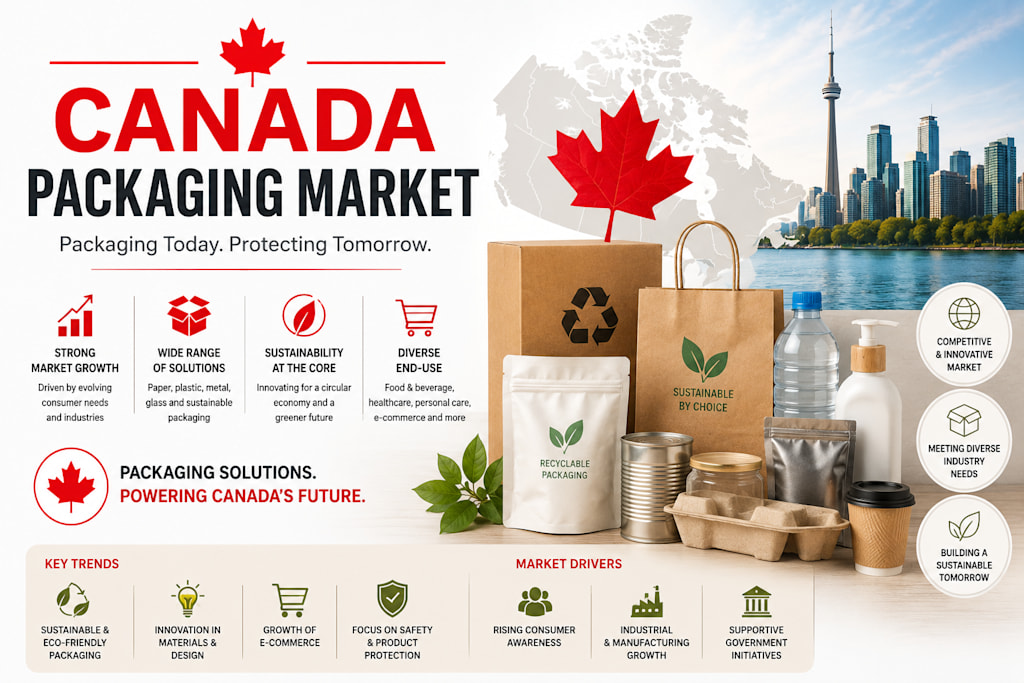
Packaging is a ubiquitous aspect of consumers' lives that goes largely unnoticed. From food containers and e-commerce boxes to beverage bottles and health products, packaging provides essential benefits by protecting items, extending their shelf life, and increasing their convenience. However, by 2026, packaging has evolved beyond just a functional necessity and has become integral to sustainability strategies, brand image, and environmental responsibility.
Throughout Canada, businesses are re-evaluating product packaging to meet the growing demand for sustainable solutions from consumers, regulators, and retailers. The packaging sector is experiencing significant changes, from the widespread use of recyclable paperboard to innovative smart packaging technologies.
The Canada packaging market, valued at $22.57 billion in 2025, is projected to grow to $31.42 billion by 2034, with a Compound Annual Growth Rate (CAGR) of 3.74% during the period 2026-2034, according to IMARC Group. This expansion is driven by increasing demand for sustainable materials, technological innovation, smart packaging solutions, and tightening environmental regulations.
Why, then, is the Canadian packaging market expanding in 2026?
The escalating demand for sustainable packaging solutions is a significant contributor. Consumers are becoming increasingly concerned about plastic waste and its environmental consequences, leading businesses to embrace recyclable, biodegradable, and compostable packaging materials. Companies are investing in eco-friendly alternatives that minimize environmental impact while satisfying consumer demand for sustainability.
Government regulations are also playing a vital role. Canada's initiatives to phase out single-use plastics and promote a circular economy are compelling manufacturers to redesign their packaging and adopt more sustainable materials. This regulatory landscape is fueling innovation within the packaging value chain, opening new avenues for environmentally responsible packaging providers.
The continuous growth of e-commerce is another major driver of market expansion. Online shopping has reshaped packaging needs, creating demand for robust, lightweight, and protective packaging that can withstand the rigors of shipping and handling. As e-commerce adoption continues, businesses are seeking packaging designs that enhance the customer experience while reducing waste and transportation costs.
A key trend in 2026 is the increasing adoption of smart packaging technologies. Advanced packaging solutions now often incorporate QR codes, RFID tags, near-field communication (NFC), and digital tracking capabilities. These technologies offer enhanced supply chain visibility, product authentication, inventory management, and customer engagement. Smart packaging helps brands create more interactive and transparent consumer experiences.
Material innovation is also transforming packaging. Manufacturers are developing stronger, lighter, and more sustainable packaging formats that strike a balance between performance and environmental goals. Novel materials, sophisticated printing techniques, and improved manufacturing processes are enabling businesses to produce packaging that is both cost-effective and environmentally responsible.
The food and beverage sector continues to be a leading consumer of packaging products. The surging demand for convenience foods, meal delivery services, and pre-packaged beverages is creating ongoing opportunities for packaging manufacturers. Businesses in this sector are prioritizing packaging solutions that can maintain freshness, extend shelf life, and meet sustainability demands simultaneously.
From a segmentation standpoint, the market comprises plastic packaging, paper and paperboard, metal packaging, and container glass. Plastic packaging remains a significant player due to its adaptability and durability, while paper and paperboard packaging are gaining popularity due to their recyclability and eco-friendly appeal.
Paper-based packaging is becoming increasingly crucial as businesses respond to sustainability pressures. Corrugated boxes, folding cartons, paper bags, and paperboard containers are seeing widespread adoption in retail, food, and e-commerce applications. Innovations in paper packaging are yielding stronger, more durable materials suitable for modern supply chain requirements.
Geographically, Ontario, Quebec, Alberta, and British Columbia continue to be major drivers of market growth, owing to their large consumer populations, extensive manufacturing sectors, and robust retail industries. These provinces remain at the forefront of investments in packaging innovation and sustainable manufacturing practices.
Another prominent trend is the adoption of circular economy principles. Companies are focusing on packaging designs that incorporate recycled content, support reuse, and improve recyclability. Brands are also collaborating closely with suppliers and recycling organizations to establish closed-loop systems that minimize waste and maximize resource efficiency.
What makes Canada's packaging market particularly compelling is its unique position at the convergence of sustainability, technology, and consumer behavior. Packaging is no longer merely a vessel but a strategic tool that enables companies to achieve environmental objectives, enhance customer experiences, and strengthen brand value.
The market is poised for continued growth, driven by sustained e-commerce expansion, strengthened commitments to sustainability, and ongoing innovation in smart and eco-friendly packaging solutions. As environmental awareness continues to rise, packaging will play an ever-more significant role in how products are manufactured, distributed, and consumed throughout Canada.
About the Creator
michael matthew
I’m a market researcher passionate about understanding people, markets, and motivations. My work blends data analysis, consumer psychology, and strategic insight to help brands and businesses make informed, human-centered decisions.
Enjoyed the story? Support the Creator.
Subscribe for free to receive all their stories in your feed.
Comments
There are no comments for this story
Be the first to respond and start the conversation.