
Why Sour Cream Powder Is Becoming a Key Ingredient in the Global Food Industry
Growing demand for convenience foods, longer shelf life, and evolving consumer tastes are helping drive strong growth in the global sour cream powder market through 2034.

The modern food industry is constantly evolving to meet changing consumer expectations. Today's shoppers want products that are convenient, flavorful, affordable, and easy to store. As lifestyles become increasingly busy and demand for ready-to-eat foods continues to rise, food manufacturers are searching for ingredients that can deliver quality and consistency while simplifying production and distribution.
One ingredient quietly gaining importance across the global food industry is sour cream powder.
Although it may not be as recognizable to consumers as fresh dairy products, sour cream powder has become an essential ingredient in countless food applications. From flavored potato chips and popcorn to seasoning blends, sauces, soups, dips, and bakery products, this versatile dairy ingredient is helping manufacturers create products that meet the demands of modern consumers.
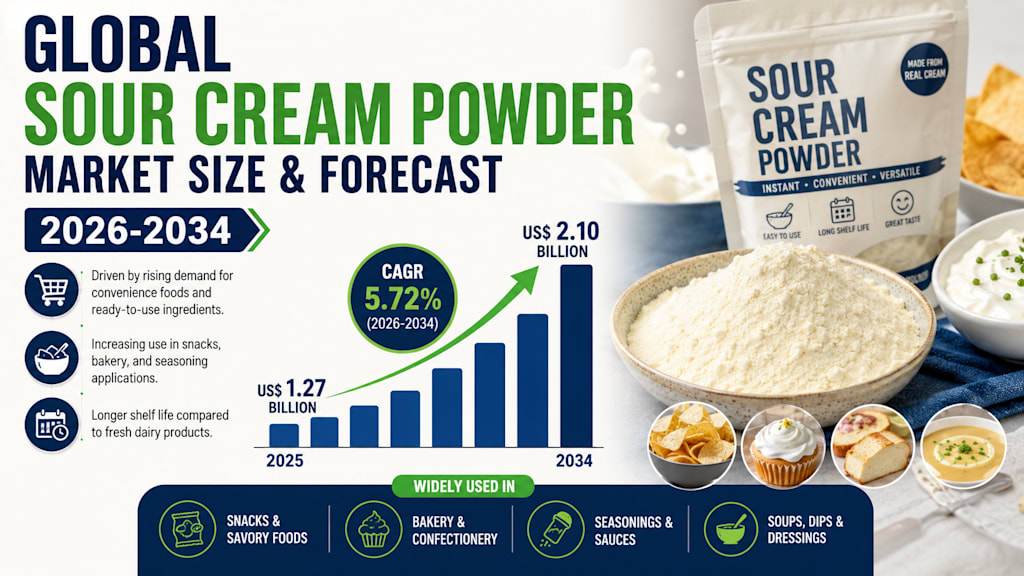
The growing importance of sour cream powder is reflected in market projections. According to Renub Research, the Global Sour Cream Powder Market is expected to expand from US$ 1.27 billion in 2025 to US$ 2.10 billion by 2034, growing at a compound annual growth rate (CAGR) of 5.72% between 2026 and 2034. This impressive growth highlights the increasing role of shelf-stable dairy ingredients within the global food supply chain.
As consumer habits continue to change and food manufacturers seek greater efficiency, sour cream powder is emerging as a valuable ingredient that bridges convenience, flavor, and functionality.

Understanding Sour Cream Powder
Sour cream powder is produced by removing moisture from traditional sour cream while preserving its signature tangy flavor and creamy characteristics. The dehydration process transforms fresh sour cream into a stable powder that can be stored for extended periods without refrigeration.
This unique characteristic provides significant advantages for food manufacturers, distributors, retailers, and consumers.
Unlike fresh sour cream, which requires continuous refrigeration and has a relatively short shelf life, sour cream powder can be transported, stored, and incorporated into food products with much greater flexibility. Once rehydrated or blended into recipes, it delivers many of the same flavor characteristics associated with fresh sour cream.
Because of these benefits, sour cream powder has become widely used in snacks, sauces, dips, dressings, baked goods, seasoning blends, instant meals, and numerous processed food products.
Its versatility has made it an increasingly attractive ingredient for food companies operating in highly competitive markets where efficiency and product consistency are critical.
The Convenience Food Boom Is Fueling Growth
One of the most important factors driving the sour cream powder market is the growing popularity of convenience foods.
Modern consumers are busier than ever before. Longer working hours, urban lifestyles, dual-income households, and changing eating habits have increased demand for products that require minimal preparation. Ready-to-eat meals, instant foods, packaged snacks, and quick meal solutions have become staples in many households around the world.
Food manufacturers rely on ingredients that can support large-scale production while maintaining flavor and quality. Sour cream powder fits perfectly into this model because it is easy to store, simple to transport, and highly adaptable across multiple food categories.
Unlike fresh dairy products, sour cream powder does not require refrigeration during storage and distribution. This reduces logistical challenges and lowers costs throughout the supply chain. Manufacturers can also maintain consistent flavor profiles across large production volumes, which is essential for building consumer trust and brand loyalty.
As convenience foods continue gaining popularity globally, demand for shelf-stable ingredients such as sour cream powder is expected to rise steadily.
The Snack Industry's Secret Ingredient
Walk through the snack aisle of almost any supermarket, and there is a good chance that sour cream powder is playing a role in many products on the shelves.
The ingredient is widely used to create popular flavors such as sour cream and onion, creamy herb blends, cheese-flavored snacks, and other savory seasonings. Its ability to deliver a rich, tangy taste while blending easily with dry ingredients makes it especially valuable in snack manufacturing.
Consumer demand for flavored snacks continues to grow across both developed and emerging markets. Potato chips, popcorn, crackers, pretzels, and extruded snacks remain popular among consumers of all ages.
At the same time, food companies are constantly introducing new flavor combinations to differentiate their products in crowded markets. Sour cream powder provides manufacturers with a reliable flavoring solution that enhances taste while supporting long product shelf life.
The global spread of Western-style snacking habits has further accelerated demand. Consumers in developing economies are increasingly embracing packaged snack foods, creating new opportunities for manufacturers and ingredient suppliers alike.
As snack consumption continues to increase worldwide, sour cream powder is expected to remain an important component of product innovation.
Shelf Life Matters More Than Ever
In today's complex food supply chains, shelf life has become a major competitive advantage.
Food companies face increasing pressure to reduce waste, improve inventory management, and serve customers across wider geographic regions. Ingredients that remain stable over long periods can significantly improve operational efficiency.
Sour cream powder offers several advantages in this area.
Its low moisture content helps prevent spoilage and extends usability compared with fresh dairy products. This allows manufacturers to maintain larger inventories without the risk of rapid deterioration.
The ingredient is particularly valuable in regions where refrigeration infrastructure is limited or inconsistent. In such markets, shelf-stable dairy ingredients provide an effective solution for delivering flavor and functionality without the logistical challenges associated with fresh products.
Longer shelf life also contributes to reduced food waste, an increasingly important consideration for both businesses and consumers seeking more sustainable food systems.
As global supply chains continue evolving, ingredients that support efficiency and reliability are likely to experience stronger demand.
Growing Interest in Health-Conscious Alternatives
Consumer preferences are changing rapidly as awareness of nutrition and wellness increases.
Many shoppers now actively seek products that support healthier lifestyles without sacrificing flavor. This trend has encouraged food manufacturers to introduce lower-fat, lower-calorie, and better-for-you alternatives across numerous product categories.
The low-fat sour cream powder segment is benefiting from this shift.
Low-fat formulations provide much of the same tangy flavor and creamy profile associated with traditional sour cream powder while containing reduced fat content. These products are increasingly used in snacks, seasonings, sauces, and processed foods targeted toward health-conscious consumers.
Food companies recognize that consumers want indulgent flavors without feeling they are compromising their wellness goals. As a result, demand for functional dairy ingredients that align with healthier eating trends is expected to continue growing.
The combination of convenience, flavor, and improved nutritional profiles positions low-fat sour cream powder as an attractive option for future product development.
Foodservice Operators Are Embracing Efficiency
Restaurants, catering companies, institutional kitchens, and quick-service chains represent another important market for sour cream powder.
Foodservice operators face unique challenges related to inventory management, food waste, labor efficiency, and consistency. Ingredients that simplify operations while maintaining quality can deliver significant value.
Sour cream powder helps address these needs by offering easy storage, reduced spoilage risk, and consistent flavor performance.
The ingredient is commonly used in sauces, dressings, soups, seasoning blends, dips, and prepared meals. Because it can be stored for extended periods without refrigeration, operators gain greater flexibility in inventory planning.
As restaurant chains continue expanding globally and foodservice providers emphasize operational efficiency, sour cream powder is becoming an increasingly attractive ingredient within professional kitchens.
Its ability to support standardization across multiple locations further enhances its appeal among large foodservice organizations.
E-Commerce Is Expanding Market Access
The rise of online shopping is creating new opportunities throughout the food ingredient sector.
Consumers today are increasingly comfortable purchasing specialty ingredients online, whether for home cooking, small businesses, or commercial food production. E-commerce platforms provide access to a wider variety of products than many traditional retail outlets.
For sour cream powder suppliers, online channels offer the ability to reach customers across broader geographic regions while reducing dependence on physical retail networks.
Bulk purchasing options, subscription services, and direct-to-consumer distribution models are making specialized food ingredients more accessible than ever before.
As digital commerce continues expanding globally, online sales are expected to become an increasingly important growth channel for the sour cream powder market.
Challenges Facing the Industry
Despite strong growth prospects, the sour cream powder market faces several challenges.
One of the most significant concerns is volatility in dairy raw material prices. Milk and cream costs can fluctuate due to weather conditions, feed prices, supply and demand imbalances, trade policies, and broader economic factors.
These fluctuations can impact production costs and profit margins for manufacturers.
Another challenge involves changing consumer perceptions regarding processed foods. Many shoppers increasingly prefer fresh, minimally processed, and clean-label products with simple ingredient lists.
Some consumers view powdered dairy ingredients as less natural than fresh alternatives. As a result, manufacturers must work to improve transparency, simplify formulations, and communicate product benefits effectively.
Balancing consumer expectations for clean-label products with the practical advantages of shelf-stable ingredients remains an important challenge for the industry.
Regional Markets Driving Demand
The United States remains one of the largest and most established markets for sour cream powder. Strong demand from the snack food industry, widespread consumption of convenience foods, and continuous product innovation support market growth.
The United Kingdom is also experiencing steady expansion as consumers embrace flavored snacks, ready meals, and international cuisine. Food manufacturers increasingly rely on powdered dairy ingredients to support product development and operational efficiency.
India represents a particularly promising growth opportunity. Rapid urbanization, expanding food processing industries, rising disposable incomes, and growing demand for convenience foods are creating favorable conditions for market expansion.
Saudi Arabia is another market showing positive momentum. Rising consumption of processed foods, growing foodservice sectors, and strong demand for shelf-stable ingredients in warmer climates are contributing to increased adoption.
Together, these regional trends demonstrate the broad global appeal of sour cream powder across diverse food markets.
Final Thoughts
The rise of sour cream powder reflects larger transformations occurring throughout the global food industry. Consumers increasingly value convenience, manufacturers seek greater efficiency, and retailers require products that support complex supply chains.
Sour cream powder successfully addresses many of these needs by offering long shelf life, reliable flavor, easy storage, and broad application versatility.
With the Global Sour Cream Powder Market projected to grow from US$ 1.27 billion in 2025 to US$ 2.10 billion by 2034, the industry appears well-positioned for sustained expansion. The continued growth of convenience foods, snack products, foodservice operations, and e-commerce channels is expected to create new opportunities for manufacturers and suppliers alike.
While challenges related to raw material costs and clean-label preferences remain, the fundamental advantages of sour cream powder continue to make it an important ingredient in modern food production. As food companies innovate to meet evolving consumer demands, sour cream powder is likely to remain a valuable and increasingly influential component of the global food landscape.
About the Creator
Enjoyed the story? Support the Creator.
Subscribe for free to receive all their stories in your feed.
Comments
There are no comments for this story
Be the first to respond and start the conversation.